
Tools
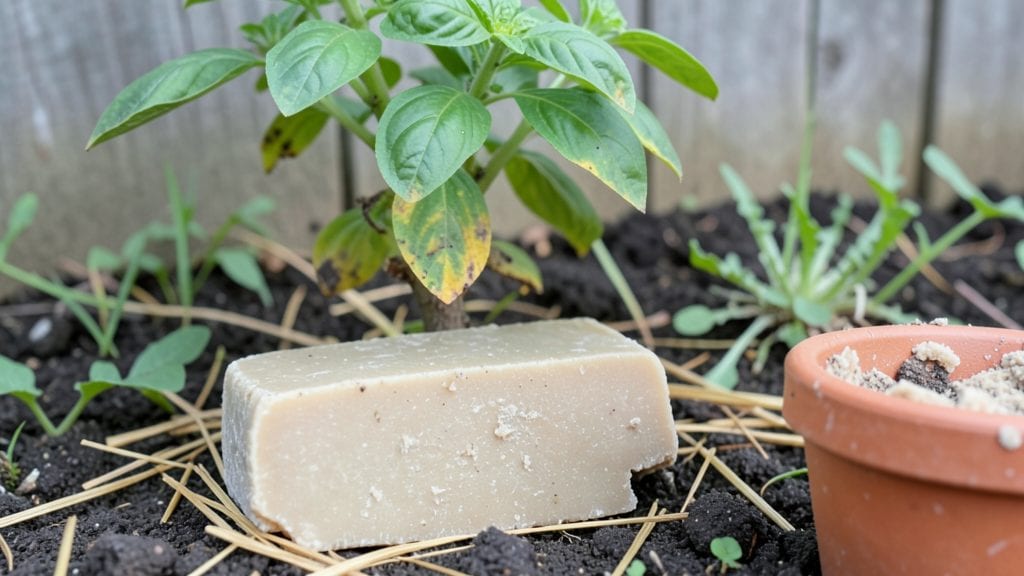
Castile soap for garden works as a natural insecticide by breaking down pests' protective layers, targeting aphids, mites, and whiteflies while keeping plants safe when mixed properly. Always dilute with water and spray during cooler hours to protect helpful bugs.
This plant-safe solution relies on its surfactant properties to suffocate soft-bodied insects by dissolving their waxy outer coatings. 🌿 Unlike synthetic pesticides, Castile soap won't leave harmful residues when used at the right concentration—typically 1-2 tablespoons per gallon of water.
The key is timing: applying it before noon prevents sunburn on treated foliage while maximizing effectiveness against pests that thrive in shade.
For best results, I recommend adding 1 teaspoon of vegetable oil to your mix—this helps the soap cling better to plant surfaces. Always test on a small leaf area first, as some sensitive plants may react differently.
The soap's mild alkalinity also makes it effective against fungal spores, giving you a two-for-one solution for many garden problems.
💡 In This Article
- How Castile Soap Disrupts Garden Pests
- Best Castile Soap Recipes for Organic Pest Control
How Castile soap disrupts garden pests
Here's what's actually happening at the microscopic level: Castile soap works because it contains saponins, natural surfactants that break down the waxy cuticle layer covering soft-bodied insects like aphids and whiteflies. This protective layer acts like a nonporous raincoat, preventing water loss and blocking chemical signals.
When soap molecules penetrate this barrier, they create tiny pores that destabilize the insect's cell membranes, causing dehydration and suffocation within 12-24 hours. The soap's mild alkalinity (pH 8-9) also disrupts the pests' nervous systems, making them less mobile and more vulnerable.
The key factor is the soap's surface tension reduction—pure water has high surface tension that bounces off insects, but soap lowers this tension to 30% of water's original level. This allows the solution to spread evenly across the insect's body, coating every microscopic crevice.
For armored pests like beetles, the effect is less dramatic because their exoskeletons are thicker and waxier, but repeated applications can still weaken their protective layers over time. 🔥 What most people don't realize is that the soap's effectiveness drops significantly when mixed with hard water (containing calcium/magnesium), as these minerals bind to the soap molecules and reduce their surfactant power.
Plant safety comes from Castile soap's biodegradable nature and the fact that plants have different protective mechanisms than insects. Most garden plants can tolerate the diluted solution (typically 1-2 tablespoons per gallon) because their cuticles are thicker and less permeable.
The soap's pH is close enough to neutral that it doesn't damage plant cell walls when used correctly.
However, the pH becomes critical when combined with other ingredients—adding citrus oils, for example, can push the mixture toward pH 6 or lower, which may harm sensitive plants like azaleas or blueberries.
Temperature plays a surprising role in effectiveness. Cooler temperatures (60-75°F) enhance the soap's ability to cling to plant surfaces and insect bodies, while heat causes it to evaporate too quickly.
This is why early morning or evening applications work best—both the pests and the plants are less stressed by environmental factors.
The soap's viscosity also changes with temperature: at 50°F, it becomes thicker and adheres better, while at 85°F+, it becomes too runny and may drip off leaves before doing its job.
Let's compare the impact on different pests: Soft-bodied insects like mites and aphids show 90%+ mortality rates within 48 hours when treated with properly diluted soap, while armored pests like scale insects require 3-5 applications spaced 7 days apart because their waxy layers regenerate.
The soap's effectiveness against fungal spores comes from its ability to disrupt the spore walls' lipid layers, preventing germination—this is why gardeners often see reduced powdery mildew after treatment. 💫
One advanced consideration is the electrolyte content of your water supply. If your tap water has high mineral content (hard water), you'll need to use distilled or rainwater for optimal results, as minerals like calcium can form insoluble salts that reduce the soap's effectiveness by up to 40%.
For maximum pest control, I recommend adding 1 teaspoon of horticultural oil to your soap solution—this creates a lipid layer that helps the soap adhere longer to both plant surfaces and insect bodies.