
Fertilization
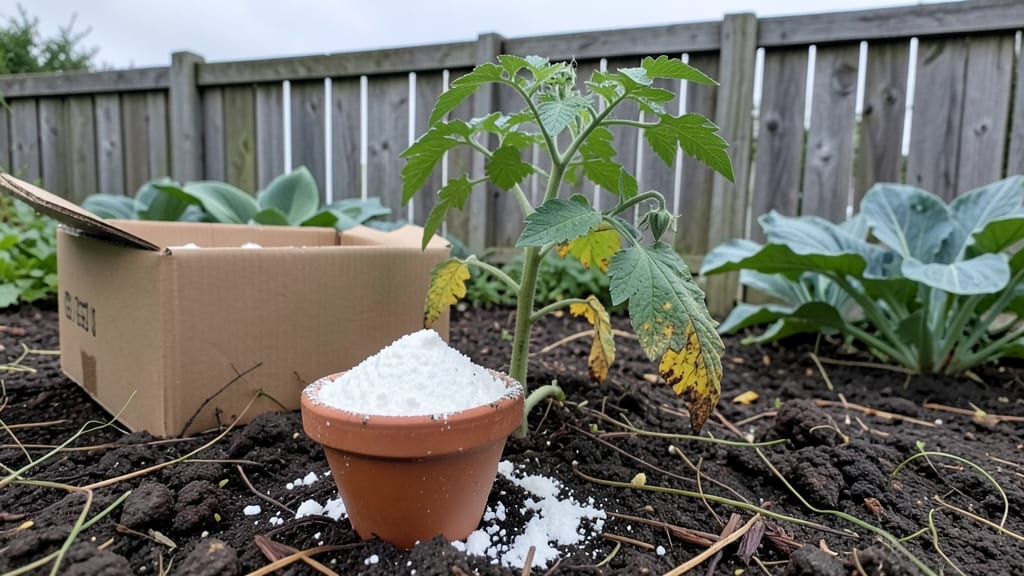
Baking soda in garden soil can adjust pH levels to neutralize acidity, but it requires careful dosing—about 1-2 teaspoons per gallon of soil—to prevent over-alkalizing, which may damage roots and beneficial soil microbes. Always test your soil's pH first to determine exact needs.
Baking soda, or sodium bicarbonate, works by reacting with acidic hydrogen ions in the soil, effectively raising the pH. 🌱 This adjustment can be especially helpful for plants like tomatoes that thrive in neutral to slightly alkaline conditions.
However, overuse can create a harsh environment that repels beneficial microbes and locks out essential nutrients like iron and manganese. I recommend spot-testing small areas first to observe how your plants respond before full application.
For best results, mix baking soda with water and apply it lightly to the soil surface, then water thoroughly to distribute it evenly. 💧 This method minimizes direct root exposure while still allowing the soil to absorb the amendment.
If you're dealing with highly acidic soil, consider combining baking soda with other organic matter like compost to buffer the change and improve soil structure over time.
💡 In This Article
- How Baking Soda Alters Soil pH Chemistry
- Safe Application Methods for Baking Soda in Gardens
How baking soda alters soil pH chemistry
When you add baking soda (sodium bicarbonate) to acidic soil, it triggers a chemical reaction that neutralizes excess hydrogen ions (H+). These ions are what make soil acidic, and baking soda donates hydroxide ions (OH-) to combine with them, forming water (H₂O) and carbon dioxide (CO₂).
This process effectively raises the soil's pH level, making it less acidic. For example, a soil with a pH of 5.5 (moderately acidic) might shift to 6.5 (neutral) after treatment, which is ideal for many vegetables like tomatoes.
The reaction works because sodium bicarbonate dissociates in water to release bicarbonate ions (HCO₃⁻), which further react with hydrogen ions. This is why mixing baking soda with water before application is crucial—it activates the chemical process. However, the effect isn't permanent.
Over time, rainwater and organic decomposition can reintroduce acidity, so periodic reapplication may be needed. 🌱 The key is balance: too much baking soda can push the pH into alkaline territory (above 7.5), which locks out essential nutrients like iron and manganese that plants need.
This pH adjustment has dramatic effects on plant nutrition. Acid-loving plants like blueberries and azaleas require pH levels between 4.5 and 5.5 to access aluminum and other micronutrients. If you accidentally raise this soil's pH to neutral, these plants will suffer from nutrient deficiencies, even if the soil appears fertile.
Conversely, tomatoes and cabbages thrive in slightly acidic to neutral soil (pH 6.0-7.0), where nutrient availability is optimal. The baking soda's impact on pH directly controls which nutrients dissolve in the soil solution and become available to roots.
Long-term use of baking soda can also affect soil structure and microbial life. Beneficial bacteria and fungi that decompose organic matter often prefer slightly acidic conditions. While a small pH increase may not harm them, excessive alkalinity can disrupt these ecosystems, reducing soil fertility over time.
The granular texture of baking soda can also temporarily alter soil aeration if applied in large quantities, though this effect is usually minor compared to the pH shift.
For container gardens, where soil volumes are small, the risk of over-alkalizing is higher, so even smaller amounts (like ½ teaspoon per gallon) may be sufficient.
Consider this comparison: blueberries need the soil to act like a weak lemonade (slightly acidic), while tomatoes prefer plain water (neutral). Baking soda is like adding a pinch of baking powder to that lemonade—it neutralizes the acid, but you can easily overdo it.
The goal is to reach the "just right" pH where your specific plants can thrive without creating an inhospitable environment for their roots or the soil's microbial helpers. 💫
What most gardeners don't realize is that baking soda's effect is temporary compared to other amendments like lime. While lime (calcium carbonate) provides long-lasting pH adjustment, baking soda works faster but requires more frequent monitoring. This makes it better for quick fixes rather than permanent soil modification.
For example, if your soil pH is 5.0 and you need it at 6.0 for tomatoes, baking soda might get you there in weeks, while lime could take months but last for years.