
Picking
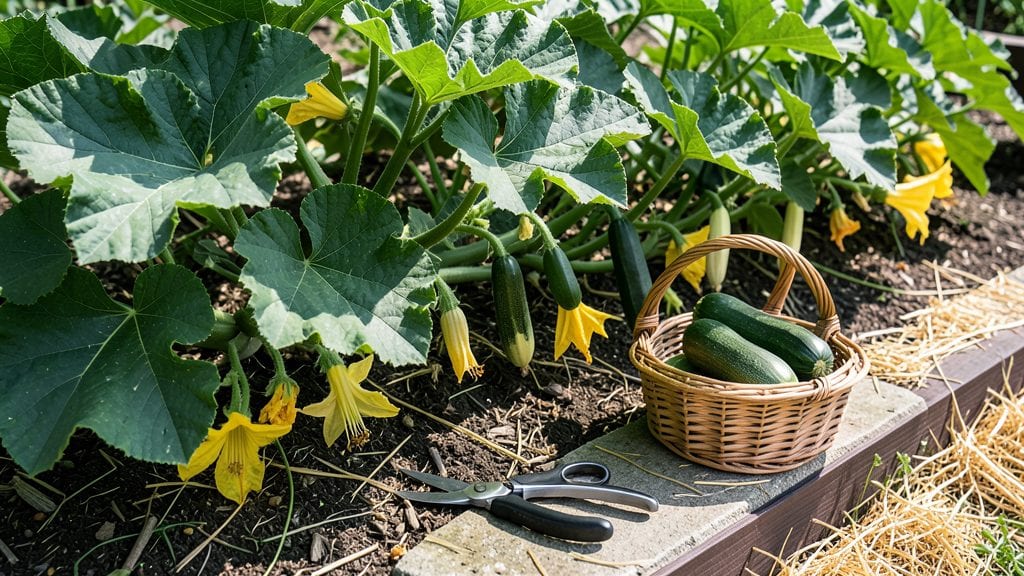
Picking squash from your garden at the right moment means the difference between a delicious, tender harvest and a bitter, seedy mess.
Harvesting too early leaves you with bland, watery flesh, while waiting too long turns your prize into a rock-hard, inedible doorstop. I’ve learned that the hard way—twice—with overgrown zucchini that could’ve been perfect if I’d just checked a little sooner.
The secret? A mix of color cues, the thumb test, and knowing your squash’s personality.
Most gardeners focus on size or color alone, but the real telltale signs are often overlooked. A fully developed stem, a skin that resists your fingernail, and a deep, rich hue (or stripe pattern) are your green light.
And yes, variety matters—summer squash like zucchini ripens faster than winter types, so timing shifts based on what’s growing.
Below, I’ll break down the exact steps to nail peak ripeness, from the thumb test to adjusting for weather, plus how to store your harvest so it stays fresh longer. No more guesswork—just foolproof squash-picking every time.
How to identify perfect squash ripeness using color and size
Picking squash at the perfect moment transforms your garden’s bounty into sweet, tender masterpieces. The key lies in understanding color changes and size benchmarks—two clues that reveal whether your squash is ready for harvest or still maturing.
Summer squash like zucchini and winter varieties like butternut each have unique signals, so let’s break down what to watch for in your garden.
For summer squash, such as zucchini and yellow crookneck, ripeness often shows up as a deep, consistent color—whether that’s glossy green or golden yellow. Meanwhile, winter squash like acorn or pumpkin develop hard, vibrant skins that signal they’re ready for storage.
Missing these cues can mean bitter, seedy squash or wasted effort—so let’s dive into the specifics.
🎃 comparison table
Squash Type
Color Cues
Size Benchmark
Stem Condition
When to Pick
Summer Squash (Zucchini)
Deep glossy green or golden yellow
6-8 inches long
Dries slightly at base
Pick when firm to touch
Summer Squash (Yellow Crookneck)
Bright yellow-orange with no green
4-6 inches long
Stem easily snaps when twisted
Harvest before seeds harden
Winter Squash (Butternut)
Tan or cream with no green at stem
12-18 inches long
Stem dries and shrinks
Pick when rind is hard
Winter Squash (Acorn)
Deep green or orange with no soft spots
4-6 inches wide
Stem pulls away cleanly
Harvest after first frost
Winter Squash (Pumpkin)
Vibrant orange or deep green
8-12 inches diameter
Stem hardens completely
Wait until hard rind
One of the biggest mistakes gardeners make is harvesting too late—especially with summer squash like zucchini. If left on the vine, they can become woody, seedy, and bitter, turning your garden’s hard work into inedible oranges. Pay close attention to the color uniformity: if your zucchini still has patches of pale green, it’s not ready yet. For winter squash, the hardness of the rind is your best friend—press your fingernail into the skin. If it doesn’t dent, it’s time to pick.
Size matters just as much as color. For example, zucchini should be 6-8 inches long when harvested, while butternut squash needs to reach 12-18 inches before it’s ready. Overlooking these benchmarks can lead to squash that’s either too small and underdeveloped or oversized and past its prime.
Always check your squash’s variety-specific guidelines—some heirloom varieties, like ‘Straightneck’ squash, can grow larger than standard types.
Environmental factors also play a role in ripeness. Hot, dry weather can speed up maturation, while
The thumb test and other pro tips for testing squash readiness
When it comes to squash, the thumb test is my go-to method for determining ripeness. This simple trick helps me avoid the frustration of harvesting too early—when the flesh is still tough—or too late, when the squash turns mealy and bitter.
The key is understanding how firmness varies by variety, from delicate zucchini to hard-shelled butternut squash.
For summer squash like zucchini, I look for a smooth, glossy skin and a size between 6 to 8 inches. The thumb test here is gentle: press your thumb into the skin. If it leaves a slight indentation but doesn’t sink in, it’s ready.
For winter squash, like butternut or acorn, the skin should be rock-hard, and the thumb test becomes more aggressive—your nail should barely dent the surface.
⚠️
If your thumb sinks in easily or the stem separates with a dry, papery crack, the squash is past its prime. Overripe squash develops woody fibers and bitter seeds, making it inedible. For winter squash, check the stem: if it snaps cleanly when twisted, it’s ready. If it tears, wait a few more days.
Another pro tip is the stem separation test. Gently twist the stem near the squash’s neck. If it detaches easily with a clean break, the squash is ripe. A stubborn stem means it needs more time.
This works especially well for acorn or delicata squash, where the stem’s dryness is a clear signal. For zucchini, though, the stem should still hold on tightly—harvest before it detaches to avoid bitterness.
Don’t overlook the weight factor. A ripe squash feels heavy for its size, thanks to its dense flesh. Lift a few candidates: the heaviest one is usually the ripest.
This is particularly useful for large winter varieties like pumpkins, where size alone isn’t enough. Combine weight with the thumb test for foolproof results.
Adjust your approach based on the squash variety. Summer squash like zucchini or pattypan should be harvested frequently (every 2–3 days) to encourage more production. Winter squash, such as butternut or spaghetti squash, can wait until fully mature—their skins harden significantly as they ripen.
For heirloom varieties, like Cocozelle, taste-test a small slice if you’re unsure.
Finally, watch the weather. Hot, dry days speed up ripening, so check squash more often during heatwaves. If a heavy rain is forecast, harvest before moisture softens the skin.
Store ripe squash in a cool, dry place (50–55°F) to extend freshness. With these tips, you’ll never miss the perfect harvest window again!