
Picking
Peppers in square foot gardening mean 16 plants per square foot—the same space that would fit just 4 tomatoes. 🌱 I’ve packed my 4x4-foot plot with so many peppers that neighbors now ask for starts, and I’m sharing the exact layout that turns tight spaces into high-yield powerhouses.
The trick isn’t just cramming plants—it’s pairing peppers with the right companions. Basil and onions deter pests, while marigolds keep aphids off the leaves. My bell peppers grow 12 inches tall in this setup, with jalapeños trailing slightly to save vertical space.
A single square foot can produce 20+ peppers if you rotate crops yearly and prune wisely.
You’ll end up with a dense, productive patch where every inch works. The peppers stay compact, the soil stays rich from companion plants, and you avoid the sprawl that wastes space in traditional gardens. Even in shady corners, the right varieties thrive—just swap heat-lovers for shade-tolerant types.
This method works for any pepper type—from sweet bells to fiery habaneros—so long as you adjust spacing by variety. Let’s map out your plot before the first seed goes in!
📚 In This Guide
- What you need
- Instructions
- Tips and common mistakes
- Wrapping up and next steps
What you need
- ● Garden bed: 1–4 raised beds (4’ x 4’ or smaller), made of wood, metal, or composite materials (ensure they’re at least 6 inches deep for pepper roots).
- ○ Optional: Pre-made SFG grids (1’ x 1’ squares) to divide beds for easier planting.
- ● Soil: High-quality potting mix or mel’s mix (50% peat moss, 50% vermiculite) or a blend of 60% compost, 30% peat moss, and 10% perlite.
- ● Per bed: 1 cubic foot of soil per square foot (e.g., 16 cubic feet for a 4’ x 4’ bed).
- ● Peppers: 1 pepper plant per square foot (e.g., 16 plants for a 4’ x 4’ bed). Choose varieties like jalapeño, bell, habanero, or cayenne based on your climate and heat tolerance.
- ● Transplants: Buy healthy 4–6” tall seedlings from a nursery or start seeds indoors 8–10 weeks before last frost.
- ● Basic tools: Hand trowel or small shovel
- ● Garden gloves
- ● Watering can or hose with a gentle spray nozzle
- ● Measuring tape or ruler (for marking SFG squares)
- ● Fertilizers: Balanced organic fertilizer (e.g., 5-5-5) or compost tea for nutrient boosts.
- ● Mulch: Straw or shredded leaves to retain moisture and suppress weeds.
- ● Support: Small cages or stakes for taller pepper varieties (e.g., bell peppers).
- ● Drip irrigation: For consistent watering, especially in hot climates.
- ● Row cover: Lightweight fabric to protect seedlings from pests or frost.
- ● 🌡️ Test your soil pH: Peppers thrive in slightly acidic soil (pH 6.0–6.8). Use a test kit if unsure.
- ● ✨ Warmth is key: Peppers need full sun (6–8+ hours/day) and warm soil (at least 60°F/15°C). Use black plastic mulch to warm beds early in the season.
- ● 💡 Companion plants: Pair peppers with basil, marigolds, or onions to deter pests naturally.
Step-by-Step instructions for growing peppers in square foot gardens
Here’s how I turn even the smallest garden plot into a high-yield pepper powerhouse using square foot gardening.
🌱 Step 1: Plan Your Pepper Layout for Maximum Yield
Square foot gardening lets you fit more plants in less space, but peppers need room to breathe. Divide your 4-foot square into a 16-inch grid (4x4 squares). Place 1 pepper plant per square—this gives each plant 1 square foot of growing space, which is perfect for medium-sized varieties like bell peppers or jalapeños.
I always space plants 12 inches apart within the square to prevent crowding. If you’re growing larger varieties like banana peppers, reduce to 1 plant per 2-square section (2 plants per 4-square block). This ensures airflow and reduces disease risk. Mark your grid with a pencil or small stakes to avoid confusion later.
💧 Step 2: Prepare the Soil for Pepper Success
Peppers thrive in well-draining, nutrient-rich soil with a pH between 6.0 and 6.8. Mix 2 parts potting mix with 1 part compost and 1 part perlite in your 4-foot square to create a loose, airy medium. Avoid garden soil—it compacts and can suffocate roots.
Work the materials into the top 6 inches of soil, breaking up any clumps. Moisten the bed thoroughly before planting so the roots can establish without stress. I like to add a handful of balanced fertilizer (10-10-10) per square foot at this stage to give peppers a strong start. Avoid over-fertilizing—peppers are sensitive to excess salts.
☀️ Step 3: Plant and Support for Strong Growth
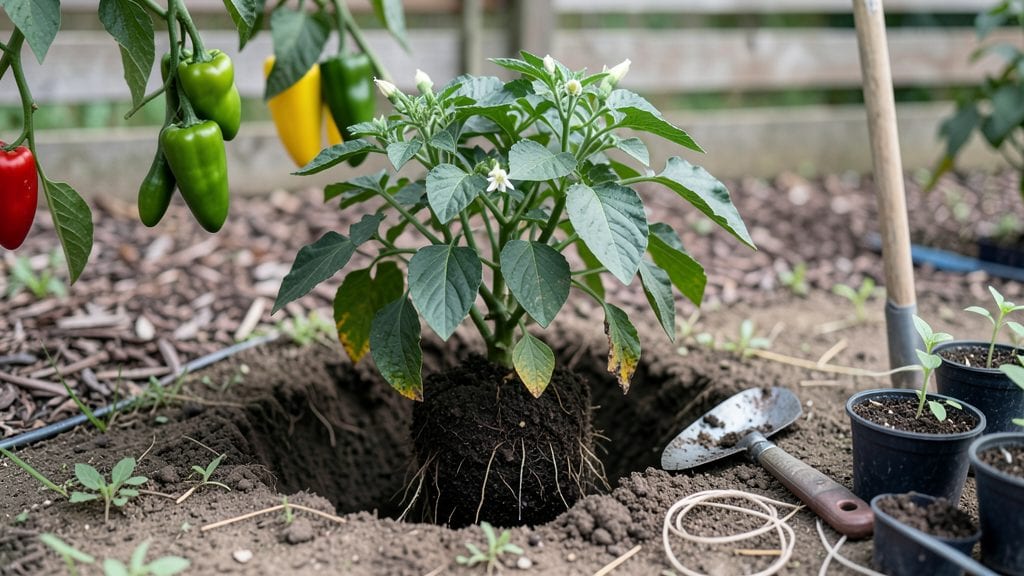
Dig a hole twice as wide as the root ball but no deeper than the container. Gently remove your pepper seedlings from their pots and place them in the hole, ensuring the soil line matches the original pot level. This prevents stem rot from burying too much of the plant.
Fill the hole with soil and press lightly to eliminate air pockets. Water deeply to settle the roots, then add a cage or stake for support. Peppers grow tall and heavy with fruit, so I always use 5-foot bamboo stakes for varieties like bell peppers. Secure the plant loosely to the stake with soft ties—tightening too soon can damage stems as they grow.
🌿 Step 4: Maintain Moisture and Fertility
Peppers need consistent moisture—1 inch of water per week, either from rain or irrigation. Water at the base of the plant in the morning to reduce fungal risks. Avoid wetting leaves, which can lead to blossom end rot or powdery mildew. I use a soaker hose for even distribution without splashing.
After the first 4-6 weeks, switch to a low-nitrogen fertilizer (5-10-10) every 3-4 weeks to encourage fruiting. Peppers are heavy feeders, but too much nitrogen leads to leafy growth with few peppers. Watch for yellowing leaves—this is your cue to adjust fertilizer or check for overwatering.
✂️ Step 5: Prune and Harvest for Continuous Production
Prune peppers sparingly—remove only yellow or diseased leaves to improve airflow. For bushier growth, pinch off the tip of the main stem when the plant reaches 18 inches tall. This encourages side branches, which produce more peppers. Avoid heavy pruning, as peppers rely on their structure to support fruit.
Harvest peppers when they reach full color and size—this encourages new fruit to form. Use clean pruners to cut stems, leaving a ¼ inch of stem attached. Store harvested peppers in a cool, dry place (around 55-60°F) for up to 2 weeks. If peppers linger too long on the plant, they’ll turn tough or bitter, so stay vigilant!
Tips & tricks for perfect square foot pepper gardens
Square foot gardening with peppers isn't just about fitting more plants in less space—it's about creating an environment where each plant thrives. Here's how to maximize your yield and avoid common pitfalls.
Spacing is Everything: That 12-inch spacing between plants in Step 1 isn't arbitrary—it's the sweet spot for airflow and disease prevention. I've learned the hard way that crowding leads to fungal issues, especially in humid climates. For larger varieties like banana peppers, that 2-square section rule prevents root competition while still giving them enough room to grow their signature elongated shapes. Mark your grid with biodegradable stakes if you're worried about remembering the layout later.
Soil Science Matters: The 2:1:1 ratio of potting mix, compost, and perlite in Step 2 creates the perfect balance of nutrients, aeration, and moisture retention. I've found that adding worm castings to that compost mix gives an extra boost of beneficial microbes. And here's a pro tip: Test your soil pH before planting—peppers are particular about that 6.0-6.8 range. If your soil tests lower, add dolomitic lime; if it's too high, work in sulfur. Don't skip this step—it's the foundation for healthy plants.
Support Systems Save the Day: Those 5-foot bamboo stakes in Step 3 aren't just for show—they're essential for supporting the weight of pepper fruits. I've seen bell peppers snap stems when they're not properly staked, leading to lost harvests. Use soft plant ties that you can adjust as the plant grows, and always secure the stake before you see the first fruit forming. For bushier varieties, consider tomato cages instead—they provide more comprehensive support.
Watering Wisdom: That 1-inch weekly watering guideline in Step 4 is crucial, but timing matters just as much. I've found that morning watering prevents fungal spores from lingering on wet leaves all night. And here's what nobody tells you—peppers are drought-tolerant once established, but they hate inconsistent moisture. If you're going on vacation, set up a drip irrigation system or ask a neighbor to water at the base of plants. The roots will thank you with better fruit production.
Pro Tips for Peppers Square Foot Gardening
- Square foot gardening with peppers isn't just about fitting more plants in less space—it's about creating an environment where each plant thrives.
- Spacing is Everything: That 12-inch spacing between plants in Step 1 isn't arbitrary—it's the sweet spot for airflow and disease prevention.
- Soil Science Matters: The 2:1:1 ratio of potting mix, compost, and perlite in Step 2 creates the perfect balance of nutrients, aeration, and moisture retention.
Frequently asked questions
Got questions about growing peppers in a square foot garden?
You’re not alone! Here are answers to the most common queries to help you grow a thriving, space-efficient pepper patch.
How many pepper plants can I fit in a 1-square-foot space?
For bell peppers, plant 1-4 plants per square foot (depending on variety—bush types like ‘Snackable’ fit 4, while larger ones like ‘California Wonder’ need 1). For hot peppers (like jalapeños or habaneros), you can squeeze in 4-9 plants—their smaller size makes them perfect for tight spaces!
When is the best time to plant pepper seedlings in a square foot garden?
Peppers hate cold—wait until after the last frost and soil temps hit 60°F+. Start seeds indoors 8–10 weeks before your last frost date, then transplant seedlings when they’re 6–8 inches tall. In warm climates, you can direct-sow in late spring!
How do I keep peppers from getting too hot or too cold in a square foot garden?
Peppers thrive in 70–85°F soil temps. Use row covers or black plastic mulch to warm soil early. If nights dip below 55°F, add a cloche or cold frame. In scorching heat, provide afternoon shade with a lightweight shade cloth (30–50%) to prevent blossom drop.
What can I plant with peppers in a square foot garden to maximize space?
Peppers love companions! Pair them with:
- Basil (repels pests, boosts flavor)
- Onions or garlic (deter aphids)
- Marigolds (natural pest control)
- Spinach or lettuce (harvest early to avoid shading peppers)
What’s the fastest way to fix pepper pests (like aphids or spider mites) in a square foot garden?
Start with neem oil spray (mix 1 tbsp neem oil + 1 tsp mild soap + 1 quart water). For aphids, blast them off with water or introduce ladybugs. Cucumber beetles? Handpick them or use row covers. Rotate crops yearly to prevent soil-borne pests!
Wrapping up and next steps
Square foot gardening with peppers proves that big flavors don’t need big spaces! 🌱 By maximizing every inch, you’ll enjoy a bountiful harvest of sweet bell peppers, fiery jalapeños, or anything in between—all while saving water, soil, and effort.
Whether you’re a seasoned gardener or just starting, this method makes growing peppers effortlessly rewarding.
Ready to turn your tiny plot into a pepper paradise? Start small—pick one variety, sketch your layout, and plant! Watch your garden (and your confidence) grow, one square foot at a time. Happy gardening! 🌟