
Plants
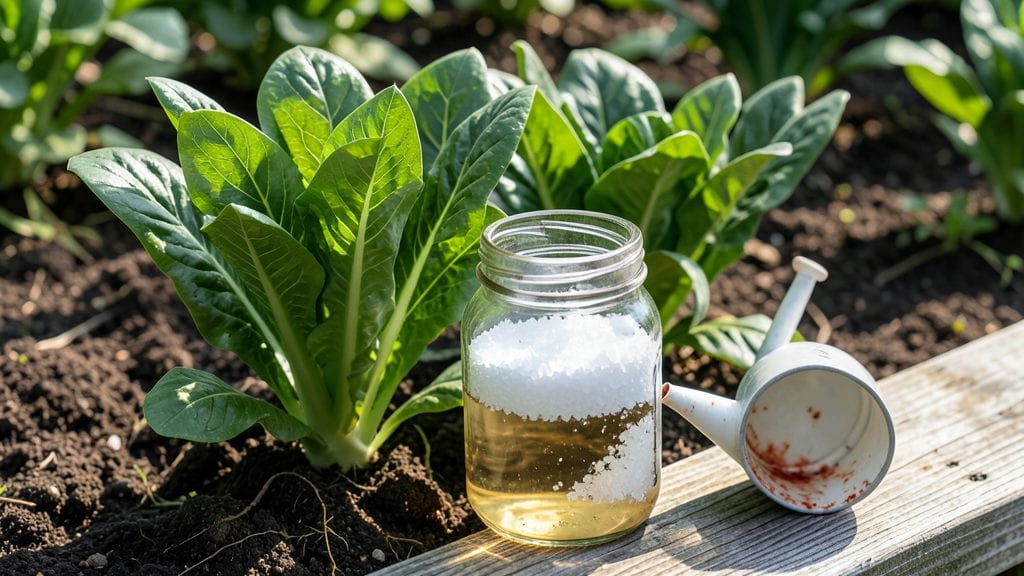
Epsom salt for garden plants enhances magnesium and sulfur absorption, which strengthens plant structure and flower production—but too much can disrupt soil balance and damage roots. Use it carefully: mix 1 tablespoon per foot of plant height in water every 4-6 weeks during active growth, and skip it entirely for salt-sensitive varieties like onions or garlic.
Epsom salt works because magnesium is a key component of chlorophyll—the green pigment that drives photosynthesis.
When plants lack magnesium, you’ll often see yellowing between leaf veins, a telltale sign of deficiency. 🌱 I’ve noticed the biggest improvements in flowering plants like roses and tomatoes, where vibrant blooms and robust stems become noticeably healthier after just a few applications.
The sulfur in Epsom salt also supports enzyme production, helping plants convert nutrients into energy more efficiently.
That said, not all plants need this boost—some, like azaleas and blueberries, actually thrive in acidic soils where Epsom salt would throw off their delicate pH balance. For those, I recommend organic alternatives like kelp meal or compost instead.
Always apply in the morning on dry soil to prevent leaf burn, and remember: a little goes a long way. Overdoing it can leave behind a salty residue that roots can’t handle.
💡 In This Article
- Magnesium and Sulfur: How Epsom Salt Benefits Plant Growth
- Safe Application Methods and Plants to Avoid
Magnesium and sulfur: how Epsom salt benefits plant growth
Here's what's actually happening at the cellular level: magnesium sits at the center of the chlorophyll molecule, acting like a catalyst that helps plants convert sunlight into chemical energy during photosynthesis.
Without enough magnesium, chlorophyll production slows—this explains why you often see yellowing between leaf veins (a condition called interveinal chlorosis) in deficient plants.
The sulfur in Epsom salt plays a different but equally vital role by helping form amino acids and vitamins, which are the building blocks for proteins and enzymes that drive growth. 🌿 Think of magnesium as the "engine" of photosynthesis and sulfur as the "fuel processor" keeping everything running smoothly.
Epsom salt delivers these nutrients in a highly soluble form—magnesium sulfate dissolves quickly in water, making it immediately available to roots through soil applications or leaves via foliar sprays.
This is where it outpaces many organic amendments: compost, for example, releases magnesium slowly over months, while Epsom salt provides an immediate boost. The catch?
This rapid availability is why precise measurements matter—too much magnesium can actually interfere with calcium and potassium uptake, leading to nutrient imbalances that stunt growth rather than promote it.
For comparison, a typical 1 tablespoon per foot of plant height provides about 1.5 grams of magnesium, which is roughly what a mature tomato plant needs for its entire growing season.
What most people don't realize is how these deficiencies manifest differently across plant types. In leafy greens like spinach or Swiss chard, magnesium deficiency causes the older leaves to yellow first because the plant prioritizes moving nutrients to new growth.
In flowering plants like roses or petunias, you'll often see stunted stems and poor bloom production because magnesium is critical for energy transfer during flowering.
The visual difference after treatment is striking—I've seen roses that were struggling to open buds suddenly produce vibrant, fully unfurled flowers within 2-3 weeks of proper Epsom salt application. The key is catching deficiencies early before they become irreversible.
There's also a common misconception that more is better. While Epsom salt is safe for most plants when used correctly, its high sulfate content can acidify soil over time, particularly in sandy soils that drain quickly.
This is why we recommend avoiding it for acid-loving plants like azaleas, blueberries, or rhododendrons—their ideal soil pH of 4.5-5.5 would drop dangerously with regular applications. For these plants, organic alternatives like langbeinite (a potassium-magnesium sulfate) or kelp meal provide magnesium without the sulfur overload.
The texture difference is also notable: Epsom salt granules dissolve instantly in water, while kelp meal requires steeping for 24 hours to release its nutrients.
Let's talk about the science of uptake: magnesium moves passively through plant roots via a process called diffusion, meaning plants absorb it based on concentration gradients in the soil solution. When you apply Epsom salt, you're temporarily increasing that concentration, which helps overcome natural soil barriers.
The sulfur component, meanwhile, gets incorporated into amino acids through a process called sulfur assimilation, which occurs in plant roots and leaves.
This dual-action delivery is what makes Epsom salt particularly effective for correcting deficiencies quickly—unlike compost, which relies on microbial activity to break down and release nutrients over time.
For gardeners working with container plants, the benefits are even more pronounced because potting mixes often lack sufficient magnesium. A 1-gallon container typically contains only about 0.1-0.2 grams of magnesium naturally, which gets depleted after 3-4 months of active growth.
This is why container gardeners often see faster results from Epsom salt—there's less competition from existing soil nutrients. The visual difference in foliage color is immediate: leaves go from dull green to a rich, vibrant emerald hue within 7-10 days of proper application.
Just be mindful of drainage—containers can become salt-stressed quickly if you don't flush the soil with plain water every 4-6 weeks after treatment. 💫
The bottom line is this: Epsom salt isn't a magic cure-all, but it's an incredibly precise tool for targeting specific deficiencies.
The most dramatic improvements I've seen occur in plants that are already slightly deficient—think of it like giving a plant a quick energy drink rather than a complete nutritional overhaul.
For maximum effectiveness, combine it with proper watering practices (never apply to dry soil) and a balanced fertilizer to ensure all essential nutrients are present. And remember: the goal is to supplement, not replace, your regular soil amendment program.