
Tools
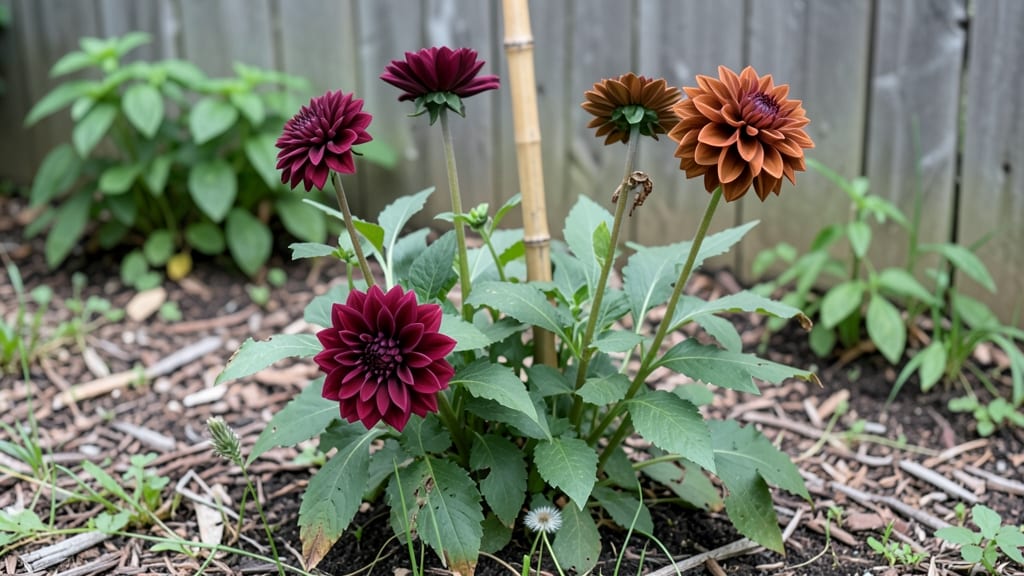
Creating a dahlia garden layout that pops from summer through frost starts with vertical layers and strategic spacing. 🌻 I designed my first dahlia bed after watching my flat, sprawling plants flop in the rain—now they stand tall in dramatic tiers, with taller varieties anchoring the back and shorter ones spilling forward like a living waterfall.
The secret lies in 18- to 24-inch spacing between plants (depending on variety) and grouping colors in 3- to 5-plant clusters for maximum impact. Pair bold reds with deep purples for contrast, or let soft pinks blend with creamy whites for a dreamy effect.
I also tuck in companion plants like ornamental grasses or salvias at the base to fill gaps and attract pollinators.
By mid-July, your garden will burst with blooms in waves of color—early varieties like 'Café au Lait' giving way to late-season stars like 'Arabian Night.'
The vertical structure keeps stems dry, reduces disease, and makes harvesting easier. Plus, the layered look works in both formal knot gardens and wild, cottage-style borders.
For a foolproof start, sketch your bed first, mark plant heights, and save the tallest dahlias for the back. Add a wire trellis if needed—mine holds up varieties like 'Thomas Edison' that reach 5 feet tall without flopping.
The payoff? A garden that feels like a living painting, not just a patch of flowers.
📚 In This Guide
- What you need
- Instructions
- Tips and common mistakes
- Wrapping up and next steps
What you need
- ● Dahlia tubers: Choose 10–20 tubers (depending on garden size) in varying heights (18"–60") for vertical interest. Opt for early, mid-, and late-season bloomers for continuous color.
- ● Potting mix: 5–10 bags of high-quality, well-draining potting soil (or garden soil amended with compost).
- ● Container or in-ground plot: Containers: 5–10 large pots (12"+ diameter) with drainage holes.
- ● In-ground: A 4’x4’–6’x6’ plot with loose, fertile soil.
- ● Mulch: 2–3 bags of organic mulch (e.g., shredded bark or straw) to retain moisture and suppress weeds.
- ● Fertilizer: Balanced 10-10-10 or slow-release dahlia-specific fertilizer (follow package rates).
- ● Stakes or cages: 10–20 sturdy bamboo stakes or tomato cages (5–7 ft tall) for support.
- ● Garden trowel or hand shovel
- ● Pruning shears (sterilized!)
- ● Measuring tape or ruler
- ● Garden gloves (heavy-duty for tubers)
- ● Watering can or hose with adjustable nozzle
- ○ Optional: Wheelbarrow for hauling soil, kneeling pad for comfort, and a spray bottle for dusting off tubers.
- ● Full sun exposure (6+ hours daily).
- ● Well-draining soil (test pH: dahlias thrive in 6.0–7.0).
- ● Patience! Tubers take 6–8 weeks to bloom.
- ● Pro tip: 💡 Chill tubers for 4–6 weeks in a cool, dark place before planting to mimic winter dormancy.
How to design a dahlia garden with vertical layers for season-long color
Here's my approach to creating a striking dahlia display that thrives through summer and fall.
🌱 Step 1: Plan Your Vertical Layers for Height and Structure
Dahlias grow in dramatic tiers, so I start by mapping three distinct height zones. Place tall varieties (4-6 feet) like 'Galaxy' or 'Thomas Edison' at the back of your bed, where they'll form a bold vertical backdrop. These need 8+ inches of space between plants for their sturdy stems to develop without crowding.
In the middle layer, position medium-height varieties (3-4 feet) such as 'Café au Lait' or 'Happy Single' about 12-18 inches apart. These will bridge the gap between giants and shorter plants while providing continuous blooms. I like to stagger them slightly behind the front row to create visual depth.
🪴 Step 2: Prepare the Soil for Heavy Feeders
Dahlias are hungry plants, so I enrich the soil with 3-4 inches of compost mixed into the top 12 inches of soil. Work in a handful of balanced fertilizer (10-10-10) at planting time to give them a nutrient boost. The goal is loose, well-draining soil—dahlias rot quickly in soggy conditions.
I always test soil pH first. Dahlias prefer slightly acidic to neutral soil (pH 6.5-7.0). If your soil is clay-heavy, amend with 1 part perlite to 3 parts garden soil to improve drainage. The roots need room to spread, so avoid compacting the soil when planting.
☀️ Step 3: Plant Tubers at the Right Depth and Spacing
Plant dahlia tubers 4-6 weeks before your last frost date when soil temperatures reach 60°F. Place each tuber with the "eye" (the small bump where stems emerge) facing upward, about 4-6 inches deep—deeper for larger tubers, shallower for smaller ones. I space them 12-18 inches apart in rows 24 inches apart for easy access.
Mulch heavily with 2-3 inches of straw or shredded leaves after planting to retain moisture and suppress weeds. The mulch also insulates tubers from temperature swings, which can stress young growth. Water deeply right after planting to settle the soil around the tubers.
✂️ Step 4: Stake and Train for Maximum Support
I install 5-6 foot bamboo stakes or metal cages at planting time, driving them 12 inches into the ground beside each tall variety. For medium-height dahlias, use 3-4 foot stakes or simple tomato cages. Tie stems loosely to the supports with soft plant ties or old pantyhose as they grow—never too tight, or you'll restrict their expansion.
Pinch back the first set of true leaves when plants reach 12 inches tall to encourage bushier growth. This is where dahlias get their dramatic form. Watch for side shoots forming at the base—these will produce additional blooms. Remove any flowers that appear before mid-summer to redirect energy into stronger stems.
💧 Step 5: Water and Feed for Continuous Blooms
Dahlias need 1-2 inches of water weekly, but I water deeply 2-3 times per week instead of shallow daily doses. Water at the base, avoiding the foliage to prevent fungal diseases like powdery mildew. I always water in the early morning so leaves dry quickly.
Feed every 2-3 weeks with a low-nitrogen, high-phosphorus fertilizer (5-10-10) to promote flowering. I also top-dress with compost tea monthly for micronutrients. Deadhead spent blooms regularly—this encourages more flowers and prevents the plant from going to seed too early in the season.
Tips & tricks for perfect dahlia garden layout
Creating a dahlia garden that thrives all season takes strategic planning—and these pro tips will help you avoid common pitfalls while maximizing that dramatic vertical impact.
Height Layering Strategy: In Step 1, when mapping your vertical tiers, consider adding a third dimension by incorporating dwarf varieties (1-2 feet) like 'Little One' or 'Mignon' in the front. These create a cascading effect that draws the eye downward while filling in gaps. I like to place them 12 inches apart in a staggered pattern, slightly offset from the middle layer, to create visual interest at ground level.
Soil Prep Pro Move: For Step 2, if your soil is particularly dense, consider adding 1 part coconut coir to 2 parts garden soil instead of perlite—it retains moisture better while still improving drainage. I've found this works especially well in clay-heavy soils where dahlias often struggle. The key is maintaining that loose, airy texture while keeping the pH in that 6.5-7.0 range we discussed.
Tuber Planting Precision: When planting in Step 3, mark your 4-6 inch planting depth with a stake before placing tubers—this ensures consistency, especially if you're planting multiple varieties. I also recommend soaking tubers in lukewarm water for 24 hours before planting to jumpstart growth. Just don't let them sit in standing water, or you risk rot.
Support System Upgrade: For Step 4, consider using metal plant cages with built-in trellis designs instead of bamboo stakes—they provide more comprehensive support and look more intentional in the garden design. If you choose stakes, install them at a 15-degree angle away from the plant to prevent wind damage. The 12-inch deep placement mentioned is critical for stability, especially for those towering varieties.
Pro Tips for Dahlia Garden Layout
- Creating a dahlia garden that thrives all season takes strategic planning—and these pro tips will help you avoid common pitfalls while maximizing that dramatic vertical impact.
- Height Layering Strategy: In Step 1, when mapping your vertical tiers, consider adding a third dimension by incorporating dwarf varieties (1-2 feet) like 'Little One' or 'Mignon' in the front.
- Soil Prep Pro Move: For Step 2, if your soil is particularly dense, consider adding 1 part coconut coir to 2 parts garden soil instead of perlite—it retains moisture better while still improving drainage.
Frequently asked questions
Got questions about creating a stunning dahlia garden layout? You’re not alone! Here are answers to the most common queries to help you design a showstopping display with confidence.
When is the best time to plant dahlias for a vertical garden layout?
Plant dahlias after the last frost when soil temperatures reach at least 60°F (15°C). For most climates, this means late spring (April–May). If you’re in a warm zone, you can start earlier—just ensure the ground isn’t frozen! Harden off tubers indoors for 1–2 weeks before transplanting for a smoother transition.
How do I space dahlias in a layered garden design?
Dahlias need 12–24 inches of space between plants, depending on variety (dwarf types = 12"; giant blooms = 24"). In vertical layers, plant taller dahlias (4–6 ft) at the back, mid-height varieties (2–4 ft) in the middle, and compact types (1–2 ft) in front. Overcrowding leads to poor airflow—prune stems to encourage bushier growth if needed.
Can I mix dahlias with other plants in my garden layout?
Pair dahlias with complementary plants like salvia, coreopsis, or ferns for texture contrast. Avoid competing with aggressive spreaders (e.g., mint or bamboo). For a low-maintenance layout, try ornamental grasses or lavender as underplantings—they thrive in similar sunlight.
Why aren’t my dahlias blooming in my layered garden?
Lack of blooms often stems from over-fertilizing with nitrogen (promotes leaves, not flowers) or inconsistent watering. Dahlias need 1 inch of water weekly and balanced fertilizer (5-10-5) when buds form. Deadhead spent blooms to encourage more flowers, and ensure they get 6+ hours of sunlight daily.
Do dahlias survive winter in a vertical garden layout?
Dahlias are tender perennials—they don’t survive frost. In cold climates, dig up tubers before the first freeze, trim foliage, and store them in dry peat moss or sawdust at 35–45°F (2–7°C). Label tubers to avoid confusion when replanting next spring!
Wrapping up and next steps
Creating a dahlia garden layout with vertical layers isn’t just about beauty—it’s about crafting a thriving, low-maintenance paradise that blooms from summer to frost! 🌸 From choosing the right varieties to playing with heights and textures, every step brings you closer to a showstopping display.
Whether you’re a seasoned gardener or a curious beginner, the key is to start small, experiment, and enjoy the process.
Now that you’re armed with tips and tricks, roll up your sleeves and get planting! 🌱 Sketch your design, gather your supplies, and watch your garden transform into a vibrant, multi-season masterpiece. Ready to dive in? Review your materials checklist or browse common questions for extra confidence—then make it happen!