
Companion Plants
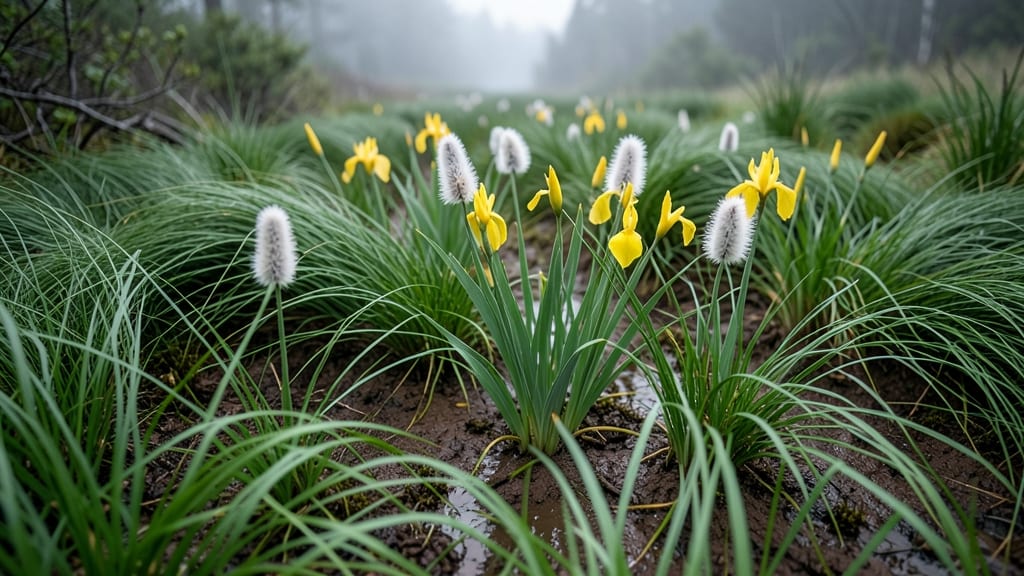
Transform soggy garden corners into lush, vibrant wetland beds with these 10 bog garden plants. Perfect for rain gardens, ponds, or poorly draining soil, these moisture-loving species thrive where others fail—adding beauty and ecological value to your landscape.
Calla Lily with Dark Purple Flowers
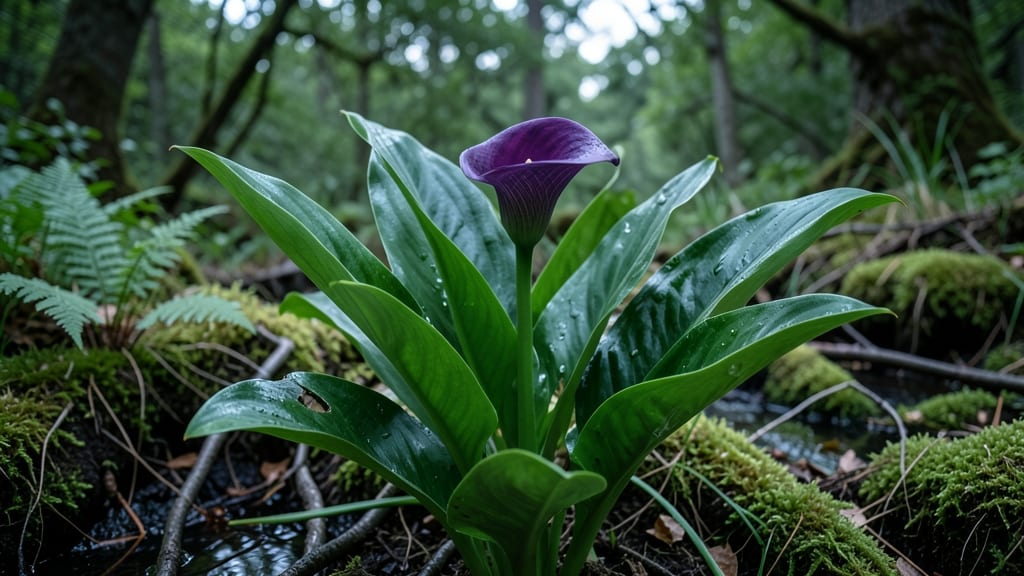
Turn your shady, soggy spots into a dramatic focal point with the calla lily, especially the deep purple variety. Its glossy, lance-shaped leaves and bold, trumpet-shaped blooms create a striking contrast against wetland moss and ferns, making it a standout in any bog garden.
This moisture-loving beauty thrives in partial shade and consistently damp soil, perfect for containers or borders where water lingers. Plant rhizomes in spring or early fall, spacing them 12-18 inches apart, and watch as they produce year-round interest—lush foliage in winter and dramatic blooms from summer to fall. 🌿
Ideal for gardeners who want low-maintenance elegance, calla lilies add height and texture without requiring constant attention. Their striking foliage and bold blooms make them a favorite for wetland-themed gardens, container arrangements, or as a statement plant in shady borders. 💚
Royal Fern with Arching Fronds
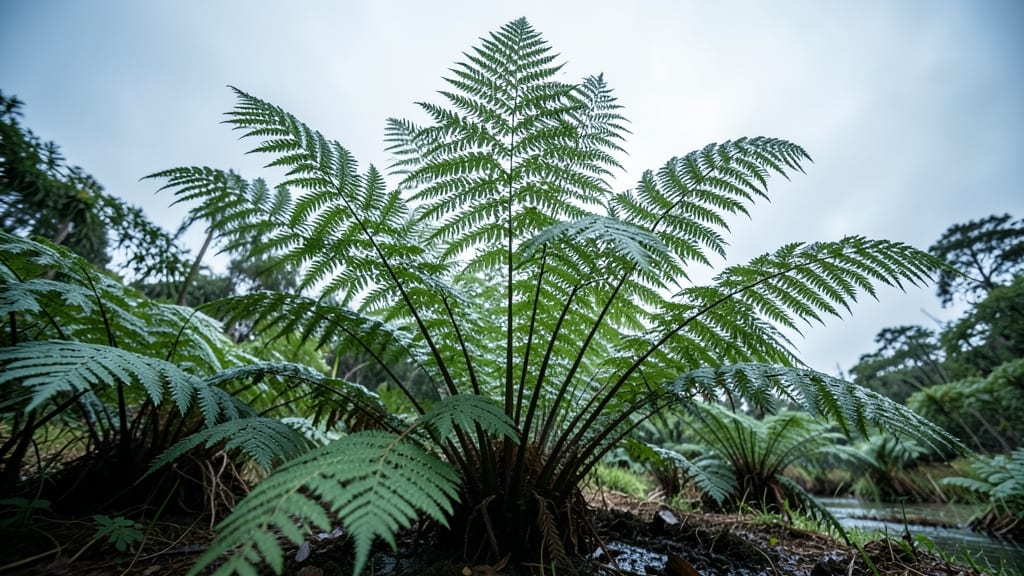
Tired of soggy patches ruining your garden plans? The Royal Fern (Osmunda regalis) turns wet, shady spots into dramatic architectural statements—its towering, feathery fronds reach heights of 3-5 feet, creating a natural privacy screen that’s far more elegant than a fence.
This hardy perennial thrives in full sun to partial shade, making it versatile for boggy areas, pond edges, or even rain gardens. Plant it in consistently moist, well-draining soil (amend heavy clay with compost), and watch it establish quickly—it’s cold-hardy to USDA Zone 4, so it’s perfect for northern climates too. For extra impact, group 3-5 plants together to form a lush, living wall.
Ideal for gardeners who want low-maintenance structure without sacrificing beauty, Royal Ferns also support wildlife by providing shelter for birds and insects. 🌿
Purple Loosestrife with Vibrant Clusters
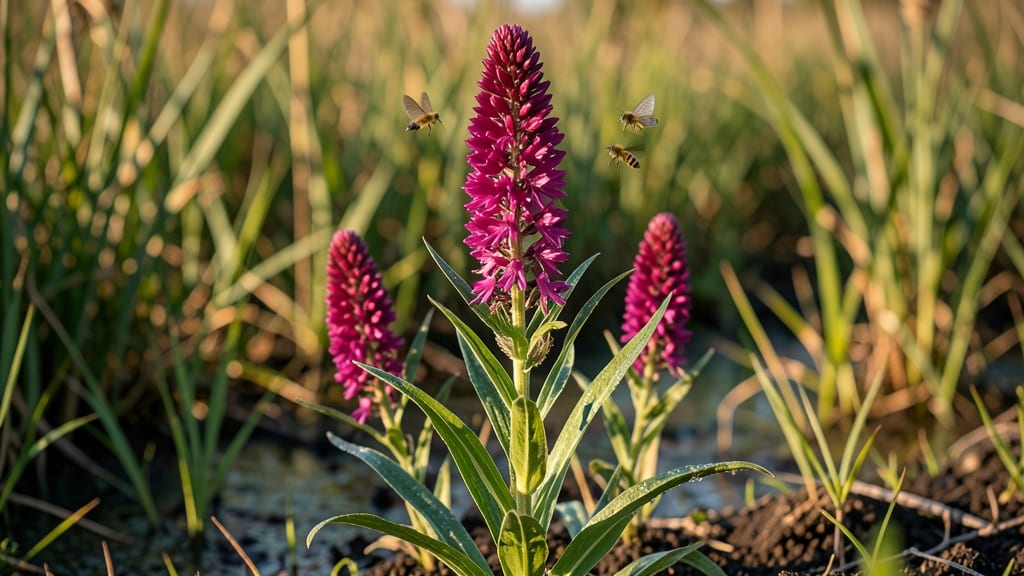
Looking for a pollinator magnet that thrives in full sun and needs almost no care? Purple loosestrife delivers dense clusters of magenta blooms from midsummer to fall, turning wetland edges into buzzing hubs for bees and butterflies.
This native wetland stunner handles full sun to partial shade and even tolerates seasonal flooding, making it ideal for rain gardens or pond borders. Its low-maintenance nature means you’ll spend more time admiring its vibrant spikes than fussing over it—just deadhead spent blooms to encourage more flowers.
Perfect for wildflower gardeners or anyone wanting to support local ecosystems, purple loosestrife’s bold color and ecological benefits make it a must-have for sun-drenched wet areas. 🌻
Sweet Flag with Sword-Shaped Leaves
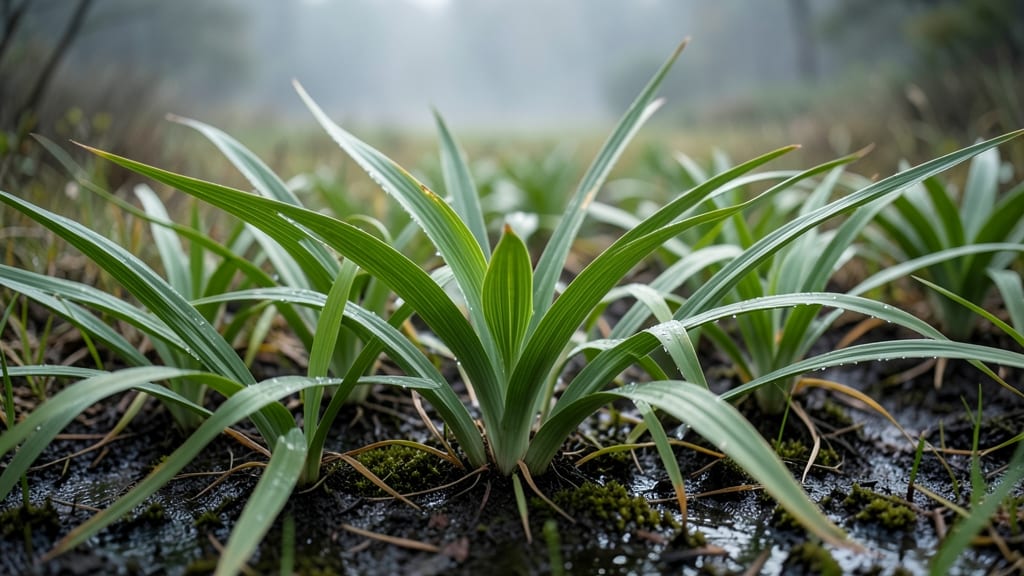
Looking for a fragrant, textured plant that doubles as a natural pest repellent? Meet sweet flag (Acorus calamus), a versatile bog garden staple with sword-shaped leaves that thrive in both sun and shade.
This hardy perennial grows 2–4 feet tall and spreads slowly, making it ideal for wetland edges or container gardens. Its aromatic foliage deters deer, rabbits, and even mosquitoes, while the golden-yellow leaves add a striking contrast to wetland beds. Plant in consistently moist soil—it tolerates seasonal flooding and partial submergence, making it perfect for rain gardens or pond borders.
Gardeners who love low-maintenance, multi-functional plants will appreciate sweet flag’s year-round interest and ability to brighten shady spots where few others grow. 💚
Water Forget-Me-Not with Tiny Blue Flowers
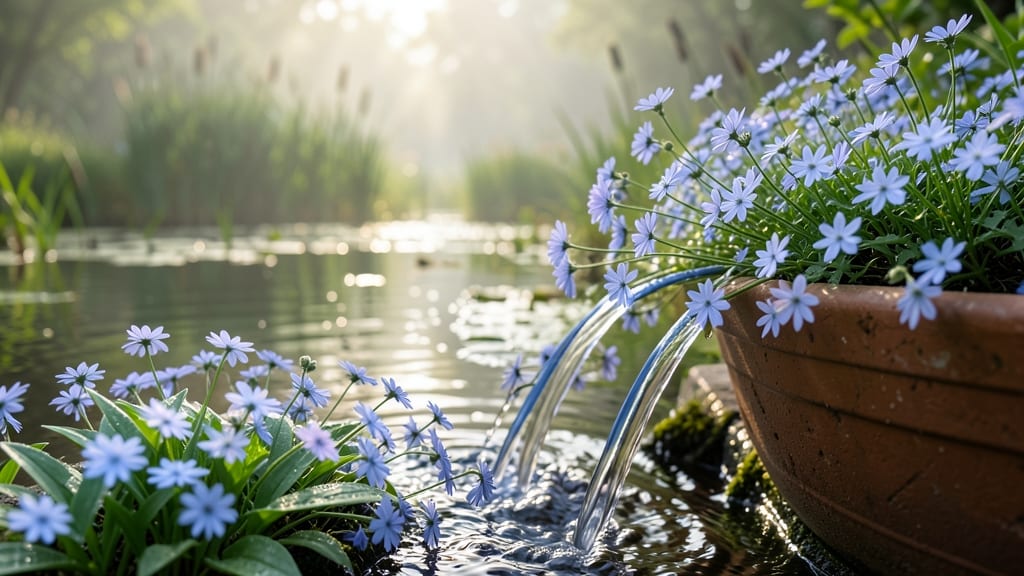
Want to add a touch of whimsy to your wetland garden? Water forget-me-not (Myosotis scorpioides) brings delicate, sky-blue blooms that spill gracefully over pond edges or container rims, creating a fairy-tale effect. These tiny flowers thrive in consistently moist soil—even shallow standing water—making them ideal for bog gardens or rain garden spills.
Plant them in partial to full shade where they’ll cascade beautifully, forming a soft blue curtain that attracts bees, butterflies, and hoverflies. A quick tip: Deadhead spent blooms to encourage continuous flowering from spring through summer. Their self-seeding habit means they’ll naturalize over time, filling gaps effortlessly.
Perfect for small-space gardeners or anyone who loves pollinator-friendly plants, water forget-me-nots are the charming understory stars of wetland beds. 🌷
Marsh Marigold with Golden Blooms
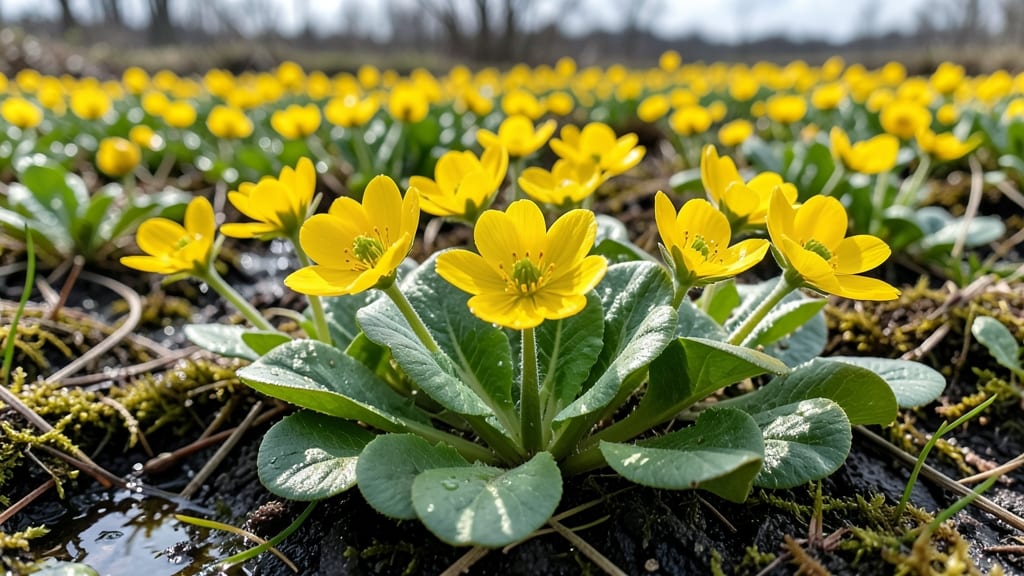
When winter finally loosens its grip and the first hints of spring arrive, marsh marigold (Caltha palustris) bursts onto the scene like a cheerful surprise. This early spring bloomer emerges before most plants, carpeting wetland beds with bright golden-yellow flowers that catch sunlight through dappled branches.
Unlike many bog plants that demand strict light conditions, marsh marigold thrives equally well in full sun or partial shade, making it a versatile choice for sunny wetland edges or shadier corners. Its glossy, rounded leaves stay lush even when submerged in shallow water, while the flowers—often appearing before leaves—create a striking contrast against soggy soil.
Perfect for gardeners who want instant color without waiting for summer, marsh marigold also attracts early pollinators like bees and butterflies. Plant it in clusters for maximum impact, or pair it with later-blooming wetland plants for continuous seasonal interest. 🌻
Cotton Grass with Fluffy Seed Heads
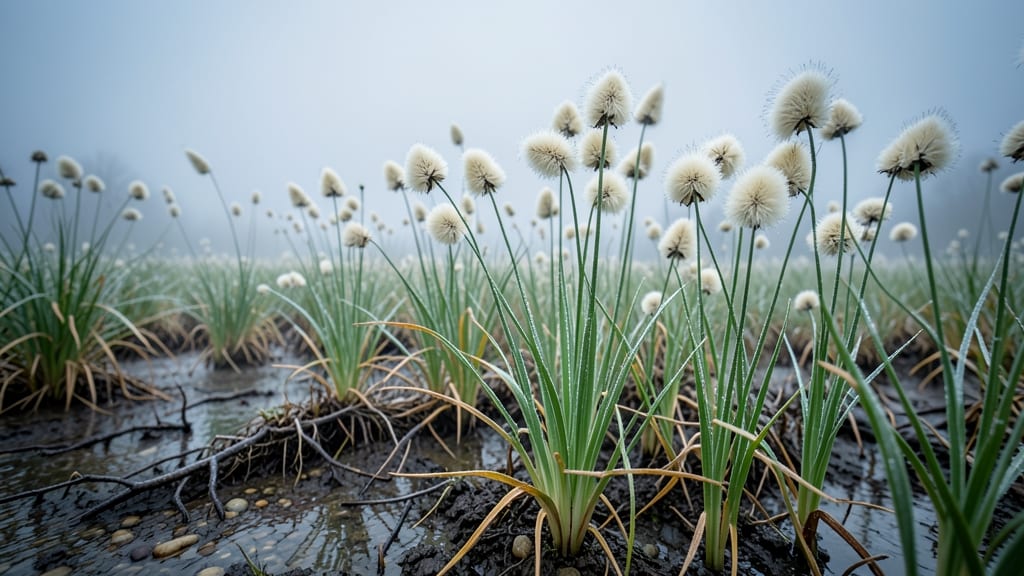
Want a plant that keeps your wetland garden looking magical even after the first frost? Cotton grass (Eriophorum) delivers fluffy white seed heads that sway in the breeze, adding soft texture and movement to winter landscapes.
This full-sun lover thrives in consistently moist to wet soil, making it perfect for bog gardens or pond edges. Its basal rosettes stay evergreen, while the seed plumes emerge in late summer, lasting through winter. For best results, plant in clusters for a dramatic, airy effect—ideal for containers or naturalizing along water features.
Gardeners in cooler climates will appreciate its winter interest, while urban gardeners can use it to soften hard edges. A true standout for texture and seasonal appeal! ✨
Water Mint with Lavender Flowers
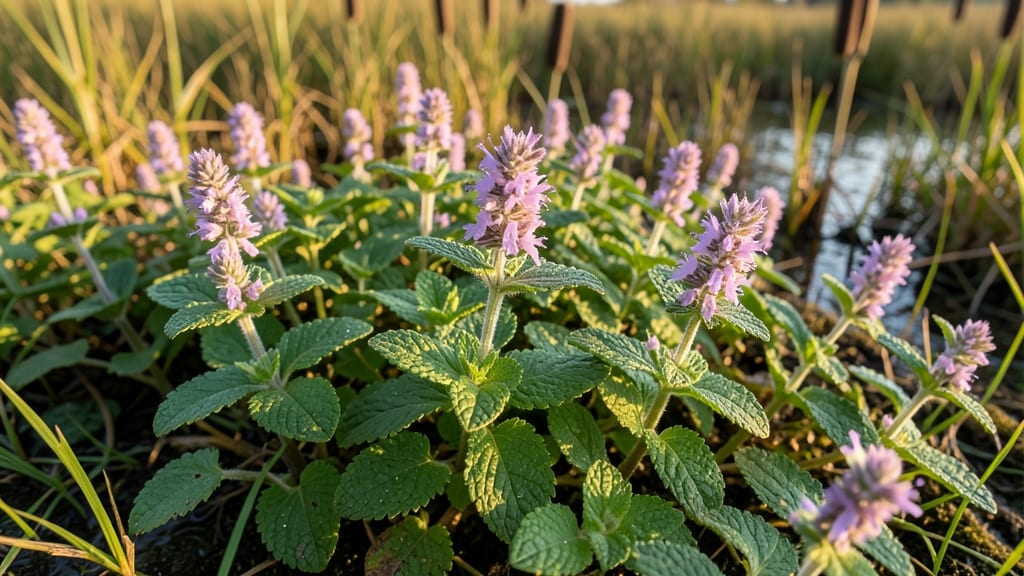
Turn your wetland edges into a fragrant, functional oasis with water mint—a dual-purpose herb that repels mosquitoes while attracting pollinators. Its lavender-pink blooms and aromatic foliage make it a standout in edible bog gardens, and it thrives in 6+ hours of sun or partial shade.
This hardy perennial spreads quickly, making it ideal for naturalizing along stream banks or filling gaps between larger bog plants. Snip leaves for teas or pest-repellent sachets, and watch bees and butterflies flock to its nectar-rich flowers. Just keep it moist—it won’t tolerate dry soil.
Perfect for gardeners who want both beauty and utility, water mint is especially valuable for those with wetland gardens or small ponds. It’s a low-maintenance superstar that works hard for your garden—and keeps biting insects at bay. 🌿
Yellow Flag Iris with Bold Stems
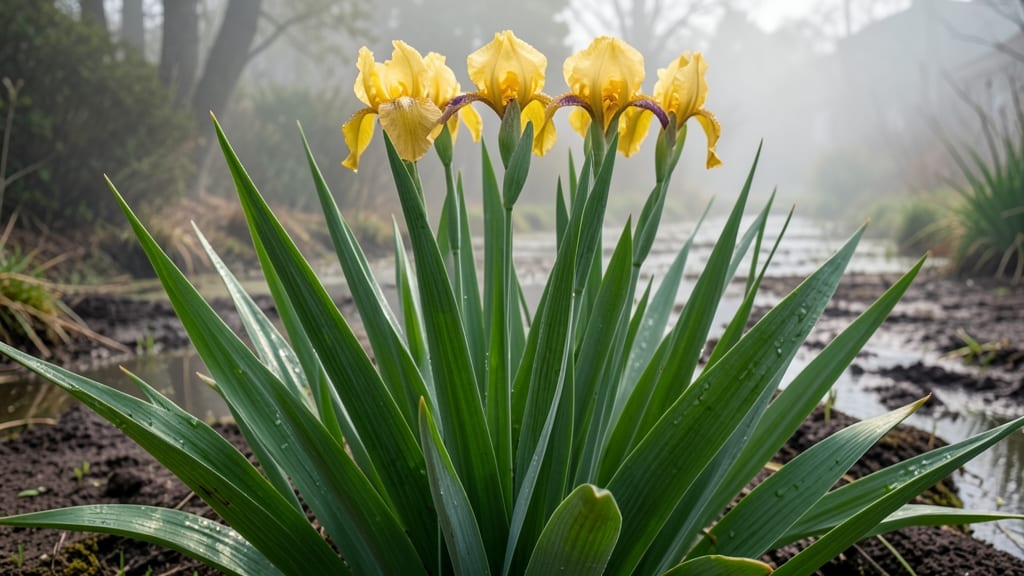
Want a bold statement plant that turns your wetland borders into a golden spectacle? Yellow flag iris (Iris pseudacorus) delivers dramatic sword-like foliage and bright yellow blooms that stand out against any wetland backdrop.
This hardy perennial thrives in full sun and can handle seasonal flooding, making it perfect for rain gardens or pond edges. Its tall, upright stems (reaching 3-4 feet) create vertical interest, while the fragrant blooms attract pollinators from late spring to early summer.
Ideal for gardeners who love low-maintenance yet high-impact plants, yellow flag iris adds year-round structure—even the dried foliage holds visual appeal through winter. 🌟
Sedge Grass with Fine Textured Blades

Tired of muddy patches ruining your wetland garden’s polished look? Sedge grass (Carex spp.) is the unsung hero of bog gardens—its fine, arching blades create a velvety green carpet that tames soggy soil while filling gaps between bold bog plants like yellow flag iris or cotton grass.
Unlike traditional lawns, sedge thrives in standing water or waterlogged soil, spreading slowly to form a dense, erosion-resistant mat. Choose varieties like Carex oshimensis for golden hues or Carex morrowii for deep green texture. Shear lightly in spring to maintain shape, but otherwise, it’s a zero-fuss ground cover that stays lush year-round.
Perfect for gardeners seeking a low-maintenance, drought-tolerant alternative to grass, sedge also works beautifully in containers or as a living edge for ponds. Its adaptability makes it a must-have for any wetland design. 🌿