
Picking
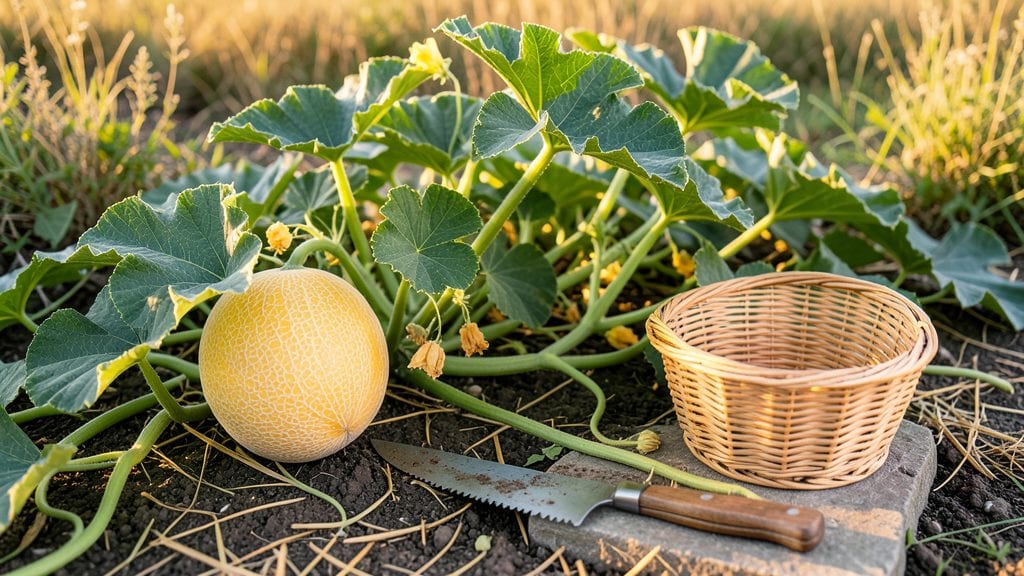
Harvesting cantaloupe from your garden at the right time means the difference between a sweet, juicy treat and a bland, mealy disappointment.
Picking cantaloupe at the wrong time means sacrificing sweetness and flavor—so how do you know when your garden’s golden melons are ready to harvest? Timing everything right ensures juicy, ripe fruit straight from your backyard.
Look for a few key signs: the rind should turn from pale green to a deep, creamy yellow, and the stem near the vine should pull away easily with a slight twist. A sweet, musky aroma at the blossom end is another telltale clue that your cantaloupe is ready.
In this guide, I’ll walk you through the three foolproof ways to test for ripeness, so you never miss the perfect moment to pick your cantaloupe 🌱—plus how to store them for maximum freshness afterward.


3 Visual and physical signs your cantaloupe is perfectly ripe
There’s nothing worse than biting into a cantaloupe that’s still hard or bland—especially when you’ve nurtured it all season. The good news? Knowing the right signs ensures you harvest at peak sweetness. Cantaloupes don’t ripen further after picking, so timing is everything.
I’ve learned the hard way that waiting for the perfect moment makes all the difference between a meal-worthy melon and one that’s barely edible.
Cantaloupes communicate their readiness through subtle but unmistakable cues. From the color of the rind to how it smells and even the way it sounds when tapped, these melons give away their secrets if you know what to look for.
Mastering these visual and physical clues means you’ll never guess again—just harvest with confidence. Let’s dive into the three foolproof ways to tell when your cantaloupe is ready.
-
1. Rind Color Changes
Look for a deep, creamy yellow or beige color on the blossom end (the side that sat on the vine).🟡 Ready vs 🟢 Not Ready -
2. Stem Separation Test
Gently twist the stem end—if it pops off easily with a slight resistance, it’s ripe. No twist? Wait a few days.✅ Stem detaches -
3. Sweet Aroma at the Stem
Sniff near the stem end—a powerful, sweet fragrance (like honeydew or musk) means it’s ready. No smell? Not there yet.👃 Sweet scent detected
Don’t overlook the thump test, a trick I picked up from my grandpa’s garden. Give the melon a firm tap with your knuckles—if it sounds hollow (like a drum), it’s ripe.
A dull thud means it needs more time on the vine. This method works surprisingly well, especially for heirloom varieties that don’t always follow the color rules.
The blossom end (the flat side where the melon rested on the vine) is your best friend. A ripe cantaloupe will have a slightly soft texture here—press gently with your thumb. If it gives just a little but doesn’t feel mushy, you’ve got a winner.
Avoid picking if this area feels rock-hard or squishy, as both can mean the melon is past its prime.
Environmental factors like temperature and humidity can speed up or slow down ripening. In hot, dry climates, cantaloupes ripen faster, so check them every 2-3 days. In cooler areas, they might take longer.
I once left a cantaloupe on the vine too long in a humid summer, and it split open—lesson learned! Pay attention to your local growing conditions and adjust your harvest schedule accordingly.
Pro tip: Harvest in the morning when temperatures are cooler. This preserves the melon’s flavor and texture longer. Use a sharp knife or pruners to cut the stem, leaving about 1 inch of stem attached.
This helps the melon last longer after harvest. Once picked, place it in a cool, dry spot (like a shaded porch) to ripen fully—though it won’t sweeten much more after picking.
Remember, cantaloupes won’t ripen further once harvested, so don’t play the waiting game if you’re unsure. When in doubt, pick early—you can always let it sit for a day or two to finish ripening indoors.
But if you nail these three key signs, you’ll be enjoying the sweetest, juiciest cantaloupes your garden has to offer.
How to test cantaloupe ripeness beyond just looking at it
When your cantaloupe reaches the expected size for its variety, don’t assume it’s ready to pick. Many gardeners make the mistake of harvesting based on size alone, but true ripeness requires deeper checks.
The blossom end of the cantaloupe (the side with the stem) holds key clues about sweetness and readiness. A ripe cantaloupe will show subtle changes here that aren’t always visible from a distance.
Beyond the blossom end, pay attention to the vine’s behavior. A healthy cantaloupe vine will often stop producing new flowers once the fruit is nearing maturity. This shift signals your plant is redirecting energy to ripening existing fruit.
Ignoring these signs can lead to overripe or underripe melons, both of which lack the peak sweetness you’re growing for.
⚠️
Many gardeners assume a cantaloupe is ripe if it reaches 3-6 pounds, but this varies by variety. For example, Hale’s Best matures smaller than Athena, yet both need the same ripeness checks. Overlooking the blossom end or vine behavior can result in melons that are hard, bland, or overly mushy.
Pro Tip: Combine 3 ripeness tests—blossom end color, stem separation, and fragrance—before harvesting. This 3-step method ensures you never miss peak ripeness.
The blossom end should turn from white or pale green to a creamy yellow or tan. This color change indicates the fruit’s sugars have fully developed. Press gently near the blossom end—if it feels slightly soft but not mushy, it’s ripe.
A hard spot means it needs more time, while a mushy texture signals it’s past its prime.
Next, check the stem’s attachment. A ripe cantaloupe’s stem should separate easily from the vine with a slight twist. If it resists, the fruit isn’t ready yet. This test is crucial because cantaloupes continue ripening off the vine, but they won’t sweeten further once picked.
Wait until the stem releases cleanly to avoid underripe fruit.
Finally, trust your nose. A ripe cantaloupe emits a sweet, musky aroma near the stem. If you smell nothing or a sour or fermented scent, the melon is either unripe or overripe. This fragrance is your final confirmation that the fruit’s sugars and flavors have peaked.
Remember, size alone isn’t enough—even if your cantaloupe looks big, it might still be hard and seedy inside. By combining these advanced ripeness tests, you’ll harvest cantaloupes at their sweetest, most flavorful stage. Happy harvesting!