
Advice
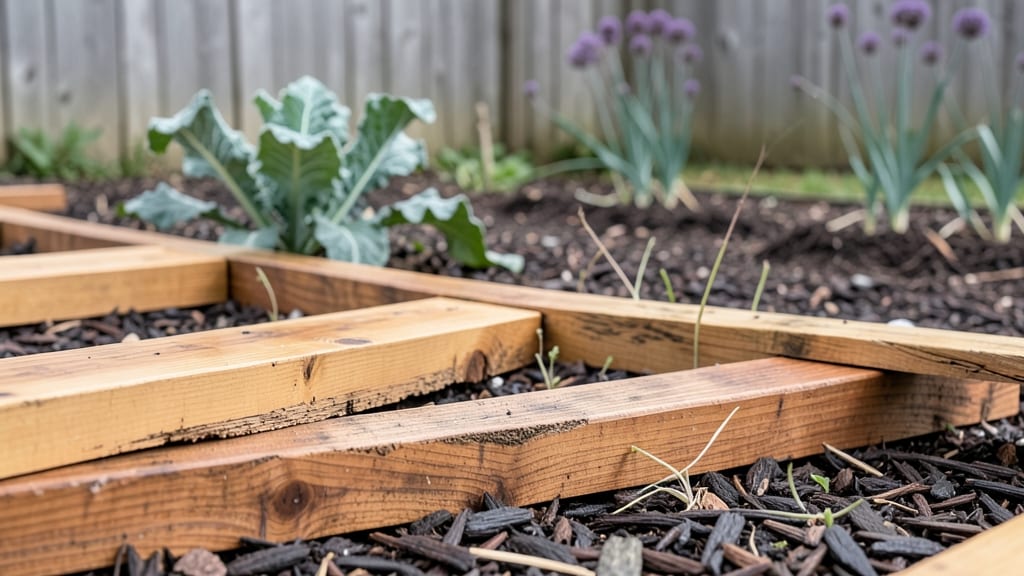
Most treated lumber contains toxic preservatives designed to resist rot and pests, but these same chemicals can seep into garden soil when exposed to moisture. 🌱 For example, older CCA-treated wood contains arsenic, which accumulates in soil and may stunt plant growth or cause leaf discoloration over months.
Even newer ACQ-treated lumber can alter soil chemistry, making it less hospitable for roots. The risk grows with prolonged exposure—what starts as subtle yellowing in leaves can become full-blown root damage if ignored.
That said, not all wood is off-limits. Cedar and redwood naturally resist rot without chemicals, while composite lumber (made from recycled wood fibers and plastic) offers a durable, plant-safe alternative.
Stone borders or galvanized metal edging provide long-term solutions with zero chemical concerns. The key is balancing durability with plant safety—your garden's health depends on it.
💡 In This Article
- Chemicals in Treated Lumber and Their Effects on Soil and Plants
- Safe Garden Wood Alternatives for Raised Beds and Pathways
Chemicals in treated lumber and their effects on soil and plants
Most treated lumber contains chemical preservatives designed to extend its lifespan, but these same compounds can wreak havoc in garden ecosystems.
The two most common treatments—chromated copper arsenate (CCA) and alkaline copper quaternary (ACQ)—both contain heavy metals and synthetic compounds that gradually leach into soil through weathering and moisture exposure.
For instance, CCA-treated wood releases arsenic at rates of about 0.01-0.1 mg per square foot annually, which accumulates over time and becomes bioavailable to plants.
The leaching process accelerates in acidic soils (pH < 6.0) or when wood is buried partially, as moisture and microbial activity break down the preservative matrix. 🌧️ What starts as a microscopic release becomes a measurable concentration—studies show soil arsenic levels can rise by 20-30% within 2-3 years near treated lumber. This isn't just a theoretical risk: gardeners using CCA-treated raised beds have reported stunted growth in vegetables (like tomatoes and peppers) and yellowing leaves with brown edges in ornamentals, symptoms consistent with heavy metal toxicity.
Even newer ACQ-treated lumber poses risks, though less severe. The copper in ACQ can alter soil chemistry by increasing pH levels locally, creating "hot spots" where root uptake is inhibited. Plants near these areas often show reduced flowering and thicker, darker green foliage—a classic sign of copper stress.
The mechanism is straightforward: copper ions disrupt cellular respiration in roots, while arsenic (from CCA) interferes with nutrient uptake, particularly phosphorus and potassium. This dual attack explains why vegetables grown in contaminated soil may develop purple stems (phosphorus deficiency) alongside leaf scorch.
Here's what's actually happening at the plant level: when roots absorb these chemicals, they trigger oxidative stress—an imbalance between free radicals and antioxidants that damages cell membranes. 🌱 In severe cases, this manifests as root burn, where roots turn black and brittle, unable to absorb water.
Fruit-bearing plants (like berries or citrus) are especially vulnerable because their high metabolic demands make them more sensitive to soil disruptions. The damage isn't always immediate; some plants show symptoms months later, by which point the contamination has spread through the soil profile.
Not all treated lumber behaves the same. Micronized copper quaternary (MCQ) treatments, for example, use finer copper particles that leach more slowly, but they still contribute to soil copper buildup over time. The key factor is exposure: above-ground structures (like trellises) pose less risk than buried or soil-contact applications.
However, even minimal contact—like a 1-inch gap between wood and soil—can allow moisture to bridge the gap and facilitate chemical transfer. This is why many gardeners unknowingly create contamination risks when using "treated" lumber for raised bed frames.
What most people don't realize is how persistent these chemicals can be. Arsenic from CCA, for example, has a half-life of 50-100 years in soil, meaning it won't disappear quickly even after removing the wood source.
Copper from ACQ or MCQ, while less persistent, can still remain bioavailable for 5-10 years, continuing to affect plant health long after installation. The solution? Choose untreated, naturally rot-resistant woods like cedar or black locust, or opt for composite materials that mimic wood without the chemical load.