Picking
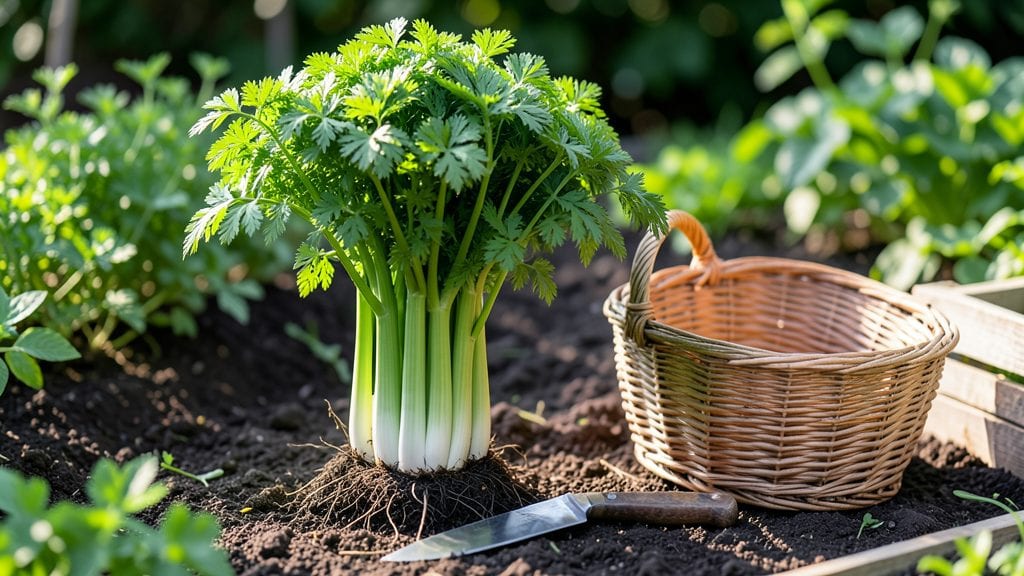
Harvesting garden celery at the right time turns your 🥬 patch into a flavorful, long-lasting crop—if you know the signs.
Timing is everything: cut too early, and you miss out on regrowth; wait too long, and the stalks turn tough and bitter. I’ve learned that the hard way—once I nearly lost a whole plant by harvesting too close to the base.
Here’s how to spot the perfect moment: look for thick, crisp stalks at least 10-12 inches tall, with dark green leaves and a pale base. Master these cues, and you’ll enjoy multiple harvests from the same plant all season.
In this guide, I’ll walk you through the best methods for cutting stems, storing your harvest, and avoiding common mistakes that stunt regrowth.


Optimal harvest timing for garden celery: when to cut stems for best flavor
Harvesting garden celery at the perfect moment transforms your homegrown crop from bland to bursting with flavor.
The key lies in a 4-6 month window after planting when stalks reach their ideal balance of tenderness and regrowth potential. Celery is unique because it rewards patience—cut too soon, and you’ll miss out on full flavor development; wait too long, and the stalks become fibrous and bitter.
Understanding the visual cues and seasonal adjustments ensures you harvest crisp, flavorful stems while preserving the plant’s ability to regrow.
For most varieties, the ideal harvest time falls between 120-160 days after sowing, depending on your climate. In cooler regions like USDA Zone 6a, spring-planted celery typically reaches harvest readiness by late May to June, while fall-planted varieties in warmer zones may be ready by September or October.
The exact timing depends on stalk thickness, leaf color, and environmental conditions, which we’ll explore in detail below to help you nail the perfect harvest window.
summary-table
Harvest Indicator
Specifics
Action
Stalk Height
10-12 inches tall (minimum)
Ready for first harvest
Stalk Thickness
1/2 inch to 3/4 inch diameter
Optimal for tenderness
Leaf Color
Deep green, vibrant, no yellowing
Healthy and flavorful
Base Color
White or pale green at stalk base
Sign of maturity
Seasonal Adjustments
Cooler climates: May-June; Warmer climates: Sept-Oct
Align with frost-free window
Regrowth Potential
Leave 4-6 inches of stalk after cutting
Encourages new growth
The stalk diameter is one of the most reliable indicators of harvest readiness. Aim for stalks that are at least 1/2 inch thick, but no thicker than 3/4 inch.
Thinner stalks often lack the crisp texture and sweet flavor you crave, while overly thick stalks can become woody and tough. To test readiness, gently squeeze a stalk near the base—it should feel firm but not hard, with a slight give that signals optimal tenderness.
Pay close attention to the leaf color and overall plant health. Dark green leaves indicate a thriving plant, while any yellowing or wilting suggests nutrient deficiencies or water stress. The leaves should also appear vibrant and upright, not drooping or curling.
If you notice yellowing at the base of the leaves, it could signal over-maturity or root stress, both of which can compromise flavor and regrowth potential.
Seasonal adjustments are critical for optimal harvest timing, especially if you’re gardening in hot climates or cooler regions. In USDA Zone 6a, for example, spring-planted celery benefits from cooler temperatures, allowing for an earlier harvest in late May.
Conversely, in warmer southern climates, fall planting yields better results, with harvests stretching into October or November. Always monitor your local frost dates—celery is sensitive to frost and should be harvested before temperatures drop below 25°F.
One of the biggest mistakes gardeners make is cutting stalks too close to the base, which can stunt regrowth or even kill the plant. Always leave 4-6 inches of stalk above the soil line when harvesting.
This remaining stem acts as a growth reservoir, allowing the plant to regenerate new leaves and stalks. If you’re aiming for multiple harvests, space your cuts 2-3 weeks apart to give the plant time to recover between harvests.
For extended harvest seasons, consider succession planting. Start your first batch in early spring (February-March) and follow with a second planting in late summer (July-August). This strategy ensures a steady supply of fresh celery while aligning with the plant’s natural growth cycles.
In container gardening, harvest timing may shift slightly due to limited root space, so monitor stalk thickness more closely and be prepared to harvest slightly earlier than in-ground plants.
After harvesting, store your celery properly to preserve its freshness and flavor. Trim the base and place stalks in a sealed container with a damp paper towel to retain moisture. Store in the crisper drawer of your refrigerator, where it should stay crisp for up to 2 weeks.
If you notice wilting or a loss of crispness, it’s a sign that the celery has passed its prime and may benefit from being used in soups or stews where texture is less critical.
Finally, don’t overlook the post-harvest care of your celery plant. After cutting, water the plant deeply to replenish moisture and apply a balanced fertilizer (like 5-10-10) to encourage regrowth. Mulch around the base to retain soil moisture and protect roots from temperature fluctuations.
With proper care, a single celery plant can yield multiple harvests over several months, making it one of the most rewarding vegetables to grow.
Step-by-step guide: how to harvest celery stems without killing the plant
Harvesting garden celery correctly ensures you get crisp, flavorful stems while giving your plant the best chance to regrow. The key is precision—cutting too aggressively can damage the root system, while improper technique may invite pests or disease.
I’ve learned that using the right tools and timing makes all the difference in extending your harvest season.
Before you grab your pruners, focus on cutting stems at the right height and angle. Avoid tugging or pulling stalks, as this can uproot the plant or leave jagged cuts that heal poorly.
Instead, aim for clean cuts just above a leaf node—this encourages new growth from the remaining plant. Let’s break it down step by step.
How to Harvest Celery Stems Safely
- Step 1: Choose mature stalks that are at least 12 inches tall with a diameter of 1/2 inch. Look for dark green leaves and firm, crisp texture.
- Step 2: Sterilize your pruning shears or sharp knife with rubbing alcohol to prevent spreading bacterial diseases. Clean tools reduce the risk of contamination.
- Step 3: Cut stems at a 45-degree angle, leaving 1-2 inches of stubble above the leaf node. This prevents water from pooling and promotes faster regrowth.
- Step 4: Harvest outer stalks first, working inward to avoid shading the center. This method encourages even growth and prevents overcrowding in the plant’s core.
- Step 5: After harvesting, water deeply to replenish moisture lost during cutting. Add a balanced fertilizer (5-10-10) to support new growth and recovery.
- Step 6: Monitor the plant for signs of stress, like yellowing leaves or wilting. If you see these, reduce harvesting frequency and focus on soil moisture and nutrient balance.
Post-harvest care is just as critical as the cutting process itself. Once you’ve trimmed your celery stalks, give the plant a light feeding with a nitrogen-rich fertilizer to encourage leafy regrowth.
I’ve found that compost tea or a diluted fish emulsion works wonders for reviving plants after harvest. Keep the soil consistently moist but not soggy—celery roots are shallow and sensitive to waterlogging.
If you notice stunted growth or yellowing leaves after harvesting, you may be overdoing it. Celery plants can only handle so much stress, and over-harvesting weakens their ability to recover.
Limit yourself to one-third of the stalks at a time, and space harvests at least 2-3 weeks apart to allow the plant to bounce back. Patience pays off with a longer harvest season!
With the right technique, you can enjoy multiple harvests from a single celery plant. I’ve extended my harvest season by up to 6 weeks by following these steps and giving my plants the care they need.
The key is balance—harvest wisely, care for the plant, and you’ll be rewarded with fresh, homegrown celery all season long. 🥬