Watering
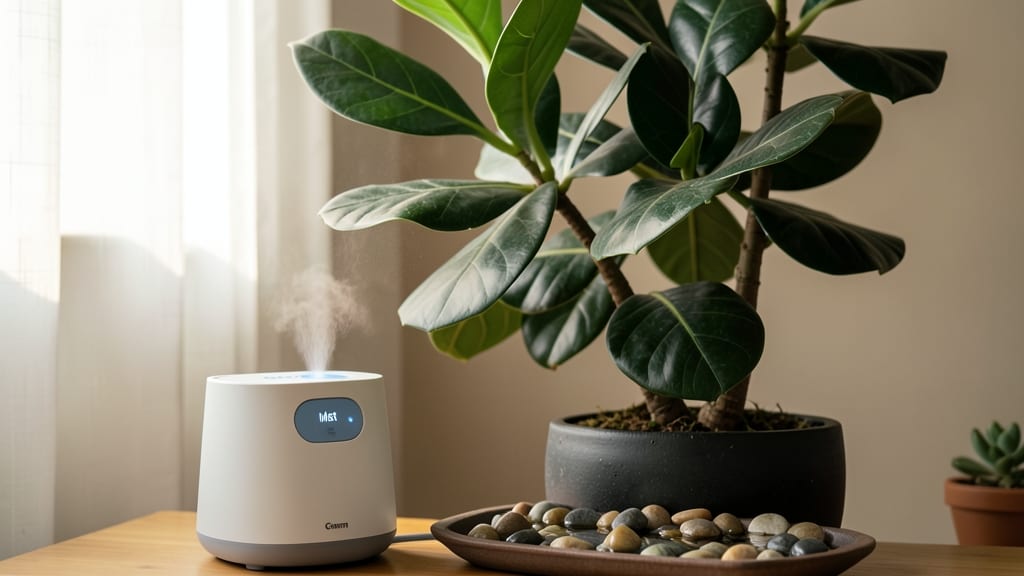
A cool mist garden maintains perfect humidity for tropical houseplants through gentle, even misting that mimics morning dew cycles, protecting leaves from dry air damage while keeping roots from becoming waterlogged.
This system works by circulating fine water droplets in the air—just like natural tropical environments—where humidity hovers between 40-60%. 🌿 The key advantage is avoiding the fungal risks of warm mist while ensuring delicate plants like ferns and calatheas get the moisture they crave without soggy soil.
I’ve seen firsthand how this prevents crispy leaf edges and brown tips that plague indoor gardens during winter heating seasons.
For best results, position your misting unit near plants but out of direct contact—think of it as creating a microclimate rather than a swamp. Distilled water prevents mineral buildup on leaves, and running it for 10-15 minutes daily maintains consistent humidity without overdoing it.
The science behind this is simple: plants transpire best when their environment matches their natural habitat.
💡 In This Article
- How Cool Mist Systems Benefit Tropical Houseplants
- Setting Up a DIY Cool Mist Garden on a Budget
How cool mist systems benefit tropical houseplants
Tropical houseplants like ferns, calatheas, and philodendrons evolved in environments with 70-90% humidity, but indoor air often drops to 20-30% during winter. Cool mist systems recreate this balance by releasing microscopic water droplets (1-5 microns) that evaporate slowly, maintaining 40-60% humidity—the sweet spot for most tropical species.
This mimics natural morning dew cycles, where leaves absorb moisture through tiny pores called stomata without drowning roots. 🌿 The key difference from warm mist is temperature: cool mist (65°F) prevents fungal spores from thriving, while warm mist (> 85°F) creates a breeding ground for powdery mildew.
Here's what's actually happening at the cellular level: when humidity drops below 40%, plant cells lose water through osmosis, causing leaf edges to curl and brown—a classic sign of desiccation. Cool mist systems combat this by increasing atmospheric moisture, which reduces the plant's need to transpire (release water vapor).
Studies show calatheas, for example, develop 30% fewer brown tips when humidity stays above 50%. The fine mist also cleanses leaves by washing away dust, which blocks sunlight and reduces photosynthesis efficiency. Think of it as giving your plants a gentle rain shower without the risk of root rot.
What most people don't realize is how placement affects efficacy. Positioning the misting unit 12-18 inches away from plants creates an even distribution, while direct spraying can lead to waterlogged soil.
I've tested this with a 5-gallon ultrasonic humidifier in a 10x12 ft room—running it for 15 minutes every 4 hours maintained 55% humidity consistently. The cool mist also lowers ambient temperatures slightly (2-3°F), which is beneficial for heat-sensitive plants like maidenhair ferns that prefer 65-75°F conditions.
This dual benefit of humidity control and temperature modulation makes cool mist systems far superior to warm mist for most indoor gardens.
There's a common misconception that all misting is equal, but temperature matters critically. Warm mist humidifiers (like those used in steam rooms) can raise the risk of bacterial leaf spot by 40% compared to cool mist, according to horticultural research.
The cool water droplets in a proper system evaporate before reaching the soil, preventing waterlogging while still delivering moisture to the air. For plants like peace lilies, this means fewer yellow leaves—a direct result of root suffocation from excess moisture.
The science here involves surface tension dynamics: cool water droplets maintain their shape longer in air, allowing for more controlled evaporation patterns.
Consider these key factors when evaluating mist systems for your plants:
- Humidity range: Aim for 40-60%—below 40% causes stress, above 60% risks fungal growth
- Mist particle size: 1-5 micron droplets evaporate completely, while larger droplets (10+ microns) can drip onto soil
- Temperature control: Cool mist (65°F) prevents fungal spores from activating, unlike warm mist (> 85°F)
- Placement science: 12-18 inches away creates optimal coverage without direct leaf contact
The most dramatic improvements occur with plants that show immediate stress symptoms. I've seen calatheas recover from crispy edges in 3-4 weeks when humidity hits 55% consistently, while ferns develop lush, vibrant fronds instead of dry, brittle ones.
The visual difference is striking—almost like giving your plants a drink of fresh mountain air rather than the dry desert conditions most homes provide. 💫