Size
The average garden size for homeowners typically falls between 100 and 200 square feet, though practical backyard gardens can span from 50 to 400 square feet based on individual needs and growing conditions. Compact spaces often yield more efficient results, while larger areas accommodate serious gardeners or food production goals.
Most homeowners I talk to discover that garden size isn't about bigger being better—it's about matching your plot to your actual needs. A 50-square-foot raised bed can produce more food than a 200-square-foot neglected patch, while a 400-square-foot garden might be overkill for someone growing herbs and flowers.
Climate plays a huge role too: desert gardeners prioritize drought-resistant layouts, while cooler regions focus on season extension techniques. 🌱 The key is starting small, testing what works, and scaling up only when you're ready to commit the time.
For example, urban gardeners often maximize vertical space with trellises or hanging planters, while suburban plots might benefit from square-foot gardening grids. I've seen 20-square-foot container gardens outperform 100-square-foot traditional beds because they're better maintained.
The right size depends on your goals—whether you're growing food, creating beauty, or just enjoying the process.
💡 In This Article
- Factors Influencing Optimal Garden Size
- Space-Saving Garden Layouts for Small Plots
Factors influencing optimal garden size
Climate zones dramatically reshape what's possible in your plot. For instance, Mediterranean climates with 300+ sunny days annually allow year-round planting in 100 sq ft spaces, while colder regions like the Pacific Northwest may need 400 sq ft just to grow cool-season crops effectively.
The USDA hardiness zones directly impact plant selection—zones 5-7 often require larger gardens for seasonal variety, whereas zones 8-10 can thrive with smaller, high-density layouts. 🌞 What most people overlook is how microclimates within yards create temperature variations of 5-10°F, allowing clever gardeners to grow tropical plants in sheltered 20 sq ft pockets even in zone 6.
Family needs create the most practical constraint. A single person might excel with a 50 sq ft container garden producing 20-30 lbs of tomatoes annually, while a family of four needs 200-300 sq ft for staple crops like potatoes, corn, and beans.
The "square foot gardening" method proves this mathematically: 1 sq ft yields 16 heads of lettuce or 4 tomato plants, meaning your 100 sq ft plot could feed two people for months.
Urban families often prioritize high-calorie crops like sweet potatoes (which produce 5 lbs per plant in 1 sq ft) over ornamental plants that take up space without returns.
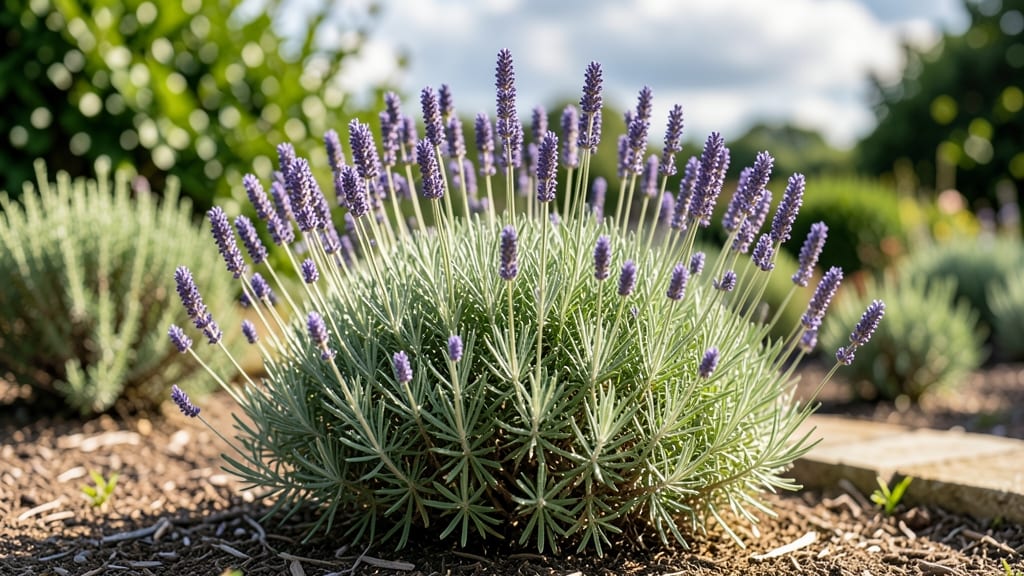
Plant types demand completely different space allocations. Vegetable gardens require 3-4 times more space than ornamental gardens for the same visual impact. A 100 sq ft vegetable plot might produce 50 lbs of food, while the same area filled with perennials like lavender or daylilies would yield zero edible harvests.
The science behind this lies in plant spacing requirements—tomatoes need 18-24 inches between plants, while marigolds thrive in 6-inch spacing. This 1:4 ratio explains why food gardens often appear "crowded" compared to ornamental beds.
Soil quality creates invisible boundaries that often determine whether you'll need 50 sq ft or 400 sq ft. Poor urban soils with 1-2% organic matter may require 30% more space to achieve the same yields as rich suburban loam with 5-6% organic matter.
The difference comes from nutrient density—healthy soil feeds plants more efficiently, reducing the need for expansion. For example, compost-amended soil can produce 25% more zucchini in 100 sq ft than unamended dirt.
This is why urban gardeners often combine raised beds (which they control) with vertical growing to compensate for limited space and marginal soil quality. 🌱
Urban vs suburban constraints create the most dramatic size differences. The average urban lot offers 250 sq ft of usable space, with 60% of that often taken by driveways or sidewalks, leaving 100 sq ft for gardening.
Suburban homes typically have 500-1,000 sq ft backyards, but only 20-30% gets used for gardens due to lawn priorities. What's fascinating is how urban gardeners maximize yield through intensive planting methods—growing 16 carrots per sq ft in containers versus 4 per sq ft in traditional rows.
This explains why some city dwellers with 50 sq ft produce more food than suburban neighbors with 300 sq ft of underutilized space.
Here's the counterintuitive truth: The largest gardens (400 sq ft) often belong to people who have failed with smaller spaces. What starts as a 100 sq ft experiment frequently expands when gardeners discover how much they enjoy the process. The key insight?
Begin with what you can realistically maintain—50 sq ft of well-tended plants will always outperform 300 sq ft of neglected soil. The optimal size isn't about square footage; it's about matching your plot to your time, skills, and actual growing goals. 💫