
Pests
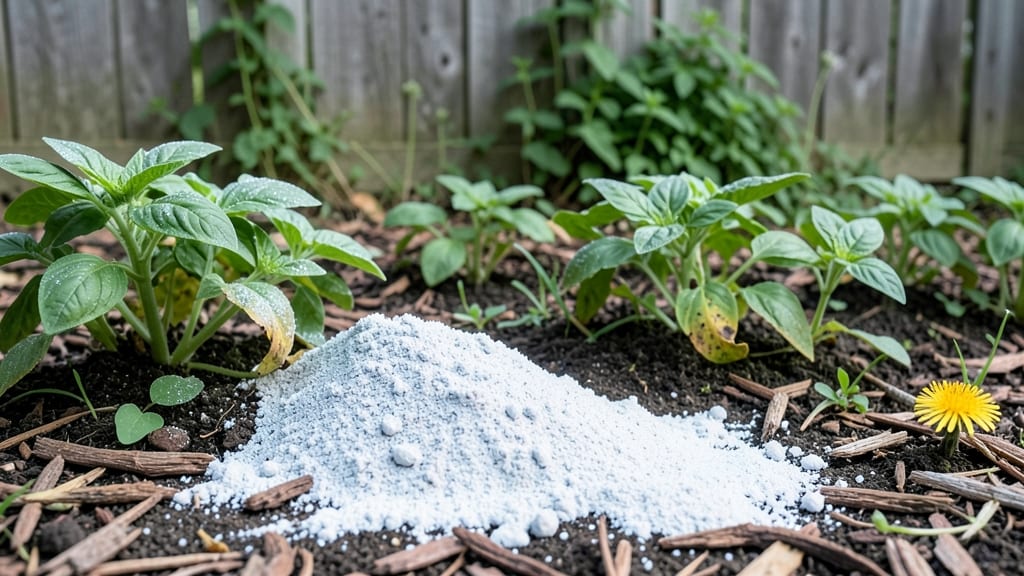
Diatomaceous earth in garden beds is a natural way to deter pests like slugs, ants, and aphids by dehydrating their bodies. Spread 1–2 pounds per 100 square feet in dry conditions, then reapply after rain or irrigation to keep it effective. Be cautious near edible plants during harvest to minimize residue.
This fine, powdery substance works by creating microscopic cuts in pests' exoskeletons, which then absorb moisture from their bodies until they die. 🌱 It's particularly effective against soft-bodied insects but won't harm earthworms or beneficial insects like bees.
The key is applying it when soil is completely dry—moisture clumps the powder, reducing its effectiveness. I've found it works best in early morning or late evening when pests are most active and humidity is lower.
For best results, use a dusting tool to distribute it evenly along garden borders or directly around plants. Reapply every 7–14 days or after heavy rain to maintain the protective barrier. Pairing it with companion plants like marigolds can enhance its pest-deterring effects while adding beauty to your garden.
💡 In This Article
- How Diatomaceous Earth Works Against Garden Pests
- Best Practices for Applying Diatomaceous Earth in Soil
How diatomaceous earth works against garden pests
Here's what's actually happening when you sprinkle this powdery substance: diatomaceous earth consists of fossilized remains of diatoms—microscopic algae with razor-sharp edges measuring 5-50 microns (about 1/100th the width of a human hair).
When pests like aphids or slugs crawl through it, these microscopic "glass shards" create tiny punctures in their waxy exoskeletons. 🔥 This disrupts their protective barrier, causing rapid moisture loss through a process called osmotic dehydration—their bodies essentially dry out from the inside within 24-72 hours.
The effectiveness depends on direct contact—pests must walk across the powder to be affected. This is why it works best against soft-bodied insects (aphids, mealybugs) and slugs, but has limited impact on hard-shelled pests like beetles.
Unlike chemical pesticides that rely on neurotoxins, diatomaceous earth acts purely physically, making it safer for plants and beneficial insects like bees and ladybugs when used correctly. The powder's food-grade quality means it breaks down harmlessly in soil over time through natural weathering processes.
Why dry conditions matter: moisture causes the powder to clump, reducing its abrasive properties by 70-80% effectiveness. When applied to damp soil, the particles stick together like wet sand, failing to create those critical microscopic cuts.
That's why early morning or late evening applications work best—humidity is lower, and pests are most active when the ground is dry. In my experience, a light dusting (1/4 inch thick) creates an invisible but deadly barrier that persists until rain or irrigation washes it away.
Compared to chemical alternatives, diatomaceous earth offers several advantages: it's non-toxic to mammals (when using food-grade versions), doesn't contribute to pesticide resistance, and breaks down completely in the environment. However, it requires more frequent reapplication (every 7-14 days) compared to synthetic pesticides that may last weeks.
The trade-off is worth it for organic gardeners who want to avoid synthetic chemicals while maintaining effective pest control. For maximum impact, combine it with cultural practices like crop rotation and beneficial insect habitats.
What most people don't realize is how selective this approach can be. While it targets harmful pests, earthworms and other soil-dwelling creatures remain unaffected because they don't crawl across the surface where the powder is applied.
This selectivity makes it an excellent choice for no-till gardening systems where preserving soil biology is crucial. The powder's natural origin means it won't leave chemical residues on your produce, making it particularly valuable for organic certification programs.
For visualizing the scale: imagine a single aphid (about 1/16 inch long) walking across a surface covered with 10,000+ microscopic glass shards per square inch. Each step creates dozens of microscopic punctures in its delicate exoskeleton.
This mechanical action is what distinguishes diatomaceous earth from chemical pesticides—it's a physical barrier rather than a poison. The result is a garden pest control method that's both effective and environmentally benign when used properly. ✨