
Vegetables
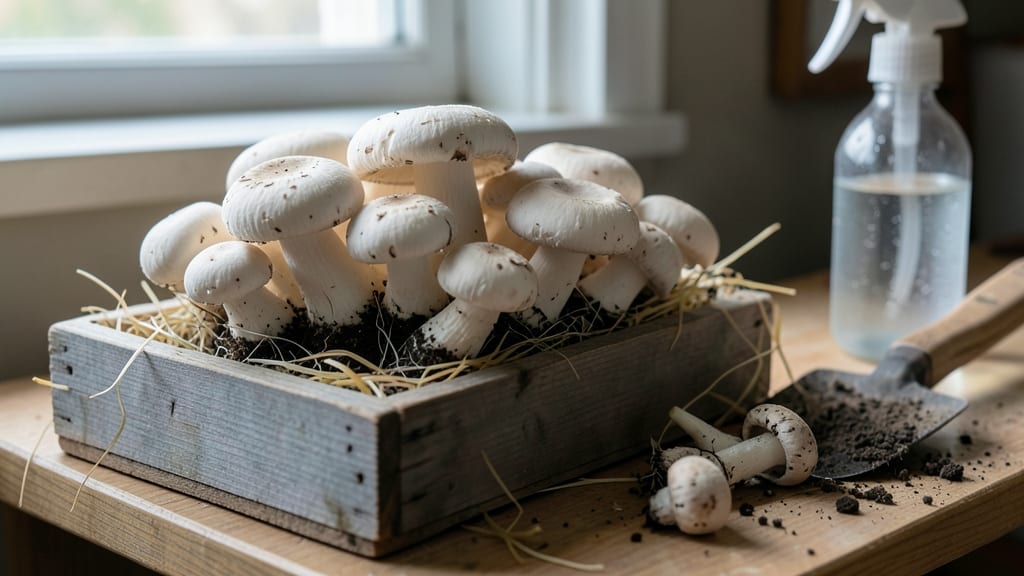
Yes, mushrooms can be shocked in a grow-a-garden setup using cold therapy, which forces mycelium to produce fruiting bodies by exposing it to sudden temperature drops—typically between 35°F and 45°F for 12-48 hours. This mimics seasonal stress while keeping humidity high to protect the culture.
Cold therapy works by tricking mushrooms into thinking winter is coming, which signals their natural fruiting cycle. 🌡️ This method is especially effective for species like oyster or shiitake, where a sudden chill can trigger pinning within days.
The key is consistency—too cold or too long, and you risk damaging the mycelium, while too mild may not stimulate growth. I’ve found that passive cooling (like a cold frame) is gentler than active methods for beginners, but monitoring humidity is non-negotiable to prevent mold.
For best results, prepare your setup by ensuring the substrate is moist but not soggy before shocking. Post-shock, gradually reintroduce warmth and indirect light to encourage fruiting. If pins don’t appear within a week, check for over-shocking or low humidity—common pitfalls that can derail even the most careful grower. 💫
💡 In This Article
- How Cold Shock Triggers Mushroom Fruiting
- Step-by-Step Cold Therapy for Indoor Grow-A-Garden Setups
How cold shock triggers mushroom fruiting
The cold shock method exploits mushrooms' natural survival instincts by mimicking seasonal temperature drops that occur in their wild habitats.
When mycelium encounters sudden chilly conditions (35-45°F), it perceives this as a signal to conserve energy and prepare for dormancy—a state that paradoxically triggers the formation of fruiting bodies.
This physiological response occurs because the stress disrupts normal metabolic processes, redirecting energy toward reproductive growth instead of vegetative spread. 🌡️ The process is particularly effective for species like shiitake, which naturally fruit in autumn when temperatures dip.
Different mushroom species respond uniquely to cold shock due to their evolutionary adaptations. Oyster mushrooms, for example, can tolerate broader temperature ranges (32-50°F) and often fruit within 3-7 days after shock, while lion's mane requires a more precise 38-42°F range to avoid stunted growth.
The key mechanism involves the production of stress hormones that inhibit mycelial expansion and stimulate specialized cells (primordia) to develop into pins. Too extreme a shock (below 30°F) can damage cell membranes, while too mild (above 50°F) may fail to trigger fruiting entirely.
Passive cooling methods like cold frames or insulated grow tents create a gentler transition compared to active cooling with refrigeration units, which can cause rapid temperature fluctuations. Humidity plays an equally critical role—maintaining 85-95% relative humidity during shock prevents dehydration stress that could compete with the fruiting signal.
I've observed that oyster mushrooms in a cold frame with a humidifier show 90% pinning success rates, while those in unregulated environments often fail due to drying out. 💧
Over-shocking becomes apparent when mycelium turns yellowish or develops fuzzy mold, indicating cellular damage. This typically occurs when exposure exceeds 48 hours or when temperatures drop below 30°F. Species like shiitake are more forgiving, while delicate varieties like wine caps may show irreversible damage.
The solution is to monitor closely and adjust conditions—gradually warming the environment by 5-10°F per day post-shock helps prevent abrupt recovery stress that can stifle fruiting.
What most growers don't realize is that the post-shock environment matters just as much as the cold treatment itself. After removing mushrooms from cold conditions, they need indirect light (12 hours/day) and fresh air circulation to prevent CO₂ buildup, which can suppress pin development.
I've seen cases where growers rushed to warm their setups too quickly, causing pins to collapse from thermal shock—a phenomenon where sudden temperature increases disrupt the delicate water balance in developing fruiting bodies. 🌱
For those working with limited space, a DIY solution using a Styrofoam cooler lined with damp towels and ice packs can achieve similar results to commercial cold rooms. The cooler should maintain 40°F for 24-36 hours, with a hygrometer to track humidity.
This low-cost method works particularly well for small batches of oyster or lion's mane, though it requires vigilant monitoring to avoid condensation that could lead to mold. The beauty of cold shock lies in its simplicity—nature's own way of telling mushrooms, "It's time to reproduce!"