
Advice
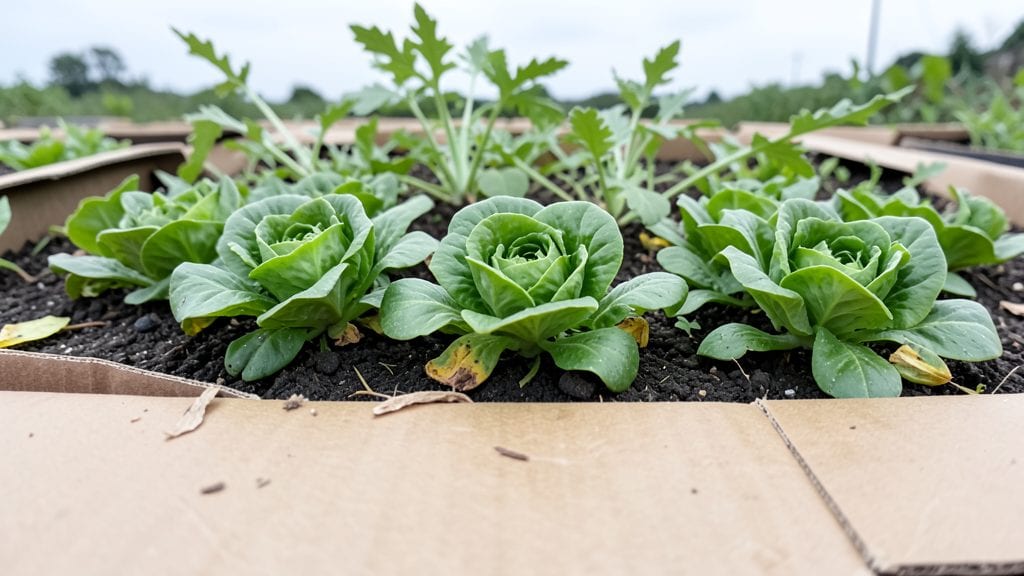
You can use cardboard in your garden safely when it's plain, unbleached, and free of tape or ink, as it decomposes into mulch, blocks weeds, and enhances soil structure over time. Just avoid treated or glossy types to keep chemicals out of your soil.
Cardboard breaks down quickly into organic matter, adding carbon-rich nutrients that improve soil fertility over time. 🌱 The key is preparation—removing any tape or labels prevents unwanted chemicals from leaching into your garden.
I’ve found that layering it under plants (especially in spring) creates a natural weed barrier while retaining moisture better than straw or wood chips. Just remember to bury the edges to discourage pests from nesting.
For best results, pair cardboard with nitrogen sources like grass clippings or coffee grounds—they speed up decomposition and balance the carbon-heavy material. This combo turns into rich compost within a few months, making it a win-win for your garden’s health.
Just avoid thick piles, which can trap too much moisture and invite mold.
💡 In This Article
- How Cardboard Mulch Affects Soil Health
- Step-by-Step Guide to Preparing Cardboard for Garden Use
How cardboard mulch affects soil health
Cardboard mulch transforms into a nutrient-rich soil amendment through a process called decomposition, where microbes break down the cellulose fibers into simpler organic compounds. Unlike synthetic mulches, cardboard contributes a steady supply of carbon—about 40-50% of its dry weight—which feeds beneficial soil organisms like earthworms and fungi.
This carbon-rich addition improves soil structure by binding particles together, creating pore spaces that enhance aeration and root growth. Over 3-6 months, properly prepared cardboard decomposes into a dark, crumbly material that resembles well-aged compost.
The moisture-retaining properties of cardboard come from its ability to block sunlight while allowing water to penetrate. When layered 2-3 sheets thick and covered with 2-3 inches of soil or mulch, it reduces evaporation by up to 40% compared to bare soil.
This is particularly valuable during dry spells, as the cardboard acts like a sponge, holding 2-3 times its weight in water before releasing it gradually to plant roots. Unlike straw mulch—which loses moisture quickly—or wood chips—which can repel water when dry—cardboard maintains consistent soil moisture without clumping.
Weed suppression works because cardboard smothers existing weeds by blocking sunlight, while its decomposition releases allelopathic compounds that inhibit new seed germination.
Studies show it can reduce weed growth by 90% when used correctly, though thick layers (4+ sheets) may create anaerobic conditions that slow decomposition and attract pests like slugs.
The key is balance: 2-3 sheets with edges buried prevents pests while still allowing air and water through—unlike dense plastic sheets that suffocate soil entirely.
Potential risks arise from improper preparation. Treated cardboard (like that from packaging) contains formaldehyde or polyvinyl chloride (PVC), which can leach toxins into soil. Even ink from glossy magazines may contain heavy metals like lead. The solution?
Use plain, unbleached cardboard from cereal boxes or egg cartons—these break down cleanly without leaving chemical residues. For extra safety, soak the cardboard in water for 24 hours before using to remove any residual dust or adhesives.
Compared to straw mulch—which decomposes faster but offers little nutrient value—cardboard provides a carbon-rich boost that improves soil fertility over time. Wood mulch, while long-lasting, can acidify soil as it breaks down, whereas cardboard maintains a neutral pH. The trade-off?
Cardboard requires more frequent replenishment (every 3-6 months) compared to wood chips (which last 1-2 years). For organic gardeners, pairing cardboard with nitrogen sources like coffee grounds or manure accelerates decomposition while creating a balanced soil food web.
Seasonal timing matters too. In spring, cardboard helps warm soil faster than wood mulch by absorbing sunlight, while in summer, its moisture-retaining properties prevent drought stress. However, in fall, thick layers may trap too much moisture, promoting mold growth—so always keep it 2-3 sheets thick and well-aerated.
The result? Healthier plants, fewer weeds, and soil that retains its structure year after year.