
Vegetables
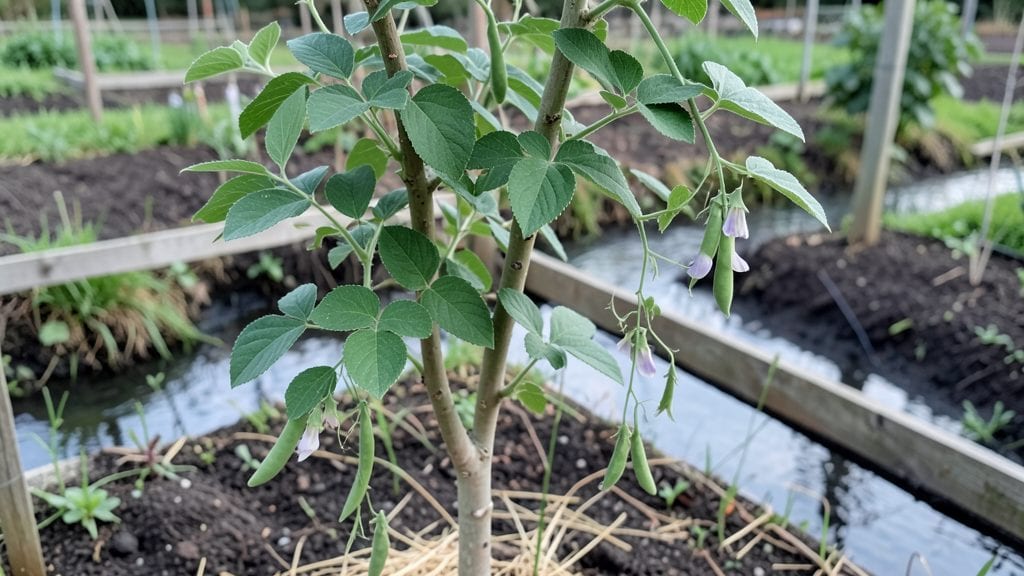
The Bible’s garden imagery starts with Eden, where God planted a thriving sanctuary to reflect His creative power and humanity’s purpose to care for creation. 🌿 This original garden contrasts sharply with later biblical themes of hardship after the Fall, showing how cultivation became both a divine gift and a reminder of our responsibility.
Even in the New Testament, gardens symbolize God’s provision—like the vineyard in Song of Solomon or the heavenly river in Revelation—tying earthly gardening to eternal promises.
What’s fascinating is how these passages connect practical gardening to spiritual truths. The Bible doesn’t just describe gardens as places of beauty; it ties them to themes of patience, stewardship, and divine presence.
Whether you’re tending a backyard plot or simply reflecting on Scripture, these connections remind us that even our simplest acts of nurturing can mirror God’s own work in creation.
💡 In This Article
- Eden’s Garden: God’s Original Design and Spiritual Significance
- Gardening in Scripture: Practical Lessons and Symbolic Parallels
Eden’s garden: God’s original design and spiritual significance
Genesis 2:8-9 paints Eden as a meticulously designed sanctuary, where God planted it "eastward in Eden" with four rivers creating a lush, fertile environment. The Hebrew word used for "planted" (נָטַע, nata) implies deliberate cultivation—God didn’t just create the garden randomly.
He arranged it with purpose, placing the tree of life at its center and surrounding it with every type of tree pleasing to the eye and good for food.
This wasn’t just a random forest; it was a masterpiece of biodiversity, with trees providing shade, fruit, and beauty—everything humanity needed for sustenance and joy.
The garden’s layout reflects a perfect harmony between humanity and nature. Unlike modern agricultural systems where we often prioritize single crops, Eden thrived with variety and balance. The rivers—Pishon, Gihon, Hiddekel, and Euphrates—provided natural irrigation, ensuring the garden remained vibrant without human labor.
This mirrors how God designed ecosystems to sustain themselves, with each element (water, soil, plants, and animals) playing a crucial role. The absence of thorns or thistles (Genesis 3:18) further emphasizes Eden’s ideal state—a place where nature cooperated effortlessly with humanity’s needs.
What makes Eden’s design spiritually significant is its role as a symbol of divine provision and relationship. God didn’t command Adam to work the soil immediately; instead, He placed him in a garden where everything was already thriving.
This reflects a trust-based partnership between Creator and creation. The garden’s abundance wasn’t about scarcity or struggle—it was about generosity and care. Even the tree of knowledge of good and evil wasn’t a threat to God’s goodness but a test of trust.
The garden’s beauty and productivity were meant to reflect God’s character: a God who provides, who delights in creation, and who invites us to participate in His work.
Contrast Eden’s ease with Genesis 3:17-19, where God curses the ground after the Fall, declaring it will "bring forth thorns and thistles" and require "toil and sweat" for survival. This shift isn’t just about punishment—it’s about reality setting in.
The garden’s original design was a glimpse of God’s intended harmony, but humanity’s choice disrupted that balance. Thorns and thistles symbolize the friction introduced by sin: nature now resists rather than cooperates, and labor becomes a necessity rather than a joy.
Yet even here, God provides a way forward—through agriculture and stewardship—showing that while the Fall introduced hardship, it didn’t erase God’s original purpose for humanity to care for the earth.
The imagery of Eden’s garden also foreshadows the New Jerusalem in Revelation 22:1-2, where the river of life flows through a city where "the tree of life" bears fruit every month.
This heavenly garden restores the original harmony of Eden, where pain and toil are absent, and God’s provision is perfect. The contrast between Eden’s initial state, the Fall’s consequences, and the New Creation’s restoration teaches us that gardens in Scripture aren’t just about plants—they’re about God’s redemptive plan.
They remind us that our work in cultivating the earth, even in a broken world, participates in God’s ongoing story of renewal.
For modern gardeners, Eden’s design offers a blueprint for intentional care. Just as God planted with purpose, we’re called to tend our gardens with mindfulness—choosing diverse, sustainable plants, working with nature’s rhythms, and seeing our labor as an act of worship.
Whether you’re growing vegetables or tending a small patch of flowers, the Bible invites you to see your garden as a miniature Eden, a place where you can experience God’s provision and steward His creation with joy.