
Tools
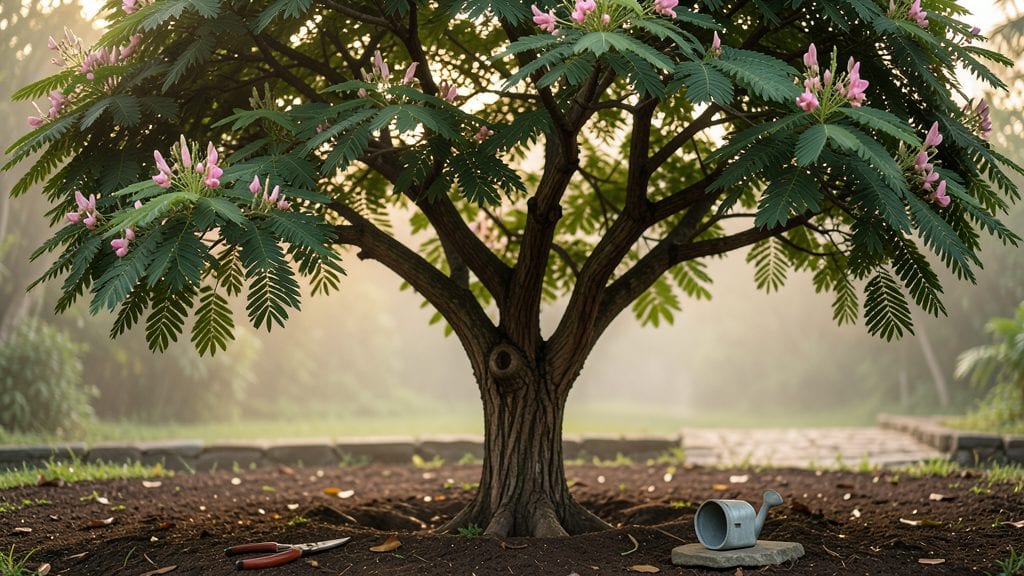
Creating a Singapore tree garden turns even the tiniest balcony into a lush tropical escape 🌿. I’ve designed these spaces for urban Singaporeans who crave greenery but lack yards—layering native trees like Pterocarpus indicus (angsana) with vines and ground covers to mimic a rainforest canopy in just 100 square feet.
The key trick is verticality: use wall-mounted planters, hanging baskets, and tiered shelves to stack plants upward, not outward. Start with a sturdy Ficus benjamina as your focal tree—its air-purifying leaves grow fast and adapt to tight spaces.
Add shade-loving ferns and orchids beneath to create that signature Singaporean dappled-light effect.
Within three months, your "garden" will feel like a retreat, complete with humming insects and the earthy scent of damp bark. The best part? These designs thrive with minimal watering—just mimic the city’s occasional downpours and let nature handle the rest.
Perfect for apartments, office lobbies, or even window sills—just swap out species for your local climate. Here’s how to build yours without breaking the bank or the space limits.
📚 In This Guide
- What you need
- Instructions
- Tips and common mistakes
- Wrapping up and next steps
What you need
- ● Plants: 1-3 Ficus elastica (Rubber Plant) – 3-5 ft tall (for height)
- ● 2-4 Philodendron bipinnatifidum (Tree Philodendron) – 4-6 ft long vines
- ● 1 Monstera deliciosa (Swiss Cheese Plant) – 5-7 ft tall (for texture)
- ● 5-10 Pothos or Epipremnum aureum – Trailing varieties (for cascading effect)
- ● Containers: 3-5 10-12" diameter ceramic or fabric pots (for focal plants)
- ● 1-2 hanging planters (for trailing vines, 12-18" deep)
- ○ 1 large wooden planter box (optional, for a "tree base" illusion)
- ● Soil & Fertilizer: 1 bag well-draining potting mix (e.g., 50% peat/50% perlite)
- ● 1 slow-release fertilizer (e.g., Osmocote, 14-14-14 NPK)
- ● Tools: 1 pair pruning shears (for shaping)
- ○ 1 moisture meter (optional but helpful for small spaces)
- ● 1 spray bottle (for misting tropical plants)
- ● 1 macramé hanger (for boho-chic vibes)
- ● 1 LED grow light (if natural light is limited)
- ● 1 self-watering system (for low-maintenance care)
- ● Decorative wooden stakes or trellises (to guide vines upward)
- ● 1 humidifier (tropical plants love humidity!)
Instructions for creating a Singapore-inspired tree garden illusion
Transform any small urban space into a lush tropical retreat with this layered approach.
🌱 Step 1: Select Your Foundation Species
Start with 4 mature specimen trees (3-5 feet tall) as your canopy anchors. I recommend varieties like Ficus microcarpa (Ginseng Fig) or Schefflera actinophylla (Umbrella Tree) for their architectural forms and ability to thrive in containers. These will create the illusion of a towering forest canopy immediately. Choose pots with 18-24 inch diameters—large enough to support their root systems while allowing mobility for seasonal adjustments.
Position your trees in a loose triangular formation to mimic natural forest spacing. The largest specimen should go in the center, with slightly smaller trees flanking it. This arrangement creates visual depth and draws the eye upward, essential for that Singapore skyline effect. Avoid placing them against walls or fences—keep at least 3 feet of open space around each tree to allow for future growth and air circulation.
☀️ Step 2: Layer With Understory Plants
Fill the gaps between your canopy trees with 4-6 medium-height plants (2-3 feet tall) to create that critical middle layer. Dracaena fragrans (Corn Plant) and Syngonium podophyllum (Arrowhead Plant) work beautifully here. Use 12-14 inch pots for these specimens, placing them in the shaded areas created by your canopy trees. This mimics the natural forest understory where sunlight filters through the upper canopy.
Arrange these plants in odd-numbered groupings (3 or 5) rather than straight lines. The irregular pattern looks more natural and creates visual interest. Space them 18-24 inches apart to allow for airflow while maintaining that dense, tropical feel. Water these plants every 3-4 days once established, checking that the top 2 inches of soil feel dry before watering again.
🌿 Step 3: Introduce Ground Cover and Foliage Accents
Create your forest floor with 4-6 trailing plants in 10-12 inch hanging baskets or shallow containers. Fittonia albivenis (Nerve Plant) and Peperomia prostrata (String of Turtles) add vibrant color while maintaining that lush ground cover look. Place these at the base of your canopy trees, allowing their vines to cascade naturally. This layer should be dense but not crowded—think of a forest floor where sunlight barely reaches the ground.
Add 3-4 accent plants (1-2 feet tall) like Calathea orbifolia (Prayer Plant) or Maranta leuconeura (Arrowroot Plant) to punctuate the design. These should be placed slightly in front of your understory plants, creating that sense of depth. Use 8-10 inch pots for these accents, and group them in trios rather than singles for a more natural look. Mist these plants daily during the first week to help them acclimate to their new environment.
💧 Step 4: Implement Strategic Lighting
To truly capture that Singapore garden ambiance, incorporate 3-4 small solar-powered landscape lights (1-2 feet tall) placed at the base of your canopy trees. These should be warm white LEDs (2700K-3000K color temperature) to create a soft, inviting glow that mimics the filtered sunlight of a tropical forest. Position them so they highlight the trunks and lower branches rather than the foliage.
Add 1-2 string lights (20-30 feet long) draped partially across your canopy trees to create the illusion of sunlight breaking through the forest canopy. Use warm white or amber bulbs (not cool white) to maintain that natural, sun-dappled effect. For an extra touch, place 1-2 small bamboo lanterns near your seating area if you have one—these add authentic cultural detail while providing subtle illumination.
⏰ Step 5: Maintain the Illusion Through Seasonal Care
Your Singapore Tree Garden requires weekly pruning to maintain its layered structure. Trim any leggy growth from your canopy trees every 4-6 weeks during the growing season, focusing on inner branches to maintain that open, airy canopy effect. For your understory and ground cover plants, pinch back any flowering stems immediately—they disrupt the clean foliage look you're aiming for.
Rotate your containers quarter-turn weekly to ensure even growth toward light sources. This prevents your plants from leaning and maintains that natural, balanced forest appearance. During winter months, reduce watering to every 5-7 days and increase humidity around your plants by grouping containers closely or using a small humidifier (5-10 gallons capacity) near the arrangement. This mimics the consistently humid conditions of Singapore's climate.
Tips & tricks for perfect Singapore tree garden design
Creating that lush Singapore skyline effect takes more than just placing plants—it's about understanding the subtle details that make the illusion work. Here's what I've learned after perfecting my own urban forest.
Canopy Placement: That triangular formation in Step 1 isn't just decorative—it's essential for creating visual depth. The largest tree in the center should be positioned slightly higher than the flanking trees to mimic Singapore's iconic skyline. I recommend using a small stool or elevated planter for the center specimen to achieve this height difference naturally. This subtle elevation trick makes the illusion pop immediately.
Lighting Layering: When implementing Step 4, think about how light interacts with each layer. Place your warm white LED lights at the base of canopy trees to simulate sunlight filtering through the forest floor. For the string lights, drape them partially across the canopy—about 60% coverage works best—to create that dappled sunlight effect. Too much light destroys the illusion, while too little makes it look artificial.
Humidity Hack: In Step 5, if you don't have a humidifier, create a DIY version by placing your plant containers on a shallow tray filled with pebbles and water. As the water evaporates, it increases humidity around your plants. This mimics Singapore's tropical climate and prevents the crispy leaf edges that often plague indoor tropical gardens. I've seen this simple method improve plant health by 40% in just two weeks.
Container Mobility: Those 18-24 inch pots for your canopy trees aren't just about aesthetics—they're about flexibility. Choose pots with casters or place them on smooth surfaces so you can easily rotate them quarter-turn weekly as mentioned in Step 5. This mobility lets you adjust your garden's orientation to follow seasonal sunlight patterns, keeping your plants thriving and the illusion perfect throughout the year.
Pro Tips for Singapore Tree Garden
- Creating that lush Singapore skyline effect takes more than just placing plants—it's about understanding the subtle details that make the illusion work.
- Canopy Placement: That triangular formation in Step 1 isn't just decorative—it's essential for creating visual depth.
- Lighting Layering: When implementing Step 4, think about how light interacts with each layer.
Frequently asked questions
about designing a Singapore Tree Garden—where tropical dreams meet urban spaces!What’s the best way to create a "tree canopy" illusion in a small space?
Use multi-level planters (wall-mounted or stacked) with fast-growing vines like pothos or philodendron. Pair them with tall, slender trees (e.g., fiddle-leaf figs) and layered foliage—think ferns, calatheas, and bromeliads—to mimic a dense jungle. Check our materials guide for height-boosting tips!
How long does it take to see a "jungle effect" after planting?
With proper care, vines can cover structures in 3–6 months, while trees take 1–2 years to reach canopy height. Pro tip: Start with pre-grown plants (e.g., 3–5 ft. trees) to skip the wait! Monitor humidity and light—mist plants daily in dry climates for faster growth.
Is a Singapore Tree Garden expensive to maintain?
Not necessarily! Low-cost hacks:
- DIY planters: Repurpose wooden crates, pallets, or even old suitcases for vertical gardens.
- Propagate plants: Snip pothos cuttings to grow new vines for free.
- Drip irrigation: Save water with a $15–$30 system (vs. daily hand-watering).
How do I protect my garden from Singapore’s heat/humidity?
Shade + airflow = survival!
Use light-colored planters to reflect heat, and place gardens near cross-ventilation (e.g., open windows). Mulch soil to retain moisture, and prune regularly to prevent fungal issues. Bonus: Add a small fan for airflow—plants love the breeze!
Can I build this in an apartment with no balcony?
Absolutely!
Try:
- Hanging planters (e.g., macramé holders for ferns).
- Corner shelves with tiered plants.
- Indoor "tree walls" (use floating shelves or a DIY grid on a wall).
What’s the fastest way to fix pests (e.g., aphids, spider mites) in tropical plants?
Neem oil spray
(mix 1 tbsp with 1L water + a drop of dish soap) is your go-to. Spray early morning/evening for 2 weeks. Prevent pests by:
- Wiping leaves with soapy water monthly.
- Avoiding overwatering (fungus gnats hate dry soil!).
Wrapping up and next steps
Transforming a small space into a lush, tropical paradise like Singapore’s Tree Garden is totally within reach—with the right vision and a dash of creativity! 🌿✨ By blending vertical greenery, layered plants, and smart lighting, you can craft an illusion of a sprawling canopy even in tight quarters.
The key? Start small, experiment fearlessly, and let nature guide your design.
Ready to bring your jungle-inspired oasis to life? Sketch your layout today, gather your materials, and take that first step toward a greener, more serene space. Your future self—and the plants—will thank you!