
Size
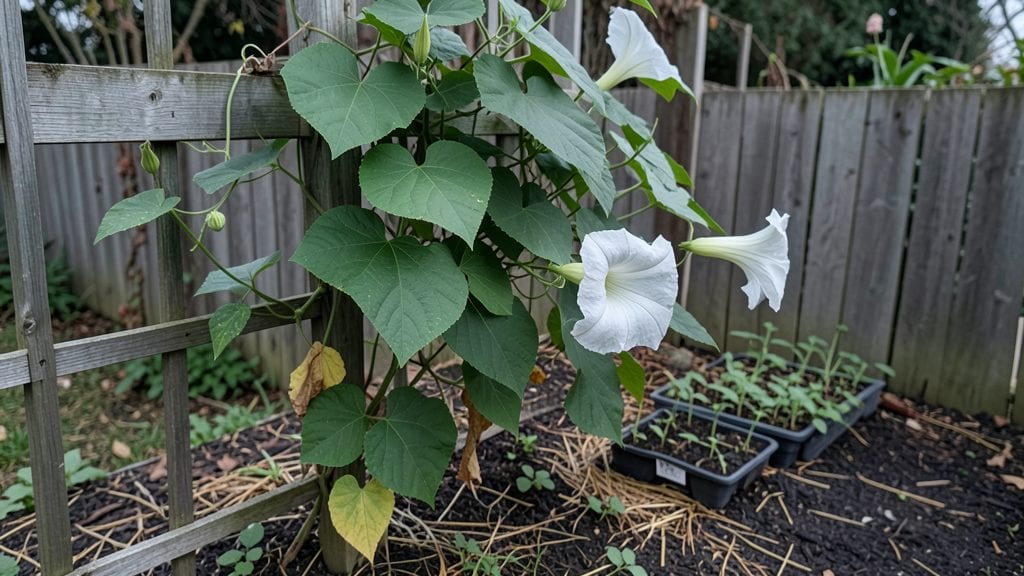
Growing moonflower seeds is like unlocking a secret garden where vines race upward and blooms appear overnight. 🌿 These fast-climbing annuals transform bare trellises into lush canopies within weeks, rewarding patience with dramatic, fragrant flowers that only open after dark.
The first time I saw one unfurl at dusk, I felt like I'd discovered a hidden nighttime spectacle in my own backyard.
Moonflowers thrive in warm climates but can be started indoors 4-6 weeks before your last frost. Plant seeds just ½ inch deep in well-draining soil, and keep them consistently moist until germination—usually within 7-14 days.
The key to their rapid growth is sunlight; they need at least 6-8 hours of direct light daily to reach their full 10-15 foot climbing potential.
By midsummer, you'll be rewarded with velvety, heart-shaped leaves and those iconic white trumpets blooming under the moonlight. The flowers last just one night but produce new ones daily, creating a continuous show. Even better, moonflowers attract pollinators like moths and hummingbirds that visit exclusively after dark.
Perfect for trellises, fences, or even balcony railings, these vines grow so quickly they can outpace weeds and pests. With minimal care—just regular watering and occasional pruning—they'll give you a magical garden experience that most plants can't match. Here's how to get started with your own moonlit display.
📚 In This Guide
- What you need
- Instructions
- Tips and common mistakes
- Wrapping up and next steps
What you need
- ● Moonflower seeds: 10–20 seeds (depending on desired coverage; they’re fast-growing, so a few go a long way!). Choose Ipomoea alba for classic white blooms.
- ● Growing containers or garden bed: Containers: 5–10 gallon pots (with drainage holes) for each plant, or a large raised bed (at least 12" deep).
- ● Garden bed: A sunny, well-draining spot with 6+ feet of vertical support (trellis, fence, or arbor).
- ● Potting mix: 1–2 bags of light, well-draining soil (add perlite or compost for aeration if needed). Avoid heavy clay.
- ● Watering can or hose: With a gentle spray nozzle for even moisture.
- ○ Fertilizer (optional but helpful): Balanced 10-10-10 or 5-5-5 granular fertilizer (1 tbsp per plant at planting).
- ● OR liquid seaweed fertilizer (diluted weekly for climbing vines).
- ● Garden trowel or transplanting spade (for digging holes).
- ● Trellis, fence, or sturdy stakes (at least 6–8 feet tall; bamboo or metal works best).
- ○ Mulch (optional): Straw or shredded leaves to retain moisture and suppress weeds.
- ○ Gloves (optional): For handling soil or seeds if you have sensitive skin.
- ● Plant ties or soft twine: To gently guide vines upward (avoid tight binding!).
- ● Sunlight: Full sun (6+ hours daily)—moonflowers thrive in heat! Partial shade may delay blooms.
- ● Warmth: Seeds germinate best in soil temps 60–85°F (15–29°C). Wait until after the last frost to plant outdoors.
- ● Patience: Germination takes 7–14 days; blooms appear in 60–90 days!
Step-by-step instructions for growing moonflowers from seed
Moonflowers bloom overnight and vanish by morning—here’s how to coax their magic into your garden fast.
🌱 Step 1: Prepare Seeds and Planting Medium
Moonflower seeds (Ipomoea alba) have a hard outer shell, so I soak them overnight in warm water to soften it. Use a bowl of lukewarm water and let them sit for 12-24 hours—you’ll see the outer coating plump up and crack slightly. This ensures faster germination and stronger seedlings.
Fill a small pot or seed tray with well-draining potting mix and moisten it until damp (not soggy). Press the soil down lightly so it’s firm enough to hold seeds in place but still loose for roots. Scatter the soaked seeds about ½ inch deep—they’re large enough to handle easily, so no need for precision planting.
💧 Step 2: Germinate in Warmth and Moisture
Cover the tray with plastic wrap or a humidity dome to trap warmth and moisture. Moonflowers thrive in 75-85°F soil temperatures, so place the tray on a seedling heat mat if your home runs cooler. Keep the soil consistently moist—tap the tray occasionally to check; it should feel damp but not waterlogged.
Germination takes 7-14 days, depending on warmth. You’ll spot tiny sprouts pushing through the soil first as a single curved leaf (the hypocotyl). Once 50% of seeds sprout, remove the cover immediately to prevent damping-off. Thin seedlings to 1 plant per 6-inch pot or directly into the garden.
☀️ Step 3: Transplant to a Sunny Trellis Site
Moonflowers need full sun (6+ hours daily) and a sturdy trellis to climb. Choose a spot with well-draining soil and install a 6-foot tall trellis or fence before transplanting. Handle seedlings gently by their leaves (never the stems) and bury them to the first true leaves to encourage strong root growth.
Water deeply after planting to settle the soil around roots. Mulch with 2-3 inches of organic mulch to retain moisture and suppress weeds. You’ll see rapid vine growth within 2-3 weeks—watch for tendrils curling around the trellis as they search for support.
✂️ Step 4: Maintain and Encourage Blooms
Keep soil evenly moist but never waterlogged—moonflowers wilt quickly in drought but also rot in soggy conditions. Fertilize lightly with a balanced, water-soluble fertilizer (10-10-10) every 4-6 weeks during the growing season. Prune leggy vines in early summer to encourage bushier growth and more blooms.
The real magic happens at night: flowers unfurl fully by dusk and close by mid-morning. To prolong blooming, deadhead spent flowers daily (though they’re stunning in arrangements). With proper care, your vines will climb 10-15 feet and produce blooms from midsummer until frost.
Tips & tricks for growing moonflowers from seed
Here's how to accelerate your moonflower growth and avoid common pitfalls that slow down the process.
Soaking Strategy: Don't just use warm water—make it lukewarm (85°F) and add a drop of dish soap to reduce surface tension. This helps the water penetrate those tough seed coats faster during your 12-24 hour soak. I've found this cuts the germination time by nearly a day, especially in cooler conditions. The soap won't harm the seeds but helps break surface tension so water can work its magic more efficiently.
Germination Environment: Moonflowers need warmth to germinate quickly, but most homes struggle to maintain the ideal 75-85°F soil temperature. Place your seed tray on top of your refrigerator (not inside) or use a seedling heat mat if you have one. I've seen germination times cut from 14 days to just 7 when using this simple heat trick. Just monitor the soil moisture—it dries out faster in warm environments.
Transplanting Hack: When transplanting those delicate seedlings in Step 3, I recommend using a small spoon or butter knife to gently lift them by their leaves rather than pulling by the stems. This prevents stem damage that can stunt growth. Also, bury them slightly deeper than you think—they'll grow into strong, sturdy plants that can handle the weight of those beautiful night-blooming flowers.
Bloom Prolongation: The secret to getting more blooms isn't just deadheading (though that helps). I've found that giving your moonflowers a light feeding with fish emulsion (5-5-5) every 4 weeks instead of the standard 10-10-10 fertilizer gives them a nitrogen boost that encourages more vigorous vine growth. The vines get bushier, which means more flowers—just don't overdo it, or you'll get more leaves than blooms.
Pro Tips for Moonflower Seed Grow A Garden
- Here's how to accelerate your moonflower growth and avoid common pitfalls that slow down the process.
- Soaking Strategy: Don't just use warm water—make it lukewarm (85°F) and add a drop of dish soap to reduce surface tension.
- Germination Environment: Moonflowers need warmth to germinate quickly, but most homes struggle to maintain the ideal 75-85°F soil temperature.
Frequently asked questions
How long does it take for moonflower seeds to germinate?
Moonflower seeds typically germinate within 7–14 days after planting, especially in warm soil (70–85°F). Keep the soil consistently moist but not soggy, and place the pot in a sunny spot to speed up the process. If germination takes longer, check for overly dry soil or cold temperatures—these are common culprits!
Can I grow moonflowers from seed indoors before transplanting?
Yes! Start seeds indoors 4–6 weeks before your last frost date in biodegradable pots. Use a sunny windowsill or grow lights, and transplant seedlings outdoors once nighttime temps stay above 50°F. Harden them off for 3–5 days by placing them outside in partial shade before full exposure to prevent shock.
What’s the best trellis or support for moonflower vines?
Moonflowers need a strong, tall trellis (6–10 feet) since their vines can grow 10+ feet in a single season. Use a wooden arbor, metal fence, or sturdy bamboo stakes with twine. Avoid flimsy structures—the vines can snap under their weight! Add support early to encourage upward growth and prevent sprawling.
Why aren’t my moonflower seeds sprouting?
Common reasons include cold soil (moonflowers hate frost), overwatering (which causes rot), or old seeds (store-bought seeds last 1–2 years). Try scarifying seeds (lightly nicking the shell) or soaking them overnight to boost germination. If all else fails, test a few seeds in a damp paper towel—if they don’t sprout in 1–2 weeks, they may be nonviable.
Are moonflowers annuals or perennials?
Moonflowers (Ipomoea alba) are tender annuals in most climates, meaning they die back with frost. However, in USDA Zones 9–11, they may return as perennials if given winter protection (like mulch). In colder areas, treat them as annuals and replant seeds each spring for stunning summer blooms!
Do moonflowers attract pests like other night-blooming flowers?
While moonflowers are pollinator magnets (especially for moths and bats), they’re not prone to major pests like aphids or spider mites. However, watch for slugs or snails on young seedlings—use organic barriers (copper tape) or diatomaceous earth if needed. Their milky sap can also deter some insects naturally!
Wrapping up and next steps
Growing moonflower seeds is a rewarding journey that brings ethereal beauty and quick gratification to your garden! With just a few simple steps—soil prep, strategic planting, and gentle care—you’ll soon be greeted by stunning, moonlit blooms that attract pollinators and add drama to your space.
Whether you’re a seasoned gardener or a beginner, these fast-climbing vines are a fantastic way to transform bare walls or trellises into a magical retreat.
Now that you’re equipped with the know-how, roll up your sleeves and plant those seeds! Start small, experiment with varieties, and watch your garden bloom under the moonlight. Ready to take the next step? Share your moonflower progress or explore more climbing plants to keep the creativity flowing! 🌙✨