
Advice
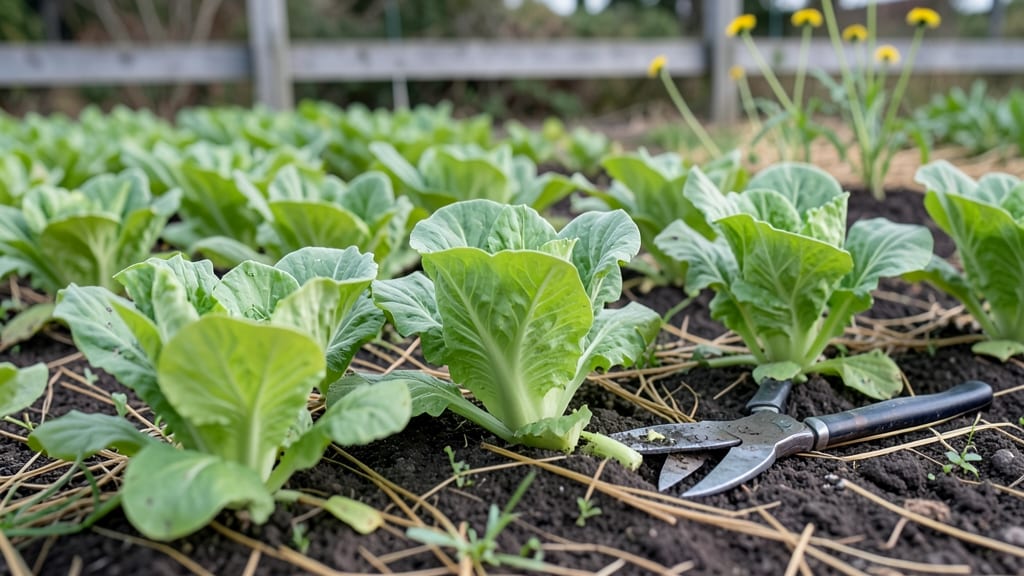
Market gardening isn't strictly commercial or subsistence—it's a hybrid model producing high-value crops for local markets while also supporting small-scale farmers' household needs. Its profitability hinges on scale, crop selection, and direct sales strategies.
Market gardening sits squarely in the middle of the farming spectrum, combining the best of both worlds. 🌱 While it shares commercial farming's focus on marketable crops like leafy greens and herbs, it operates on a smaller scale that often includes household consumption.
This dual approach lets farmers maximize profits from high-demand produce while maintaining food security for their families. The key difference from pure subsistence farming? Market gardeners prioritize sales through farmers' markets, CSAs, or wholesale channels rather than growing solely for home use.
What sets successful market gardeners apart is their ability to balance labor-intensive growing with smart business tactics. Many specialize in crops that fetch premium prices—like microgreens or heirloom tomatoes—while keeping overhead low through efficient irrigation and seed sourcing. The direct-to-consumer model eliminates middlemen, boosting profit margins significantly.
For example, a family growing 5 acres of organic greens might sell 70% at the farmers' market while keeping 30% for home use—a perfect blend of commercial viability and self-sufficiency.
💡 In This Article
- Market Gardening’s Hybrid Business Model
- Profitability Factors in Market Gardening
Market gardening’s hybrid business model
Market gardening thrives on a delicate balance between commercial viability and household self-reliance. Unlike large-scale agricultural operations that prioritize volume and mechanization, market gardeners focus on high-value, labor-intensive crops like leafy greens, herbs, and specialty vegetables.
The average successful market garden operates on 1-5 acres, producing enough for both direct sales and family consumption. This dual-purpose approach allows farmers to generate income while maintaining food security—a key distinction from pure subsistence farming.
The labor intensity is what makes market gardening distinct. While commercial farms often rely on heavy machinery, market gardeners typically employ hand tools and manual labor, which keeps costs low but demands significant time investment.
For example, a 1,000-square-foot plot of microgreens can yield $500-$1,500 per harvest cycle, but requires 10-15 hours of labor per week for planting, harvesting, and washing. This hands-on approach ensures quality but limits scalability compared to industrial farming.
Revenue streams are another defining feature of this hybrid model.
Market gardeners diversify income through multiple channels: farmers' markets (where they can charge 2-3x more than grocery stores), Community Supported Agriculture (CSA) programs (offering weekly shares for $20-$50 per week), and wholesale sales to restaurants (where chefs pay $1-$3 per pound for fresh, local produce).
This multi-pronged strategy reduces reliance on any single market and stabilizes cash flow throughout the growing season.
Crop specialization is the secret weapon of profitable market gardens. Instead of growing a wide variety of crops, successful gardeners focus on 3-5 high-demand varieties that sell quickly and command premium prices.
For instance, heirloom tomatoes might sell for $4-$6 per pound at farmers' markets, while baby kale can fetch $3-$5 per bunch. This specialization allows gardeners to optimize their growing space and labor, maximizing returns on their investment. The trade-off?
Limited product variety compared to large-scale farms, but higher profit margins per square foot.
Seasonal planning further refines this hybrid model. Market gardeners carefully time their plantings to align with peak demand periods, such as spring salad greens (March-May) and summer tomatoes (June-August). By extending seasons with hoop houses or cold frames, they can grow crops year-round in temperate climates.
This strategic timing ensures a steady supply of fresh produce when consumers are willing to pay top dollar, creating a sustainable balance between commercial sales and household needs.
What most people overlook is how market gardening bridges the gap between traditional farming and modern agribusiness. It’s not about choosing between commercial or subsistence—it’s about creating a system where both coexist.
For example, a family might allocate 60% of their garden to market sales (like selling 200 bunches of carrots per week at the farmers' market) while keeping 40% for home use. This flexibility allows them to adapt to market fluctuations, weather challenges, or personal needs without sacrificing profitability.