Shrubs
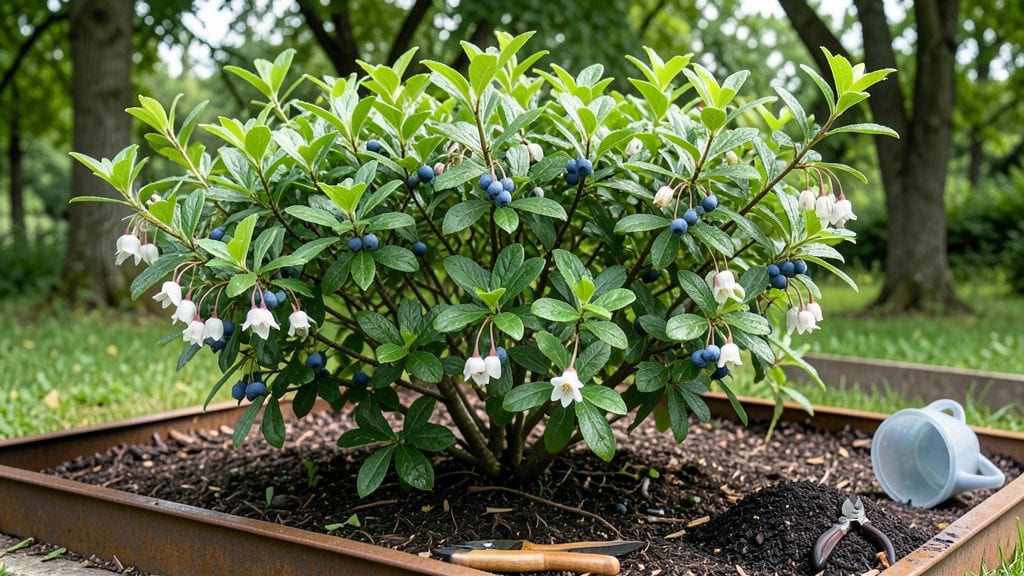
Gardening blueberry bushes in small spaces is easier than you think—and the payoff is worth every effort. 🌱 I’ve turned a 3-foot-wide patch into a productive blueberry haven by focusing on the right soil, sunlight, and care. The key isn’t just space; it’s creating the perfect acidic environment they crave.
You’ll need well-draining soil with a pH between 4.5 and 5.5, which means amending with sulfur or peat moss if your yard is alkaline. Blueberries thrive in full sun but tolerate partial shade, making them perfect for balconies or sunny windowsills with large containers.
Water consistently—about 1 inch per week—but avoid soggy roots.
Pruning in late winter keeps bushes compact and productive, while harvesting in stages extends your season. By summer, you’ll be picking sweet, juicy berries that taste nothing like store-bought. The secret? Patience and the right conditions—your first full harvest comes in year two or three.
Works for urban gardens, rural plots, and everything in between. Once established, these bushes need minimal care and reward you with years of harvests. Let’s get those roots growing!
📚 In This Guide
- What you need
- Instructions
- Tips and common mistakes
- Wrapping up and next steps
What you need
- ● Blueberry plants: Choose dwarf varieties (like 'Top Hat' or 'Peach Sorbet') for small spaces. Buy 3–5 plants (mix of highbush and rabbiteye if possible) for cross-pollination.
- ● Well-draining soil: Aim for 4.5–6.0 pH (use a soil test kit 🧪). Amend soil with peat moss or pine fines (1–2 bags) for acidity.
- ● Compost or organic matter: 5–10 gallons to enrich soil before planting.
- ● Fertilizer: Acid-loving plant fertilizer (e.g., 10-10-10 or cottonseed meal, 1–2 lbs per bush).
- ● Mulch: Pine straw or wood chips (2–3 inches) to retain moisture and acidity.
- ● Drip irrigation or soaker hose: 10–15 feet to keep roots consistently moist.
- ● Pruning shears: Sharp, bypass-style for clean cuts.
- ● Garden gloves: Heavy-duty to protect against thorns.
- ● Blueberry bush trellis or support: For varieties that grow tall (e.g., 6–8 ft stakes).
- ● Row cover or frost cloth: For early spring frost protection (1–2 covers).
- ● Bird netting: To protect ripe berries from hungry birds.
- ● Soil pH test kit: For precise monitoring (reapply amendments as needed).
- ● Container pots: 15–20 gallon pots if growing in containers (ensure drainage holes!).
Step-by-Step guide to planting blueberry bushes in compact spaces
Here's how to grow healthy, productive blueberry bushes even when space is limited.
🌱 Step 1: Choose the Right Varieties for Small Spaces
Select compact, dwarf varieties like 'Top Hat' or 'Peach Sorbet' that mature at 3-4 feet tall—perfect for containers or tight garden beds. These stay manageable while producing abundant fruit. Avoid standard varieties; they'll outgrow your space within a few years. I always check the plant tag for USDA hardiness zone compatibility with my climate before buying.
For pollination, plant two different varieties within 15 feet of each other. Blueberries are self-pollinating but produce better yields when cross-pollinated. If space is extremely tight, choose a self-fertile variety like 'Bluecrop'—it handles pollination alone but still benefits from a companion plant.
🪴 Step 2: Prepare Acidic Soil or Container Mix
Blueberries demand acidic soil with a pH between 4.5 and 5.5. Test your soil first—most garden centers sell affordable test kits. If your native soil is too alkaline, amend it with 2-3 pounds of sulfur per 100 square feet and mix in 3-4 inches of peat moss or pine bark fines to maintain acidity.
For containers, use a 50/50 blend of peat moss and perlite—this mimics the acidic, well-draining conditions blueberries thrive in. I add 1 tablespoon of chelated iron to the mix to prevent chlorosis (yellowing leaves) from iron deficiency. Fill your container 2/3 full before planting, leaving room for root growth.
☀️ Step 3: Plant in Full Sun with Proper Spacing
Choose a south-facing location with at least 6 hours of direct sunlight daily. Blueberries need full sun to ripen fruit properly. In containers, place them where they won’t be shaded by taller plants or structures. Dig a hole twice as wide as the root ball but only as deep—planting too deep suffocates roots.
Space 4-5 feet apart in garden beds to allow airflow and prevent fungal diseases. If using containers, select 15-20 gallon pots—smaller pots restrict root growth and reduce yields. Water thoroughly after planting to settle the soil and eliminate air pockets around roots. Mulch with 2-3 inches of pine needles to retain moisture and slowly acidify the soil.
💧 Step 4: Water and Fertilize for Optimal Growth
Keep the soil consistently moist—blueberries hate drought stress but also despise soggy roots. Water deeply 2-3 times per week during the first growing season, ensuring the top 6 inches of soil stay damp but not waterlogged. In containers, check moisture daily; pots dry out faster. I use a moisture meter to avoid guesswork.
Fertilize in early spring with a balanced, acid-loving plant fertilizer (10-10-10 or similar). Avoid high-nitrogen fertilizers—they promote leafy growth at the expense of fruit. Instead, I mix 1/4 cup of ammonium sulfate into the soil annually to boost acidity and provide nitrogen. Prune weak or crossing branches in late winter to improve airflow and fruit production.
⏰ Step 5: Prune and Harvest for Year-Round Productivity
Prune annually in late winter or early spring before new growth begins. Remove dead, diseased, or weak wood first, then cut back older canes to encourage younger, fruit-bearing branches. I never prune more than one-third of the plant in a single season—blueberries are sensitive to aggressive pruning. Thin fruit clusters to 1/2 inch apart in early summer to prevent overcrowding and improve size.
Harvest when berries easily detach from the stem and turn deep blue (usually mid to late summer, depending on variety). Pick every 2-3 days to encourage continuous production. Store unwashed berries in the fridge for up to 2 weeks. For a longer harvest, plant early-, mid-, and late-season varieties—they’ll ripen sequentially, extending your season by 4-6 weeks.
Tips & tricks for perfect blueberry bushes in compact spaces
These game-changing insights will help you maximize your small-space blueberry harvest while avoiding common pitfalls that sabotage growth.
Variety Selection Wisdom: When choosing compact varieties like 'Top Hat' or 'Peach Sorbet' in Step 1, pay special attention to the plant tag's maturity height—some dwarf varieties can still reach 5 feet if given perfect conditions. For true compact growth, select varieties labeled "dwarf" or "patio" types, which typically stay under 3 feet. I've learned this the hard way after watching a "compact" variety outgrow its space within two seasons. Also, consider the plant's growth habit: some varieties grow wider while others grow taller, which matters for your specific space constraints.
Soil Science Secret: In Step 2, when preparing your acidic soil mix, don't skip the chelated iron—it's the difference between vibrant green leaves and chlorotic yellowing. I've seen blueberries with perfect pH levels still suffer from iron deficiency because gardeners overlooked this critical micronutrient. Test your soil's pH again after amending with sulfur and peat moss; aim for that 4.5-5.5 range precisely. For container growers, I recommend mixing in a slow-release acidifying fertilizer like aluminum sulfate at planting time to maintain optimal conditions throughout the season.
Pruning Precision: The annual pruning in Step 5 requires surgical precision. When cutting back older canes, look for the telltale "collar" where the cane meets the main stem—this is where new growth will emerge. I always make my cuts just above this collar at a 45-degree angle to prevent water from pooling on the wound. Never remove more than one-third of the plant in a single season, as blueberries are particularly sensitive to aggressive pruning. For first-year plants, minimal pruning is best—just remove any dead or damaged wood to encourage strong establishment.
Harvest Hack: When harvesting in Step 5, use a pair of sharp scissors or pruners to snip the stems just above the berry—this prevents damage to the plant and allows for easier picking. For containers, I recommend harvesting berries every other day during peak season to maintain production. Store your freshly picked berries in a single layer on a paper towel-lined tray in the fridge to prevent moisture buildup, which can cause mold. The deep blue color is your best indicator of ripeness, but also check for easy detachment from the stem—a berry ready for picking should come off with gentle pressure.
Pro Tips for Gardening Blueberry Bushes
- These game-changing insights will help you maximize your small-space blueberry harvest while avoiding common pitfalls...
- Variety Selection Wisdom: When choosing compact varieties like 'Top Hat' or 'Peach Sorbet' in Step 1, pay special att...
- Soil Science Secret: In Step 2, when preparing your acidic soil mix, don't skip the chelated iron—it's the difference...
Frequently asked questions
Got questions about growing blueberry bushes?
You’re not alone! Here are answers to the most common queries—from planting to troubleshooting—to help you cultivate thriving, berry-filled shrubs in even the tightest spaces.
Q: How long does it take for blueberry bushes to produce fruit?
Patience is key! Most blueberry bushes take 2–3 years to bear fruit after planting, though some varieties (like Top Hat or Peach Sorbet) may produce light harvests in the first year. Choose dwarf or semi-dwarf varieties for faster results in compact gardens.
Q: Do blueberry bushes need winter protection?
Yes, especially in colder climates! Mulch heavily (3–4 inches of straw or pine needles) around the base to insulate roots. For young bushes or harsh winters, wrap the crown with burlap or use a frost blanket. Prune in late winter after frost risk passes.
Q: Can I grow blueberry bushes in containers?
Dwarf varieties like Sunshine Blue or Pink Lemonade thrive in 15–20 gallon pots with acidic soil (pH 4.5–5.5). Use a mix of peat moss, perlite, and pine bark, and ensure pots have drainage holes. Move containers to partial sun (6+ hours/day) and fertilize monthly with an acid-loving plant food.
Q: Why aren’t my blueberry bushes producing berries?
Common culprits include:
- Improper pH: Test soil—blueberries need acidic conditions (use sulfur or peat moss to adjust).
- Poor pollination: Plant two varieties nearby (even if one is self-pollinating, cross-pollination boosts yields).
- Over/under-pruning: Prune in late winter to remove dead wood and open the canopy for airflow.
- Nutrient deficiency: Yellow leaves? Add iron or manganese (common in alkaline soils).
Q: What’s the best way to prune blueberry bushes?
Prune annually in late winter (before buds swell) to:
- Remove dead or diseased wood (cut at the base).
- Thin out old canes (older than 5 years) to encourage new growth.
- Shape the bush by trimming overlapping branches for better airflow.
Wrapping up and next steps
Growing blueberry bushes in compact spaces is not only doable—it’s rewarding! 🌱 With the right variety, soil prep, and care, you’ll enjoy a year-round harvest of juicy, antioxidant-rich berries. Whether you’re a beginner or a seasoned gardener, these tips prove that small spaces can yield big results.
Ready to take the next step? Start by selecting your bushes and marking your planting spots—then, watch your little patch of paradise grow! 🌟