
Landscaping
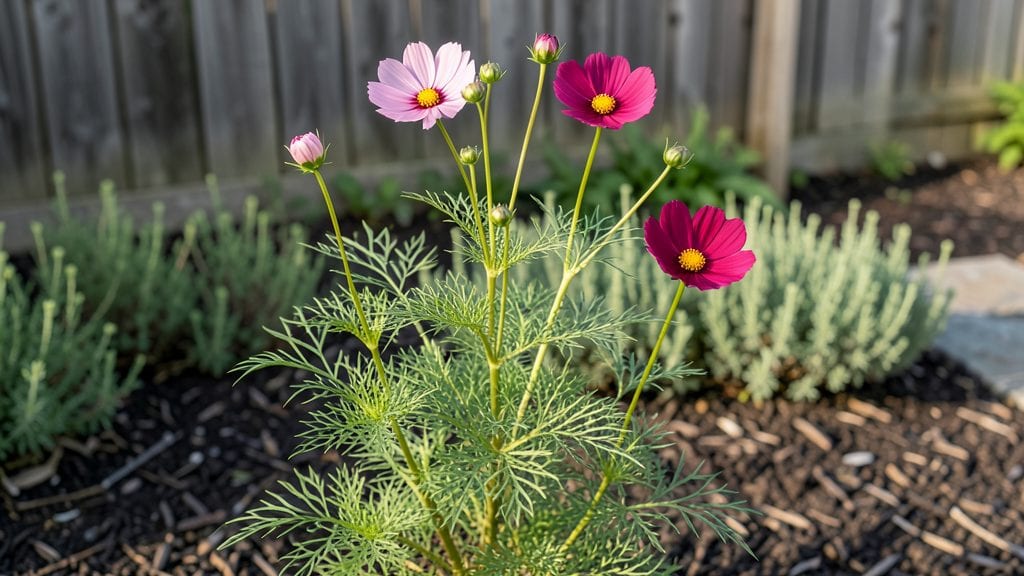
My cosmos garden design starts with a single rule: let them grow wild but with purpose.
These airy blooms transform any space into a sunlit meadow with minimal effort—just scatter seeds in spring, watch them climb, and enjoy the show from June through frost. 🌻 The secret lies in their effortless charm: they self-seed like crazy, attract butterflies by the dozen, and pair beautifully with almost anything.
Begin with a color palette—cosmos come in whites, pinks, and fiery reds that brighten borders, cottage gardens, or pollinator patches. Mix them with lavender for a Mediterranean vibe or pair with black-eyed Susans for a wildflower meadow feel.
They thrive in full sun and poor soil, making them perfect for neglected corners or container edges. Just don’t crowd them; give each plant 12-18 inches of space to avoid leggy stems.
What you’ll end up with is a garden that feels alive all season long—no deadheading required, no fussing over wilting. The blooms keep coming in waves, and the seed heads add rustic texture in winter.
Plus, they’re deer-resistant, so even rural gardeners can relax. For extra drama, let a few stems go to seed and save the seeds for next year’s effortless display.
Works in any setting—urban balconies, rural fields, or everything in between. The only mistake you can make is overthinking it. Let cosmos teach you the joy of low-maintenance beauty. Ready to let them take over? Here’s how to make it happen.
📚 In This Guide
- What you need
- Instructions
- Tips and common mistakes
- Wrapping up and next steps
What you need
- ● Cosmos seeds: Choose Cosmos bipinnatus (Sensation Mix) or Cosmos sulphureus (Bright Lights) for vibrant blooms. Plan for 10–15 seeds per square foot or follow packet spacing (typically 12–18 inches apart).
- ● Well-draining soil: A mix of 60% topsoil, 30% compost, and 10% perlite/sand (for sandy or clay-heavy soil). Test soil pH (ideal: 6.0–7.0).
- ● Organic mulch: 2–3 inches of shredded bark or straw to retain moisture and suppress weeds.
- ● Fertilizer: Balanced 10-10-10 or compost tea (apply lightly at planting and mid-season). Avoid high-nitrogen fertilizers.
- ○ Support structures (optional): Tall varieties (Cosmos bipinnatus): Bamboo stakes or trellises (6–8 ft tall).
- ● Low-growing varieties: Garden rings or decorative pots for borders.
- ● Hand trowel (for planting seeds).
- ● Garden rake (to level soil).
- ● Watering can or hose with adjustable nozzle (gentle watering prevents seed displacement).
- ● Pruning shears (for deadheading and shaping).
- ● Measuring tape (to space plants evenly).
- ○ Gloves (optional, for comfort).
- ● Sunlight: Full sun (6+ hours daily)—cosmos thrive in warmth!
- ● Watering schedule: Keep soil consistently moist but not soggy until established (first 2–3 weeks). After that, drought-tolerant!
- ● Planting time: Sow seeds 2–3 weeks after your last frost date (spring) or directly in fall for winter blooms.
- ● Pest control: Monitor for aphids or spider mites; spray with neem oil if needed.
How to design a stunning cosmos garden for season-long color
Here's my go-to approach for creating a vibrant, easy-care cosmos display that blooms from summer through fall.
🌱 Step 1: Choose Your Cosmos Varieties and Planting Locations
Start by selecting cosmos varieties that match your color palette and height preferences. Tall varieties like 'Bright Lights' reach 4-5 feet and work beautifully as backdrop plants, while shorter types such as 'Sensation Mix' stay around 2-3 feet—ideal for mid-height planting. I always group plants by height to create natural tiers in the garden bed.
Cosmos thrive in full sun, so pick a location that receives at least 6-8 hours of direct sunlight daily. If your site gets afternoon shade, opt for shorter varieties that won't flop under heavy blooms. Mark the planting area with stakes or string to visualize the layout before digging.
☀️ Step 2: Prepare the Soil for Optimal Growth
Cosmos are drought-tolerant once established, but they perform best in well-draining soil. Loosen the top 6-8 inches of soil in your planting area with a garden fork or tiller, breaking up any compacted layers. Mix in 2-3 inches of compost or aged manure to enrich the soil without adding excessive nitrogen, which can reduce flowering.
Cosmos don't require fertile soil, but they appreciate a light amendment for better root establishment. Avoid heavy soils—these plants hate soggy roots. If your soil drains poorly, create raised beds or add a 1-inch layer of coarse sand mixed into the topsoil. You'll see stronger stems and more abundant blooms when roots aren't fighting waterlogged conditions.
🌿 Step 3: Plant Seeds at the Right Time and Depth
Sow cosmos seeds directly in the garden 2-3 weeks after your last frost date when soil temperatures reach at least 60°F. These seeds germinate quickly—often within 7-14 days—so there's no need for indoor starting. Scatter seeds ¼ inch deep and 12-18 inches apart for single-stemmed varieties, or 6-12 inches apart for bushier types.
Lightly cover seeds with soil and water gently to avoid disturbing them. I like to use a fine mist setting on my hose to keep seeds in place. Once seedlings reach 2-3 inches tall, thin them to your desired spacing. This prevents overcrowding and ensures each plant gets proper airflow, reducing the risk of fungal diseases.
💧 Step 4: Water and Maintain for Continuous Blooms
Water cosmos deeply once a week during the first growing season to encourage strong root development. Once established, these plants are drought-tolerant and can handle 1-2 weeks without water in most climates. You'll know they're thirsty when the leaves start to wilt slightly in the afternoon—this is their natural way of conserving moisture.
Deadhead spent blooms regularly by pinching off faded flowers just above the next set of leaves. This encourages continuous flowering throughout the season. I also remove any leggy stems that grow too tall and floppy—they detract from the garden's neat appearance. Fertilizer isn't necessary, but a light application of balanced 10-10-10 fertilizer in early summer can boost vigor for late-season blooms.
✂️ Step 5: Extend the Season with Strategic Pruning
To prolong the blooming season, cut back cosmos plants by one-third in early fall when flowers start to slow. This rejuvenates the plant and often triggers a second flush of blooms before frost. I always use clean, sharp pruners to make cuts just above a set of leaves or buds, which encourages new growth.
Leave the stems in place after cutting—they'll regrow quickly. If you're in a colder climate, you can also protect plants by covering them with 2-3 inches of mulch after the first frost. Cosmos are annuals, so they'll die back completely in winter, but their seeds often self-sow for next year's garden. Collect any fallen seeds you want to save for future plantings.
Tips & tricks for perfect cosmos garden design
Here's what I've learned after years of growing cosmos—these little tricks make all the difference between a pretty garden and a showstopper.
The Height Factor: When planning your cosmos display in Step 1, leave at least 12-18 inches between the back row and any fences or walls. Cosmos grow taller than you think, and those 4-5 foot varieties can easily reach 6 feet in ideal conditions. I always place my tallest cosmos against the house or fence to create a natural backdrop that frames the rest of the garden.
Soil Test Trick: Before amending your soil in Step 2, do a quick drainage test: Dig a hole 12 inches deep and fill it with water. If it drains completely within an hour, your soil is fine. If water remains after 2 hours, you definitely need that 1-inch sand layer or raised bed. I've seen cosmos flop dramatically in heavy clay—don't let that happen to your garden!
Timing Secret: The 60°F soil temperature in Step 3 is non-negotiable for germination. Use a soil thermometer for accuracy—especially in cooler climates. I've planted cosmos too early in spring and waited weeks for germination. If your soil is below 60°F, wait it out or use a cold frame to warm the soil faster. Those seeds won't sprout until conditions are right!
Deadheading Strategy: For maximum blooms in Step 4, I deadhead every 3-4 days during peak flowering season. The key is to pinch just above the next set of leaves—not at the stem base. This encourages bushier growth and more flowers. I also recommend wearing gloves—those stems can be prickly when they've been in full sun all day!
Pro Tips for Cosmos Garden Design
- Here's what I've learned after years of growing cosmos—these little tricks make all the difference between a pretty garden and a showstopper.
- The Height Factor: When planning your cosmos display in Step 1, leave at least 12-18 inches between the back row and any fences or walls.
- Soil Test Trick: Before amending your soil in Step 2, do a quick drainage test: Dig a hole 12 inches deep and fill it with water.
Frequently asked questions
Got questions about creating a stunning cosmos garden design? You’re not alone! Here are some of the most common queries—and their answers—to help you plan your dream low-maintenance floral oasis.
What’s the best time of year to plant cosmos seeds for continuous blooms?
For season-long color, sow cosmos seeds directly in the ground 2–3 weeks after your last frost date (spring) or in late summer (for fall blooms). Cosmos thrive in warm soil—wait until nighttime temps stay above 50°F (10°C). Pro tip: If your growing season is short, opt for early-spring planting and enjoy blooms until frost!
Do cosmos need full sun? What if my yard only gets partial shade?
Cosmos love full sun (6+ hours daily) for the most vibrant blooms, but they’re adaptable! In partial shade (4–6 hours), expect fewer flowers but still cheerful displays. Troubleshooting: If blooms fade early, thin plants to improve airflow and add a balanced fertilizer (like 10-10-10) to boost vigor.
How can I mix cosmos with other low-maintenance plants for a cohesive design?
Pair cosmos with complementary perennials like black-eyed Susans, salvia, or Russian sage for texture. For height contrast, add tall grasses (e.g., Miscanthus) or delphiniums. Design hack: Use cosmos as a "filler" in cottage-style gardens—their airy stems soften the look of denser shrubs like hydrangeas or lavender.
Why aren’t my cosmos blooming? What am I doing wrong?
Common culprits: over-fertilizing (too much nitrogen = leafy growth, no flowers), crowded plants (thin to 12–18" apart), or lack of deadheading. Fix it: Snip spent blooms regularly, ensure well-draining soil, and avoid heavy-handed feeding. Cosmos are drought-tolerant but may skip blooms if stressed—water deeply 1–2x/week in dry spells.
Are cosmos pollinator-friendly? Will they attract bees or butterflies?
Absolutely!
Cosmos are a pollinator magnet, especially for bees, butterflies, and hummingbirds. Their nectar-rich flowers support local ecosystems while adding movement to your garden. Bonus: Plant in clusters (3+ plants) to create "landing pads" for butterflies. Avoid pesticides—cosmos are pest-resistant but benefit from companion planting with marigolds to deter aphids.
Can I grow cosmos in containers? What’s the best pot size?
Yes! Cosmos thrive in containers with at least 12" depth and drainage holes. Use a lightweight potting mix (add perlite for aeration) and plant 2–3 seeds per pot. Container tip: Place pots in full sun and water when the top inch of soil is dry. Dwarf varieties (like ‘Bright Lights’) are ideal for small spaces or balconies!
Wrapping up and next steps
Transforming your garden into a cosmos-powered paradise doesn’t require backbreaking work—just a little creativity and the right plants! These vibrant, low-maintenance blooms bring season-long color while thriving in various climates.
Whether you’re a seasoned gardener or just starting, cosmos offer an easy way to elevate your outdoor space with minimal effort and maximum impact. 🌸
Ready to dive in? Start by sketching your dream layout, then gather your materials and plant your cosmos seeds or starts. Before you know it, your garden will burst with effortless beauty—and you’ll be the envy of the neighborhood! 🌿
Next step: Pick your favorite cosmos varieties and get planting—your future self (and pollinators!) will thank you. 🌺