
Pests
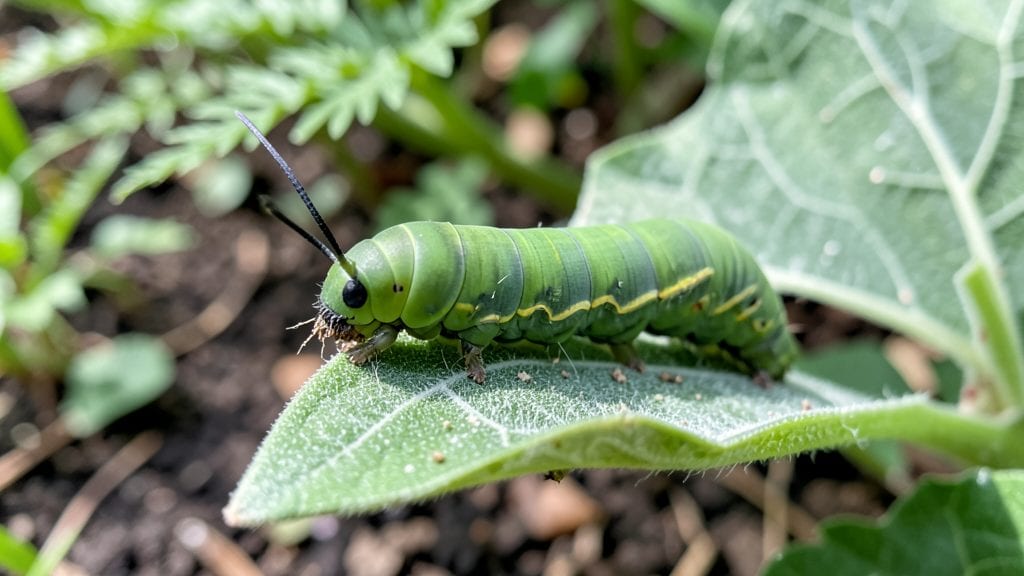
Caterpillars in your garden aren’t just cute fuzzy caterpillars—they’re the hungry larvae stage of moths and butterflies that can strip plants bare overnight. ✨ I’ve watched tomato plants go from lush and green to skeletonized in just a few days, and it’s a gut-punch for any gardener.
The key to saving your plants isn’t fear, but knowing exactly what’s happening and how to act fast.
The damage starts when caterpillars chew through leaves, stems, and even fruits, leaving behind silky webs or frass (their poop). Some, like tomato hornworms, can grow over 3 inches long and devour entire plants in days. The good news?
Most caterpillars are easy to spot if you check your plants regularly—especially the undersides of leaves where they hide. Prevention starts with healthy plants and a few simple tricks, like row covers or neem oil sprays.
You’ll learn how to identify the most common garden caterpillars, when to intervene (and when to let nature handle it), and organic control methods that actually work. My go-to? A mix of handpicking, beneficial insects like parasitic wasps, and targeted sprays that don’t harm pollinators.
The goal isn’t to eliminate every caterpillar—it’s to keep your garden thriving while still supporting the butterflies we all love.
This works for vegetable gardens, flower beds, and even houseplants—whether you’re dealing with a single tomato hornworm or a full-blown infestation. Let’s get your garden back to healthy and productive without resorting to harsh chemicals.
The Hidden Triggers Inviting Caterpillars
Caterpillars don’t just appear in your garden out of thin air—they’re drawn by a mix of environmental cues, plant chemistry, and even human habits. Understanding these triggers helps you prevent infestations before they start. Here’s why your garden becomes a caterpillar buffet:
Caterpillars are picky eaters—they only dine on plants their parent moths or butterflies can recognize. This is called host-specific feeding, and it’s hardwired into their DNA. For example:
- Tomato hornworms 🥔🐛 target only nightshades (tomatoes, peppers, eggplants) because their moths lay eggs exclusively on these plants.
- Tobacco budworms 🍃🐛 prefer tobacco, potato, and tomato leaves due to chemical signals in the plant’s sap.
- Gypsy moth caterpillars 🌳🐛 feast on oak, apple, and birch leaves because their moths seek these trees for egg-laying.
Why it matters: If you grow these plants, you’re essentially hanging out a "Dine In" sign. Pro tip: 💡 Plant traps like nasturtiums or marigolds near vulnerable crops—they distract caterpillars with milder flavors.
Healthy plants have natural defenses—thick leaves, bitter tastes, or even toxins—but when they’re stressed, those defenses weaken. Caterpillars detect this stress through:
- Volatile organic compounds (VOCs): Damaged or overwatered plants release chemical signals that moths "smell" from miles away. Think of it like a distress flare for pests!
- Nutrient deficiencies: Plants low in nitrogen (a key protein source) become easier targets because caterpillars seek out high-protein meals.
- Physical damage: Even minor pruning or hail can trigger a plant’s stress response, making it more appealing to egg-laying moths.
Actionable fix: 🌡️ Maintain balanced soil pH (6.0–7.0 for most veggies) and avoid overwatering. Pro tip: ✨ Use companion planting (e.g., basil near tomatoes) to mask stress signals.
Many moths are phototactic, meaning they’re drawn to light—especially artificial sources like porch lights, streetlamps, or even your garden floodlights. Here’s how it works:
- Nighttime navigation: Moths use the moon’s light to orient themselves. Artificial lights disrupt this, causing them to spiral upward—right into your garden’s foliage.
- Heat attraction: Light bulbs (especially warm-toned LEDs) emit heat, mimicking the body heat of potential mates or hosts.
- Egg-laying hotspots: Moths exhausted from circling lights often lay eggs on the first green surface they find—your prized zucchini plant.
Solution: 🔥 Switch to yellow bug lights (5,000–6,500K color temperature) or motion-activated lights. Pro tip: ⏰ Turn off garden lights after dusk if possible.
Caterpillars time their life cycles to weather conditions, and climate shifts can throw off their natural rhythms. Key triggers include:
| Weather Factor | How It Attracts Caterpillars |
|---|---|
| Warm, humid nights 🌡️ | Moths emerge in droves—ideal for egg-laying. Example: Cabbage loopers peak after 70°F+ nights. |
| Rain followed by sun ☔🌞 | Moisture softens plant leaves, making them easier for caterpillars to chew. Eggs also hatch faster in damp conditions. |
| Drought stress 💧 | Plants produce more sugars to survive, which caterpillars find irresistible (like a dessert buffet). |
What to do: 🎯 Monitor your local degree-day accumulations (a tool gardeners use to predict pest outbreaks). Adjust watering to avoid drought stress.
Remember: Caterpillars aren’t random—they’re following a script written by nature. By disrupting their signals (light, scent, stress), you can keep your garden off their menu. 🚫🍽️
Quick Fixes for Garden Caterpillar Woes
If your garden has become a caterpillar buffet, don’t panic! These hungry larvae can strip plants bare in days, but with the right approach, you can reclaim your green space—without harsh chemicals. Below, we’ve matched common causes to practical, eco-friendly solutions, plus prevention tips to keep your garden thriving.
Cause: A single female moth can lay hundreds of eggs, leading to an explosion of caterpillars on favorite plants like tomatoes, cabbage, or roses.
Fix It:
- 🔥 Handpick & Drown 👨🍳
- Wear gloves and pluck caterpillars off leaves (especially large ones like tomato hornworms) into a bucket of soapy water. Do this early in the morning when they’re sluggish.
- Pro tip: Focus on the undersides of leaves—many caterpillars hide there!
- 🌿 Introduce Predators 🐞
- Ladybugs, lacewings, and parasitic wasps love caterpillars. Buy or attract them with neem oil sprays (repels pests but doesn’t harm predators).
- Plant dill, fennel, or marigolds near vulnerable plants to lure beneficial insects.
- 🧹 Remove Egg Masses 🔍
- Check leaf undersides for gelatinous egg clusters (common with cabbage worms or loopers). Scrape them into alcohol or soapy water to kill them before they hatch.
Cause: Hungry caterpillars chew holes in leaves, stems, or even fruits, weakening plants and inviting disease.
Fix It:
- 🥘 Bt Spray (Bacillus thuringiensis) 💧
- A natural bacterial pesticide that targets caterpillars’ digestive systems. Mix with water and spray directly on leaves (reapply after rain).
- Safe for: Bees, birds, and pets! Test on a small area first.
- 🧵 Physical Barriers 🛡️
- Wrap floating row covers around young plants to block moths from laying eggs. Secure edges with soil or bricks.
- For tomatoes/peppers, use collars (cardboard tubes buried around stems) to trap crawling caterpillars.
- 🍅 Prune & Dispose ✂️
- Cut off heavily damaged leaves and drop them in a sealed bag (not compost!). Check for hidden eggs or larvae before tossing.
Cause: Caterpillars thrive where plants are stressed, soil is nutrient-poor, or natural defenses are weak.
Fix It:
- 💡 Strengthen Plants 🌱
- Fertilize with compost or balanced organic fertilizer (too much nitrogen = softer leaves = caterpillar snacks).
- Water deeply at the base (not overhead) to reduce egg-laying spots and fungal issues.
- 🌡️ Trap Crops 🎯
- Plant sacrificial crops like nasturtiums or basil near high-risk plants. Moths will lay eggs there instead of your veggies!
- Harvest and burn or compost these plants when caterpillars appear.
- 🌙 Disrupt Mating 🌙
- Hang pheromone traps (for specific moths like cabbage loopers) or bright lights at night to attract and confuse adult moths.
- 🌿 Rotate Plants ✨
- Avoid planting the same crop in the same spot yearly. Caterpillars (and their eggs) overwinter in soil—confuse them with diversity!
If caterpillars return year after year despite your efforts, consider:
- 🐕 Companion planting (e.g., catnip deters squash vine borers).
- 🔪 Last-resort sprays: Use spinosad (derived from soil bacteria) if Bt isn’t working.
- 🌍 Professional help: Local extension offices often offer free pest ID and organic solutions.
Remember: A few caterpillars aren’t always bad—they’re food for birds and other wildlife! But when they’re devouring your garden, these steps will help you strike a balance between control and harmony. 🌿🐛💚
Frequently asked questions about caterpillars in gardens
Are all caterpillars bad for gardens?
Not necessarily! Many caterpillars are harmless or even beneficial. For example, monarch butterfly caterpillars only eat milkweed, while others like swallowtail caterpillars target dill or parsley. Only aggressive feeders (like tomato hornworms or cabbage loopers) need control. Leave the rest—they’ll turn into beautiful butterflies!
How do I tell if caterpillars are damaging my plants?
Look for these red flags: Holes in leaves (especially along edges), silky webs (tent caterpillars), or frass (tiny black pellets—their poop!). Check leaf undersides and new growth first. If you see 50%+ damage, it’s time to act.
Can I use soap spray to kill caterpillars?
Yes, but use insecticidal soap (not dish soap) mixed with water. Spray directly on caterpillars (not just leaves) to avoid harming beneficial insects. Reapply every 3-5 days or after rain. For stubborn infestations, pair it with Bt spray for better results.
Why do caterpillars always return after I treat them?
New eggs may still be hatching! Adult moths can lay hundreds of eggs in one night, and some (like cabbage moths) produce multiple generations per season. Break the cycle by removing egg masses, using row covers, and planting trap crops (like nasturtiums) to lure them away.
Are there caterpillars that help my garden?
Some caterpillars act as natural pest control. For example, parasitic wasp larvae feed on caterpillars, while lacewing larvae (not caterpillars but similar) hunt aphids. Even "bad" caterpillars become food for birds and bats. Balance is key—eliminate only the destructive ones!