
Tools
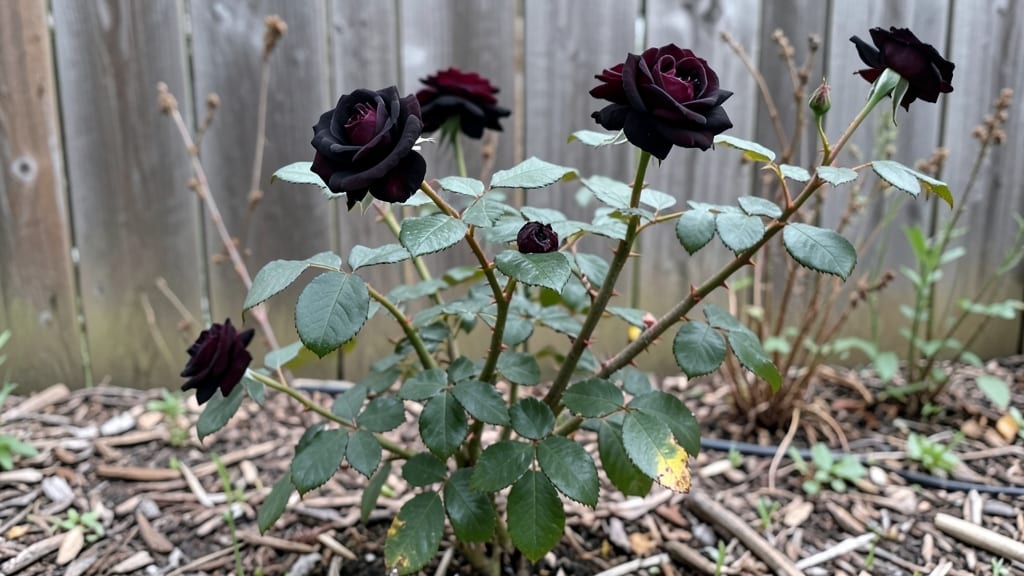
A garden centered around black roses transforms any outdoor space into a moody, cinematic masterpiece. 🌿 I've designed several of these dramatic landscapes, and the key lies in treating them as a dark canvas rather than just another flower bed.
These roses don't just grow—they command attention with their velvety petals and shadowy elegance.
The secret to their impact isn't just the roses themselves but how you stage them. Pair them with silver foliage like lamb's ear or dusty miller for striking contrast, or let them stand alone against a backdrop of deep green boxwoods.
Even a single black rose bush becomes a focal point when surrounded by lighter, airy textures like ferns or ornamental grasses.
What you'll create is a garden that feels like stepping into a gothic novel—mysterious yet refined. The deep burgundy-black blooms glow under moonlight, while their rich hue makes surrounding colors pop in unexpected ways.
In summer, they're dramatic; in winter, their skeletal branches add architectural interest that no other plant can match.
This design works equally well in formal knot gardens, cottage-style borders, or even as a standalone specimen. The beauty is that black roses adapt to your vision, whether you want a whisper of elegance or full-on dark romance. Let's bring that drama to life in your own space.
📚 In This Guide
- What you need
- Instructions
- Tips and common mistakes
- Wrapping up and next steps
What you need
- ● Black roses (or dark red/velvet varieties): 5–10 plants (e.g., Baccara, Black Baccara, or Queen Elizabeth)
- ● Well-draining soil: 10–15 cubic yards (mix garden soil with compost and perlite for aeration)
- ● Organic mulch: 2–3 bags (cedar or black dye mulch for contrast)
- ● Fertilizer: Balanced 10-10-10 or rose-specific formula (1–2 lbs per plant)
- ● Potting mix (if container gardening): 5–10 gallons per pot
- ● Stakes or trellis: 1–2 per plant (for climbing varieties)
- ● Drip irrigation or hose: For consistent watering (1–2 gallons per plant, 2–3x/week)
- ● Garden trowel or spade: For planting and soil prep
- ● Pruning shears: Sharp, sterilized shears for trimming
- ● Gloves: Heavy-duty for thorns (2–3 pairs)
- ● Wheelbarrow: For hauling soil/mulch
- ● pH testing kit: To ensure soil pH 6.0–6.5 (ideal for roses)
- ○ Spray bottle: For misting (optional but helpful for humidity-loving varieties)
- ● Companion plants: Silver foliage (e.g., Lavender, Artemisia) to make black roses pop
- ● Garden lights: Solar-powered LED lights for evening drama
- ● Decorative rocks or gravel: For a modern, high-contrast border
- ● Rose food boosters: Fish emulsion or Epsom salt (monthly feedings)
- ● Frost cloth: For winter protection in colder climates
How to design a striking black roses garden
Creating a bold focal point with deep, velvety blooms is easier than you think.
🌿 Step 1: Choose Your Black Rose Varieties
True black roses don't exist—what we call "black" are actually deep burgundy, maroon, or near-black hybrids like 'Black Baccara', 'Black Magic', or 'Black Pearl'. I always plant at least one of these as my centerpiece, then add complementary colors like white or deep purple roses to create contrast. These varieties thrive in full sun and well-drained soil, so pick a spot that gets at least 6 hours of sunlight daily.
For a dramatic effect, I space 4-5 plants about 3 feet apart in a circular pattern. This creates a natural focal point that draws the eye immediately. If your space is smaller, 2-3 plants in a triangular arrangement still make a powerful statement. Just remember—black roses grow 3-5 feet tall, so give them room to spread their canes.
🪴 Step 2: Prepare the Planting Site
Black roses need rich, well-draining soil with a pH between 6.0 and 6.5. Before planting, mix 2-3 inches of compost into the top 12 inches of soil to improve fertility and drainage. I also add a 5-10-10 fertilizer at planting time to give them a strong start—just follow the package instructions for application rates.
Dig holes twice as wide as the root ball but only as deep as the container. This prevents the graft union (the bulge near the base of the plant) from being buried too deep, which can cause rot. Gently loosen the roots if they're circling in the pot, then place the rose in the hole so the graft union sits 2 inches above soil level. This ensures proper airflow and prevents disease.
☀️ Step 3: Plant and Water for Establishment
Fill the hole with soil, pressing lightly to remove air pockets, then water deeply to settle everything. You'll know you've done it right when the soil looks evenly moist but not soggy. After watering, add 2-3 inches of mulch around the base (but keep it 4 inches away from the stem) to retain moisture and suppress weeds. I use shredded bark mulch because it breaks down slowly and improves soil structure over time.
Water your black roses once a week for the first month, giving them about 1 gallon per plant each time. After that, water deeply every 5-7 days, depending on rainfall. The key is to keep the soil consistently moist but never waterlogged—black roses hate soggy roots. You'll see new growth within 2-3 weeks if everything is right.
✂️ Step 4: Prune for Shape and Health
Prune your black roses twice a year: once in early spring (just before new growth starts) and again in late summer (after flowering). In spring, cut back any dead or damaged canes to just above a healthy bud, and remove any crossing or crowded branches. This encourages strong, upright growth and better airflow, which prevents fungal diseases that love dark, damp conditions.
After the first flush of blooms in summer, trim back one-third of the oldest canes to stimulate new growth. You'll also want to deadhead spent blooms regularly—this means cutting the stem back to the first 5-leaflet leaf below the bloom. It keeps the plant looking tidy and encourages more flowers. Just be careful not to over-prune; black roses are heavy bloomers and need plenty of energy to produce those dramatic flowers.
🌱 Step 5: Maintain for Year-Round Drama
Feed your black roses every 4-6 weeks during the growing season with a balanced rose fertilizer (like 10-10-10 or 5-10-5). I also add Epsom salt (1 tablespoon per gallon of water) every 2 weeks to boost magnesium, which gives the flowers their deep, rich color. In fall, apply a slow-release fertilizer and a 3-inch layer of mulch to protect the roots over winter.
Watch for pests like aphids or spider mites—these love the tender new growth of roses. If you see them, spray the plants with neem oil or insecticidal soap in the early morning or evening when bees aren't active. Black roses are stunning, but they do attract attention, so a little extra care keeps them looking their best all season long.
Tips & tricks for perfect black roses garden design
These simple strategies will help you create a showstopping black rose display that wows every season.
Sunlight Strategy: The 6 hours of sunlight requirement is non-negotiable for those dramatic black blooms. If your garden gets less than 6 hours, consider placing your black roses in a south-facing location or using reflective surfaces like light-colored walls or gravel to bounce extra sunlight onto the plants. I've seen black roses thrive in partial shade with supplemental grow lights during their peak blooming months—just be prepared for fewer flowers if sunlight is limited.
Soil Secrets: That 6.0-6.5 pH range is crucial for black roses to access the iron and magnesium they need for their deep, velvety color. Test your soil before planting—if it's too acidic, add crushed limestone to raise the pH gradually. I've found that mixing in 2-3 inches of compost and 5-10-10 fertilizer at planting time gives them the perfect nutrient boost to handle their heavy blooming demands.
Pruning Precision: When you're trimming back one-third of the oldest canes in late summer, focus on the thickest, most established stems. These are the ones that have already produced blooms and are ready for renewal. I always make my cuts just above a healthy bud that's facing outward—this encourages new growth that will fill out your garden beautifully. Don't be afraid to get bold with your pruning; black roses respond well to confident cuts.
Watering Wisdom: The first month is critical for establishing those deep roots, so stick to that 1 gallon per plant weekly guideline. After that, let your finger be your guide—stick it 2 inches into the soil. If it feels dry, it's time to water. I've learned the hard way that black roses show stress quickly when they're thirsty, so it's better to water consistently than to let them dry out completely between waterings.
Pro Tips for Black Roses Garden
- These simple strategies will help you create a showstopping black rose display that wows every season.
- Sunlight Strategy: The 6 hours of sunlight requirement is non-negotiable for those dramatic black blooms.
- Soil Secrets: That 6.0-6.5 pH range is crucial for black roses to access the iron and magnesium they need for their deep, velvety color.
Frequently asked questions
What are the best black rose varieties for a dramatic garden?
True "black" roses don’t exist—opt for deep velvety black Baccara, Black Magic, or Black Pearl varieties. These near-black blooms thrive in full sun and well-drained soil. For extra drama, pair them with silver foliage or white roses to heighten the contrast. Pro tip: Prune regularly to encourage lush, dark blooms!
How long does it take for black roses to establish and bloom?
Black roses are slow to mature—expect 1–2 years before full blooms appear. Plant in early spring for a head start, and mulch to retain moisture. Patience pays off: once established, they’ll reward you with bold, long-lasting flowers. Fun fact: Some varieties bloom intermittently, so deadhead spent blooms to encourage more!
Can I grow black roses in containers? Yes—but with caveats!
Use large pots (18"+ diameter) with drainage holes and a mix of potting soil + compost. Choose dwarf varieties like Black Jack for smaller spaces. Containers dry out faster—water deeply 2–3x/week in summer. Pro tip: Move pots to sunnier spots in winter to prevent leggy growth.
What pests or diseases should I watch for with black roses?
Black roses are prone to black spot fungus, aphids, and spider mites. Prevent issues with neem oil sprays and proper spacing (3–4 ft apart). Avoid overhead watering to keep foliage dry. If you spot yellowing leaves or sticky residue, act fast—early treatment saves your garden! Warning: Slugs love these roses; use beer traps or copper barriers for organic defense.
What plants pair best with black roses for maximum contrast?
For a moody, cinematic look, pair black roses with:
- Silver foliage (e.g., lamb’s ear, dusty miller)
- White blooms (e.g., hydrangeas, lilies)
- Deep purples (e.g., salvia, iris)
- Chartreuse greens (e.g., hostas, variegated grasses)
This color palette creates a striking focal point—perfect for weddings, photoshoots, or just wowing neighbors! Design tip: Use odd-numbered groupings (3–5 plants) for natural flow.
Wrapping up and next steps
A black roses garden isn’t just a stunning visual—it’s a bold statement of elegance and mystery in your outdoor space. 🌹✨ Whether you’re drawn to the deep hues of Blaue Lunge or the velvety allure of Black Baccara, these roses bring drama and sophistication to any landscape.
With the right care and placement, your garden can become a breathtaking focal point that turns heads and sparks conversations.
Ready to transform your garden? Start by sketching a layout, gathering your materials, and planting with confidence. Your dream garden is just a few petals away!