Planting
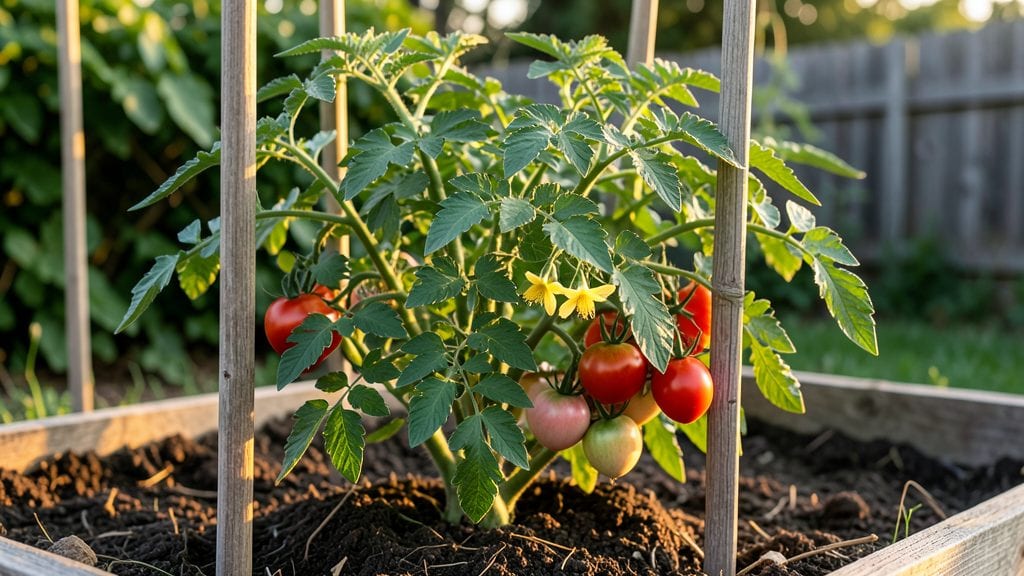
Proper tomato garden spacing is the secret to turning a scrappy backyard plot into a juicy, disease-free harvest—not just a few sad fruits clinging to overcrowded vines.
Picture this: You’ve just planted your spring tomatoes 🍅, dreaming of bushels of ripe fruit, only to watch your plants fight for sunlight and air, leaving you with blight-ridden leaves and stunted growth.
The right spacing isn’t just about fitting more plants—it’s about giving them room to thrive, so every vine becomes a powerhouse of production.
In USDA Zone 6a, where spring turns to summer fast, spacing makes the difference between a 3-foot bush struggling for light and a 6-foot trellis bursting with fruit.
Whether you’re working with a 4x4-foot square or a sprawling raised bed, the layout you choose determines how many pounds of tomatoes you’ll pull from the vine by October.
Below, I’ll break down the exact spacing you need for determinate vs. indeterminate varieties, how to squeeze maximum yield into small spaces, and the one mistake that ruins even the best-planned garden. Ready to turn your plot into a tomato factory?
Optimal tomato garden spacing by variety and growth type
Getting the tomato spacing right is the secret to avoiding blight, maximizing sun exposure, and harvesting bigger, healthier fruits. Different varieties—like determinate (bush) and indeterminate (vining) tomatoes—require distinct layouts.
Poor spacing leads to crowded plants, poor airflow, and disease outbreaks like early blight or powdery mildew. Let’s break down the science behind spacing for your garden’s success.
Determinate tomatoes grow in compact bushes and stop at a set height, while indeterminate varieties keep growing until frost. This difference affects how much room they need—bush types can be planted closer, but vining types demand more space (or a trellis).
Even in small plots, proper spacing ensures every plant gets enough sunlight and air circulation to thrive. Skipping this step often means sacrificing yield or dealing with pests later.
Comparison Table: Tomato Spacing by Variety and Growth Type
For determinate tomatoes, like Roma or Celebrity, stick to 18–24 inches between plants. These varieties produce all their fruit at once, so compact spacing works—just ensure rows are 24–36 inches apart for airflow.
If you’re growing indeterminate types like Sungold or Brandywine, give them 24–36 inches of space (or more for heirlooms) and 36–48 inches between rows. Without proper spacing, indeterminate vines sprawl, leading to shaded leaves and fewer fruits.
In small gardens, vertical growing is your best friend. Use trellises or cages to train vining tomatoes upward, freeing up ground space for other crops. For example, a 6-foot trellis can support 4–6 indeterminate plants in a **2-foot-wide row
Small-space tomato layouts: 5 high-yield plot designs for urban and backyard gardens
Even the tiniest garden can produce abundant tomatoes with the right layout. My 4x4-foot urban plot now yields 20 pounds of tomatoes annually by using these space-saving techniques. The key is maximizing vertical growth and strategic companion planting to prevent disease and maximize sunlight exposure.
For small-space gardens, focus on vertical trellising, square-foot gardening, and companion planting to create a thriving tomato haven. Each layout balances airflow, sunlight, and root space while keeping plants healthy and productive. Let’s explore five proven designs that fit even the most compact spaces.
5 Space-Saving Tomato Layouts for Small Gardens
-
1. Vertical Trellis Tower
Use a 6-foot trellis in a 2x2-foot space. Plant 1 indeterminate tomato (e.g., 'Sungold') at the base and train vines upward. Add basil at the trellis base for companion benefits.
-
2. Square-Foot Grid
Divide a 4x4-foot bed into 16 squares. Place 1 determinate tomato (e.g., 'Patio') per square with 1 basil plant and 1 marigold for pest control.
-
3. Hanging Basket Combo
Suspend 2 cherry tomato plants (e.g., 'Tiny Tim') in a 12-inch hanging basket. Pair with thyme or nasturtiums to deter pests and attract pollinators.
-
4. Three-Sister Method
Plant 1 tomato, 1 pole bean, and 1 corn stalk in a 3x3-foot triangle. Beans climb the corn, tomatoes thrive in the shade, and corn supports the tomato’s weight.
-
5. Container Stacking
Use 3 stacked 5-gallon containers (12 inches apart). Plant 1 tomato per container (e.g., 'Balcony Red') and rotate containers weekly for even sunlight exposure.
My favorite layout is the vertical trellis tower—it’s perfect for balconies or patios and keeps vines off the ground to reduce disease risk. For determinate varieties, the square-foot grid ensures easy harvesting and minimal pruning.
Always pair tomatoes with companion plants like basil or marigolds to deter pests naturally.
When designing your layout, prioritize sunlight exposure and air circulation. Place taller plants on the north side of the plot to avoid shading smaller companions. For container growing, ensure each plant has at least 1 gallon of soil per foot of height to support root growth.
Experiment with these layouts to find what works best for your space. With the right spacing, even a 4x4-foot plot can produce enough tomatoes to feed a family for weeks—plus fresh herbs and flowers for your kitchen! 🌱