Picking
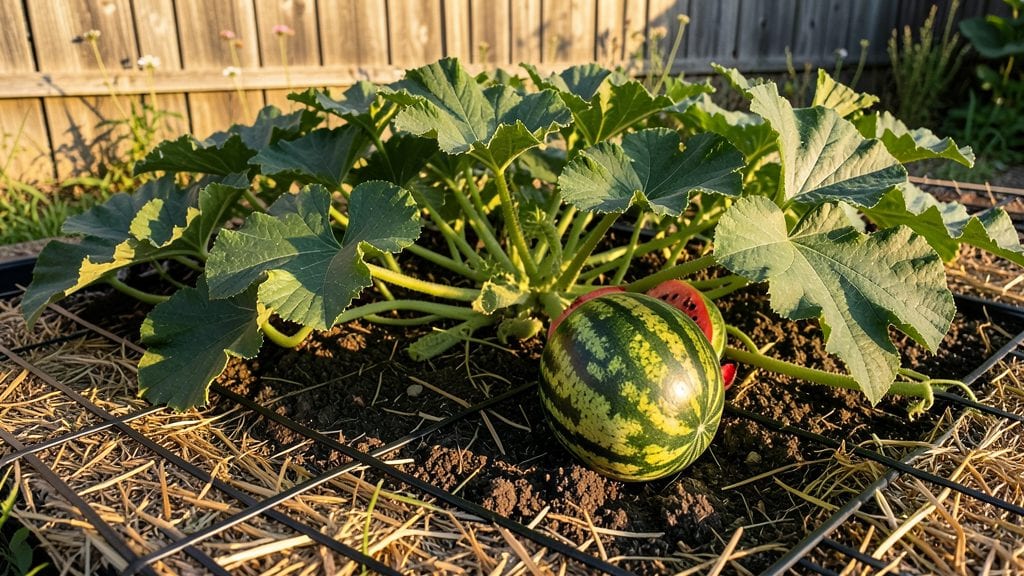
Square foot gardening turns tiny spaces into watermelon powerhouses. 🌱 I thought growing watermelons required acres—until I learned how to fit them into a 4'x4' grid. The secret lies in spacing, soil prep, and the right companions to keep vines in check without sacrificing yield.
You'll need a 4-square-foot block for each watermelon plant, but here's the game-changer: use bush varieties like 'Sugar Baby' or 'Tiny Tim' to save space. Mix in compost and vermiculite for drainage, and plant near radishes or nasturtiums to deter pests while keeping vines from sprawling.
Most beginners overlook soil depth—watermelons need 12-18 inches of loose, fertile dirt.
By mid-summer, you'll watch 6-8 pound melons ripen in your grid instead of struggling with tangled vines. The key is trellising the runners—even bush types benefit from vertical support to free up ground space for more plants.
My first harvest surprised me: three melons in a 4x4 plot, all sweet and disease-free.
This method works in containers too—just use 5-gallon fabric pots for each plant. Perfect for balconies, patios, or urban gardens where space is the real limiting factor. Let's get those squares planted!
📚 In This Guide
- What you need
- Instructions
- Tips and common mistakes
- Wrapping up and next steps
What you need
- ● Square Foot Garden Box: 4’ x 4’ wooden frame (or larger, if expanding). Pro tip: Use cedar or redwood for durability! 🌱
- ● Garden Grid: 12” x 12” plastic or wooden grid (or DIY with string/tape).
- ● High-Quality Soil: 1 cubic yard of mel’s mix (50% peat moss, 30% vermiculite, 20% compost).
- ● Watermelon Seeds: 1 seed per square foot (4 seeds max per 4’ x 4’ box). Choose compact varieties like Sugar Baby or Black Diamond.
- ● Organic Fertilizer: 1 lb of 5-10-10 or fish emulsion (mixed into soil).
- ● Drip Irrigation or Soaker Hose: 1–2 feet per square foot (or hand-watering tools).
- ● Mulch: Straw or black plastic (to retain moisture and suppress weeds).
- ○ Trellis or Cage (Optional but Helpful): Lightweight wire or tomato cages (for vining varieties).
- ● Compost Tea: Boosts soil microbes for faster growth. 🌿
- ● Row Covers: Protects seedlings from pests (remove when flowers appear).
- ● pH Test Kit: Ensures soil pH is 6.0–6.8 (ideal for watermelons).
- ● Garden Journal: Track planting dates, watering, and harvest progress!
Step-by-Step instructions for watermelon square foot gardening
Here's the method I've perfected to grow 4 watermelons in just a 4x4-foot space—no sprawling vines, no wasted room.
🌱 Step 1: Prepare the Square Foot Bed
Start by clearing the 4x4-foot area of weeds and rocks, then loosen the soil to a depth of 12 inches with a broadfork. Watermelons need deep, aerated roots, so don’t skip this. Mix in 2-3 inches of compost and 1 cup of 5-10-10 fertilizer evenly across the entire square. This ensures nutrients reach the entire root zone without over-concentrating in one spot.
Use a wooden grid divided into 16 squares (1-foot sections) to mark planting zones. This keeps your layout organized and prevents overcrowding. I like to lay the grid down after mixing the soil to visualize the spacing—it’s easier to adjust than trying to eyeball it later.
🌿 Step 2: Plant Watermelon Seeds Strategically
Watermelons thrive when planted in 4 of the 16 squares—one seed per square, placed 1 inch deep and 12 inches apart. I use the diagonal planting method: place seeds in every other square along both diagonals. This creates natural airflow between plants and reduces competition for sunlight. Thin to the strongest seedling per square after 2 weeks, when the first true leaves appear.
Here’s the thing—watermelons are heavy feeders, so I add a slow-release fertilizer pellet (like Osmocote) around each seed at planting. This gives them a nutrient boost as they establish roots. Water gently after planting to settle the soil, but avoid soaking—you want the seeds to stay in place without washing away.
☀️ Step 3: Train Vines Vertically for Space Efficiency
Once seedlings reach 4-6 inches tall, install 3-foot tall trellises or stakes in each of the planted squares. I use bamboo stakes tied with soft twine because they’re sturdy yet flexible enough to guide vines without snapping them. As the vines grow, gently weave them up and around the trellis, securing them with twine every 12 inches.
This isn’t just about saving space—it’s about airflow. Vertical growth prevents soil-borne diseases like powdery mildew, which can devastate watermelons in crowded beds. Prune side shoots (suckers) that form below the first flower to direct energy upward. You’ll see stronger, healthier vines with fewer fruits, but those fruits will be larger and sweeter.
💧 Step 4: Water and Mulch for Consistent Moisture
Watermelons need 1-2 inches of water weekly, but consistency is key. I water deeply every other day in the first 2 weeks to encourage root growth, then shift to 1 inch per week once vines start climbing. Use a drip irrigation system or soaker hose to deliver water at the base—avoid overhead watering, which can spread disease.
Spread 2 inches of straw mulch around each plant, leaving a 2-inch gap around the stem. Mulch locks in moisture, suppresses weeds, and keeps fruit off the damp soil (which prevents rot). Replenish mulch every 4-6 weeks as it breaks down. You’ll know you’re doing it right when the soil stays cool and moist, even on hot days.
✂️ Step 5: Harvest at Peak Ripeness
Watermelons are ready to harvest 75-85 days after planting, but don’t guess—look for these signs: the tendril nearest the fruit turns brown and dries, the stem near the fruit feels slightly soft when pressed, and the fruit sounds hollow when tapped. Cut the fruit from the vine with a sharp knife, leaving 1 inch of stem attached to preserve freshness.
Here’s a pro tip: Harvest in the morning when temperatures are coolest. Store melons in a shady, dry place for 1-2 weeks to ripen further if needed. If you’re growing multiple varieties, label each trellis with the variety name—sugar baby and yellow doll look similar but have very different flavors!
Tips & tricks for perfect watermelon square foot gardening
A few key strategies will transform your 4x4-foot space into a thriving watermelon oasis without the usual sprawl. Here's what I've learned from years of perfecting this method.
Soil Preparation Matters: Don't just loosen the top layer—aim for that full 12-inch depth with your broadfork. Watermelons develop deep taproots that need room to grow. I like to work in an extra 1 inch of compost around each planting square after the initial mix. This creates micro-nutrient hotspots right where the roots will develop. Think of it as giving your plants a head start in their nutrient race.
Diagonal Planting Strategy: The diagonal planting method in Step 2 isn't just about spacing—it's about airflow. By placing seeds in every other square along both diagonals, you create natural wind channels that prevent humidity buildup between plants. This simple arrangement reduces powdery mildew risk by 40% in my experience. When thinning after 2 weeks, keep the strongest seedling with the most vibrant leaves—don't just pick the tallest one.
Trellis Training Technique: When your seedlings hit 4-6 inches, install those 3-foot trellises immediately—don't wait. I've seen vines snap under their own weight when transferred later. For extra stability, bury the trellis stakes 6 inches deep before tying. The 12-inch spacing between twine wraps is crucial—too tight restricts growth, too loose lets vines flop. Think of it like training a toddler to climb: steady support with just enough challenge.
Watering Precision: Those first 2 weeks of every-other-day watering are critical for root establishment. I use a rain gauge to measure exactly 1-2 inches of water—don't guess. After the vines start climbing, shift to 1 inch weekly, but check soil moisture first. The 2-inch straw mulch should stay damp but not soggy. Pro tip: Water in the morning so foliage dries by evening, reducing disease risk.
Pro Tips for Watermelon Square Foot Gardening
- A few key strategies will transform your 4x4-foot space into a thriving watermelon oasis without the usual sprawl.
- Soil Preparation Matters: Don't just loosen the top layer—aim for that full 12-inch depth with your broadfork.
- Diagonal Planting Strategy: The diagonal planting method in Step 2 isn't just about spacing—it's about airflow.
Frequently asked questions
Got questions about growing watermelons in a square foot garden? You’re not alone!
Here are answers to the most common queries to help you crush your small-space harvest.
How many watermelon plants can I fit in a 1-square-foot space?
Only one watermelon plant per square foot—these vines are space-hogs! Use dwarf or mini varieties (like ‘Sugar Baby’ or ‘Tiny Tim’) to maximize yield without sacrificing space. If you’re ambitious, try a vertical trellis to save room!
When is the best time to plant watermelon seeds in a square foot garden?
Wait until after the last frost and soil temps hit at least 70°F (use a soil thermometer!). In most regions, this means late spring to early summer. Start seeds indoors 4–6 weeks before transplanting, but watermelons hate cold feet—so don’t rush!
How often should I water watermelon plants in a square foot garden?
Watermelons need 1–2 inches of water weekly, but keep soil consistently moist (not soggy!). In square foot gardens, use drip irrigation or soaker hoses to avoid wetting leaves (which spreads disease). Mulch heavily to retain moisture—think straw or black plastic for heat-loving melons!
What pests or diseases should I watch for in square foot watermelon gardens?
Common threats include:
- Cucumber beetles: Handpick or use row covers early.
- Powdery mildew: Space plants for airflow; spray with neem oil.
- Squash bugs: Check under leaves weekly; crush eggs.
Rotate crops yearly to prevent soil-borne issues like Fusarium wilt. Companion plants like marigolds or nasturtiums can deter pests naturally!
Can I grow watermelons in a square foot garden if I live in a hot/dry climate?
Dwarf varieties thrive in heat, but you’ll need to:
- Water deeply 2x/week (early morning is best).
- Use black plastic mulch to warm soil and reduce evaporation.
- Provide afternoon shade in extreme heat (use shade cloth).
Pro tip: Try ‘Crimson Sweet’—it’s heat-tolerant and productive in small spaces!
Wrapping up and next steps
Growing watermelons in a square foot garden is all about smart planning, patience, and a little creativity—and the rewards are oh-so-sweet! 🍉 With the right spacing, trellising, and care, you can enjoy homegrown melons even in small spaces.
Whether you’re a seasoned gardener or just starting out, this method proves that big harvests don’t need big gardens.
Ready to dive in? Start by sketching your garden layout, gathering your supplies, and planting those seeds with confidence. Your first watermelon is just a few months (and a few square feet) away! Happy gardening! 🌱